
What can a novel perceive that a philosophical treatise cannot? Can literature make an argument, deepen moral understanding, or change how readers judge human actions? And does the form of a story produce kinds of knowledge unavailable to abstract reasoning?
These questions frame Literature as Moral Philosophy, a collection of twelve essays edited by Grace Whistler and published by Bloomsbury Academic in 2026. Moving across ethics, aesthetics, moral psychology, narrative, theater, fiction, and film, the volume considers literature as a mode of philosophical inquiry.
Its subjects range from Kant, Judith Butler, and Mikhail Bakhtin to Albert Camus, Faust, Mary Shelley, Dostoevsky, Tarkovsky, and Giannina Braschi.
This article introduces the volume through Bloomsbury Academic’s description and published table of contents. It is not a review and does not summarize or interpret the individual chapters.
Can Literature Make a Philosophical Argument?
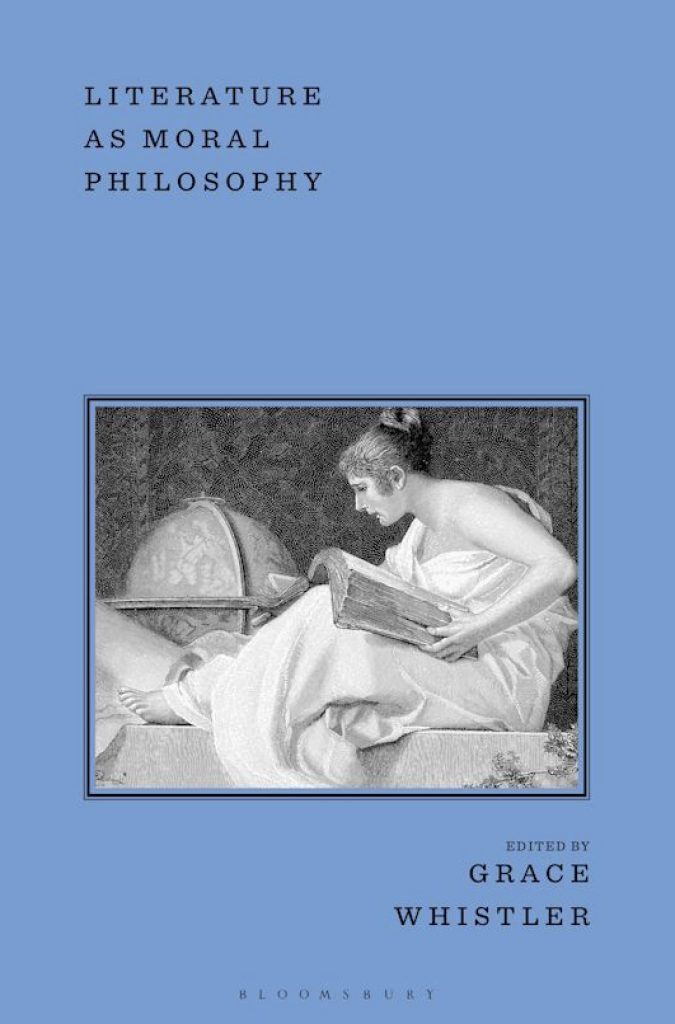
The relationship between literature and philosophy is ancient and contested. Stories can dramatize conflicting values, place readers inside unfamiliar lives, and test moral choices without necessarily resolving them. Yet philosophers have long disagreed about whether literature produces knowledge, encourages moral development, or merely stirs emotion.
Bloomsbury presents Literature as Moral Philosophy as an inquiry into literature’s suitability as a vehicle for moral, ethical, and philosophical thought. At the center of the collection is a fundamental question: what insights become possible through literary form?
That question connects the book with some of the most influential work in modern and contemporary moral philosophy. Martha Nussbaum has examined the relationships among literature, emotion, ethical judgment, justice, and human flourishing. The philosopher and novelist Iris Murdoch explored attention, imagination, goodness, and the difficulty of seeing other people clearly. Their work helped establish the novel not simply as an illustration of philosophical ideas but as a possible form of moral inquiry in its own right.
Whistler’s collection approaches this wider debate through three areas: literature as argument, literature as a source of moral growth, and literary genres as forms of philosophical thought.
Explore Literature as Moral Philosophy at Bloomsbury Academic.
Literature as Argument: Kant, Butler, Bakhtin, and Braschi
The first section asks how literature perceives, questions, and argues. Its four chapters bring together place, ethics, immortality, performativity, heterobiography, parable, and the novel.
Ghazouane Arslane opens the section with “Reading as a Way of Seeing: Literature and the Perception of Place.” Jon Stewart examines “Jean Paul’s Critique of Kant’s Ethics and Theory of Immortality,” connecting literary thought with one of the foundational figures in modern moral philosophy.
Daphna Erdinast-Vulcan brings two major thinkers in philosophy and literary theory into conversation in “Performativity and/or Heterobiography: Judith Butler and Mikhail Bakhtin.” Butler’s work on language, identity, power, vulnerability, and performativity has reshaped the humanities, while Bakhtin’s concepts of dialogue, polyphony, and the social life of language remain central to the study of the novel.
The section concludes with Grace Whistler’s “The Dream of Reason: Parables and Monsters in the Novels of Giannina Braschi.” Its placement within “Literature as Argument” situates the chapter among inquiries into how literary works perceive, challenge, and generate ideas.
Literature, Moral Growth, and the Ethics of Stories
The second section turns from literary argument to the relationship between reading and moral development.
Nora Hämäläinen contributes “Ethics, Literature and the Potential for Change,” while Christopher Hamilton considers “The Value of Literature: Morality and Meaning.” Anthony J. Cascardi’s “Becoming Human: Literature and Moral Growth” places the formation of human character at the center of the discussion.
Laura D’Olimpio and Andrew Peterson conclude the section with “The Ethics of Narrative Art: Philosophy in Schools, Compassion and Learning from Stories.” Its title brings the debate into education by connecting narrative, compassion, and philosophical learning.
These essays address some of the field’s most consequential questions. Can reading cultivate empathy or compassion? Does literature contribute to moral education? Can stories change how people understand themselves and their responsibilities to others? What is the relationship between aesthetic value and moral meaning?
Camus, Faust, Mary Shelley, Dostoevsky, and Tarkovsky
The third section, “The Genres of Philosophy,” moves among theater, myth, speculative fiction, the novel, melodrama, and film.
Sophie Bastien examines “Albert Camus and the Literary Evolution of Theatrum Mundi.” Camus remains one of the most widely read philosophical writers of the modern era, particularly for his treatment of absurdity, rebellion, freedom, mortality, and moral responsibility.
John Krapp’s “The Myth of Faust and the Idea of Transgression” turns to one of European literature’s defining narratives: the pursuit of knowledge, power, and experience at the risk of moral catastrophe.
Katalin Nun Stewart considers existential despair in Mary Shelley’s The Last Man. Best known for Frankenstein, Shelley continues to occupy an important place in debates about creation, responsibility, isolation, technological ambition, and what it means to be human.
The collection concludes with Stephen Mulhall’s “‘The Salamander of the Human Soul’: The Melodrama of Scepticism in Dostoevsky and Tarkovsky.” By bringing a novelist and filmmaker into the same philosophical frame, the chapter title underscores the volume’s interest in ideas that travel across artistic forms.
Spotlight: Giannina Braschi and “The Dream of Reason”
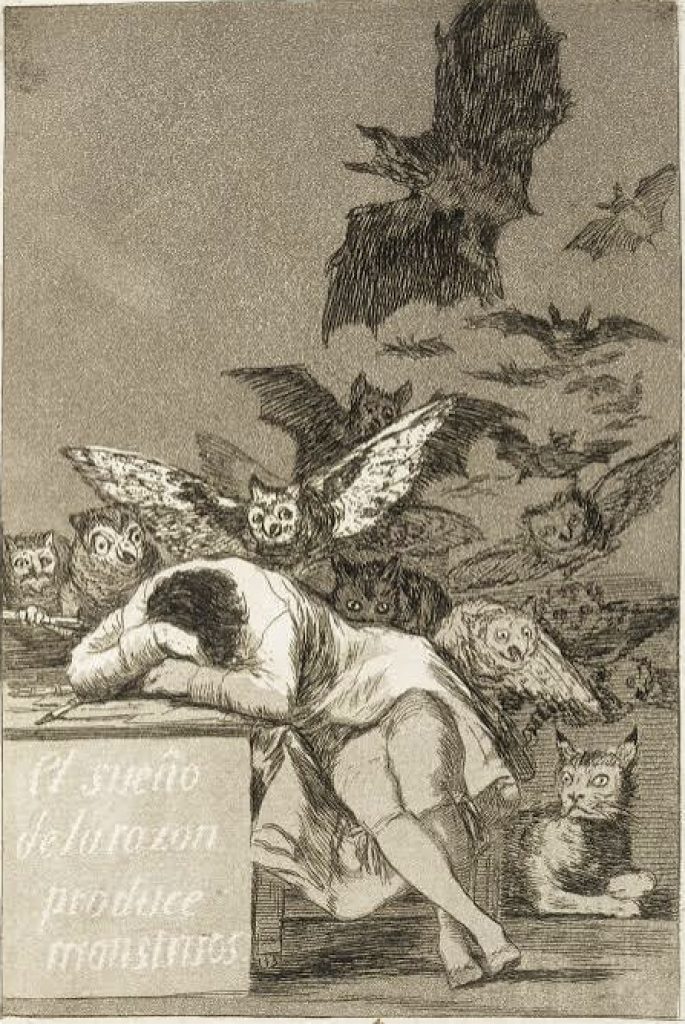
Grace Whistler, editor of Literature as Moral Philosophy, examines Braschi’s novels in “The Dream of Reason: Parables and Monsters in the Novels of Giannina Braschi,” the final chapter in the book’s section on literature as argument.
The chapter title places Braschi’s novels in a constellation of parables, monsters, and the dream of reason. The precise argument joining those terms—and the novels through which Whistler develops it—belongs to the essay itself.
Braschi’s body of work provides useful background for readers encountering her through the collection. She writes in Spanish, Spanglish, and English across poetry, fiction, theater, dialogue, satire, manifesto, and philosophical fiction. Her major works include El imperio de los sueños (Empire of Dreams), Yo-Yo Boing!, United States of Banana, and Putinoika.
Across these books, philosophical questions become dramatic encounters. Characters argue about language, freedom, political power, immigration, identity, art, value, sovereignty, and moral responsibility. Ideas are carried through comedy, contradiction, parody, performance, and clashes among competing voices.
In United States of Banana, Hamlet and Zarathustra accompany Giannina to the Statue of Liberty to free Segismundo, the imprisoned character drawn from Calderón de la Barca’s Life Is a Dream. Shakespeare, Nietzsche, and Calderón enter a contemporary confrontation with empire, liberty, Puerto Rico, and the United States.
Braschi’s writing also unsettles conventional divisions among novel, poem, play, manifesto, political satire, and philosophical dialogue. This formal hybridity provides relevant context for her inclusion in a volume concerned with literature’s ability to think and argue.
For Readers of Literature and Philosophy
With its range of writers, thinkers, and artistic forms, Literature as Moral Philosophy will be relevant to scholars, students, teachers, and general readers interested in moral philosophy, literature and ethics, philosophical fiction, narrative ethics, aesthetics, moral psychology, literary theory, philosophy and film, and the philosophy of literature.
The collection may also support courses exploring compassion, moral education, existentialism, skepticism, performativity, narrative identity, and the relationship between art and moral judgment.
About Literature as Moral Philosophy
- Editor: Grace Whistler
- Publisher: Bloomsbury Academic
- Electronic publication: July 23, 2026
- Print publication: August 20, 2026
- Length: 296 pages
- Formats: Paperback, hardback, PDF ebook, and EPUB/Mobi ebook
- Paperback ISBN: 978-1-3504-5613-6
- Hardback ISBN: 978-1-3504-5614-3
- PDF ebook ISBN: 978-1-3504-5615-0
- EPUB/Mobi ebook ISBN: 978-1-3504-5616-7
Related Reading
- Postcolonial Political Philosophy: Giannina Braschi on Freedom, Sovereignty, and Empire
- Yo-Yo Boing! and the New American Literary Language
- Giannina Braschi’s Biography
Editorial note: This publication announcement was prepared by the site’s editorial team and was not written by Grace Whistler, Giannina Braschi, or Bloomsbury Academic. Its description, organization, chapter titles, contributor names, and publication details are based on information published by Bloomsbury Academic. The post does not review, summarize, or interpret the individual essays. Last updated September 2026.