
Giannina Braschi’s Biography: The Literary Encyclopedia

Giannina Braschi’s Life and Works
Citation: O’Dwyer, Tess. “Giannina Braschi”. The Literary Encyclopedia. March 19, 2026

Giannina Braschi is a leading force of innovation in American and Latin American literature and political philosophy of the late twentieth and early twenty-first century. Braschi writes mixed-genre epic works in Spanish, Spanglish, and English about the marvels and travesties of the human flow—of mass migration, mass incarceration, democracy, economy, and revolution—and of enduring humanistic themes of creativity, love, liberty, and hope.
The United States Library of Congress qualified Braschi’s genre-defying writings as cutting-edge, influential, and revolutionary. Her works include the epic poem El imperio de los sueños (1988) [Empire of Dreams, 1994], the groundbreaking Spanglish novel Yo-Yo Boing! (1998), and the geopolitical tragicomedy United States of Banana (2011). Her magnum opus PUTINOIKA (2024) is a mixed-genre tragicomedy in the era of the late-stage American empire marked by collusion, pollution, and delusion.
Braschi creates “hard-hitting, no-holds-barred, mind-expanding story-worlds” that testify to some of the gravest manmade and natural catastrophes of the contemporary period, including the September 11th attacks on the World Trade Center and the COVID-19 pandemic (Aldama and O’Dwyer 15). Her politically charged and radical texts presciently prophesize further erosion of civil liberties; the disintegration of the United States; the collapse of democracies; the escalation of militarism, oligarchy, and nationalism; and the formation of new geopolitical alliances that threaten the core of Western values and economies. And yet, amidst the disintegration of civil society, there is an unrelenting hope in Braschi’s work. The Puerto Rican cultural icon urgently calls for the creation of “new noises, new values, new genres” in the “void where nothing works” (PUTINOIKA 276).
Highly Influential Yet Notoriously Unclassifiable
Braschi’s writing is highly influential, yet notoriously unclassifiable. Her work blends elements of poetry, fiction, essay, theater, manifesto, tabloid, confession, and something unrecognizable that “could be considered music” (Kuebler 159). She flatly rejects the conventions of the third-person narrator in novels, the voiceover in film, and the objective voice of journalism. For Braschi, objectivity is a pretense used to disguise prejudice, bad taste, and a lack of imagination. “They think it’s all about storytelling. But I say it’s about geometry and architecture”, writes Braschi (PUTINOIKA 17). ”We don’t need storytellers. We need soothsayers. I never said I am a storyteller. I said I am a soothsayer. I say the sooth” (PUTINOIKA 276). By discarding conventional narrative as a passive escape, Braschi proposes a new literary architecture—one that speaks to the tone and exigencies of our time by igniting a radical confrontation with truth, futurity, and the reader’s own creative agency (Aldama, “Interventions” 64).
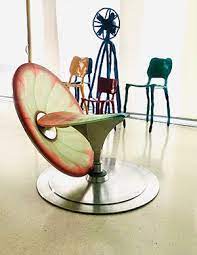
Braschi’s work has been widely adapted across a myriad of disciplines, including the art song cycle, post-dramatic theater, sculpture, photography, short film, and graphic novel, notably Joakim Lindengren’s United States of Banana (2021). Her “art is function” ethos has further catalyzed innovations in industrial design and architecture; a prominent example is Ian Stell’s Giannina chair, a kinetic hybrid that transforms from a chair into a lamp to exist purposefully between typologies. This conceptual framework also anchored the Harvard Graduate School of Design’s urban planning project Urbanismo Ecológico en América Latina [Ecological Urbanism in Latin America] (2019), which employed Braschi’s mixed-genre definitions to theorize the foundations of sustainable design (O’Dwyer 20). While many artists and makers find structural clarity in Braschi’s poetics, there is little consensus among literary critics as to which movement, style, or genre her writing belongs.
Eccentric, strange, bizarre, original, visionary, prophetic, revolutionary, and unclassifiable are the go-to adjectives applied to both Braschi and her lifework. However, in academic terms, Braschi is associated with a range of fields. These include stylistic movements such as postmodern literature and hysterical realism; linguistic and regional categories like Spanglish, McOndo, and Nuyorican poetry; theoretical frameworks spanning postcolonial theory, Latinx philosophy, and transnational studies; and genre-specific discourses on speculative fiction, experimental writing, and post-dramatic theater (Broncano 2023).
Braschi is frequently situated within the foundational Latin American canon alongside Nobel laureates Gabriela Mistral, Pablo Neruda, and Octavio Paz, yet she is equally categorized among the iconoclastic McOndo and Post-Boom novelists—including Alberto Fuguet, Sergio Gómez, Edmundo Paz Soldán, Roberto Bolaño, Luisa Valenzuela, and Diamela Eltit—whose collective project dismantled magical realism. Beyond this regional lens, scholars identify formal affinities between her work and postmodern maximalists such as Don DeLillo and David Foster Wallace, while placing her in dialogue with the radical experimentalism of Kathy Acker, Anne Carson, and Mark Z. Danielewski. This curricular versatility extends into postcolonial studies, in which critics evaluate United States of Banana alongside works by J. M. Coetzee, Maryse Condé, and Salman Rushdie to interrogate the weight of imperial legacies. Within Hispanic American literature, her translanguaging experimentation is often contrasted with the realist leanings of Sandra Cisneros and Junot Díaz, while her Spanglish ruptures are framed as structural manifestations of Gloria Anzaldúa’s Borderlands theories. In the realm of political philosophy, Braschi’s inquiries on sovereignty and liberty are seen to intersect with the discourses of Giorgio Agamben, Jacques Derrida, and Friedrich Nietzsche. Ultimately, whether situated on a syllabus alongside Dante’s epic poetry, Sophoclean tragedy, Margaret Atwood’s speculative fiction, or the Nuyorican verse of Pedro Pietri and Julia de Burgos, Braschi’s writing functions as a quintessential academic disruptor; its linguistic dynamism and prophetic imagination compel a rigorous rethinking of contemporary literary boundaries.
Consequently, critics often survey various schools of thought only to conclude—as the editor of Latin American Literature Today did in a dossier dedicated to her work—that Braschi, like all masters of such an unclassifiable style, “is all these things and none of them at once” (Rioseco 2023). Sergio Gutiérrez Negrón observes that Braschi’s reader—educated after the postmodern heyday—is often “at odds to explain what is happening, how it is allowed to happen, and why—despite all this—it works so well”, noting that one must simply “give in to the excess, to the vivacious audacity of the project, to the sense that something is at stake in every line, even—and especially—the funniest ones” (Negrón 2021). Synthesizing this vast stylistic range, Elidio La Torre Lagares concludes in his study of hyperglossia (excessive writing) that “Braschi is a literary genre in herself” (160).
Braschi’s Early Years in Puerto Rico: From Socialite to Scholar
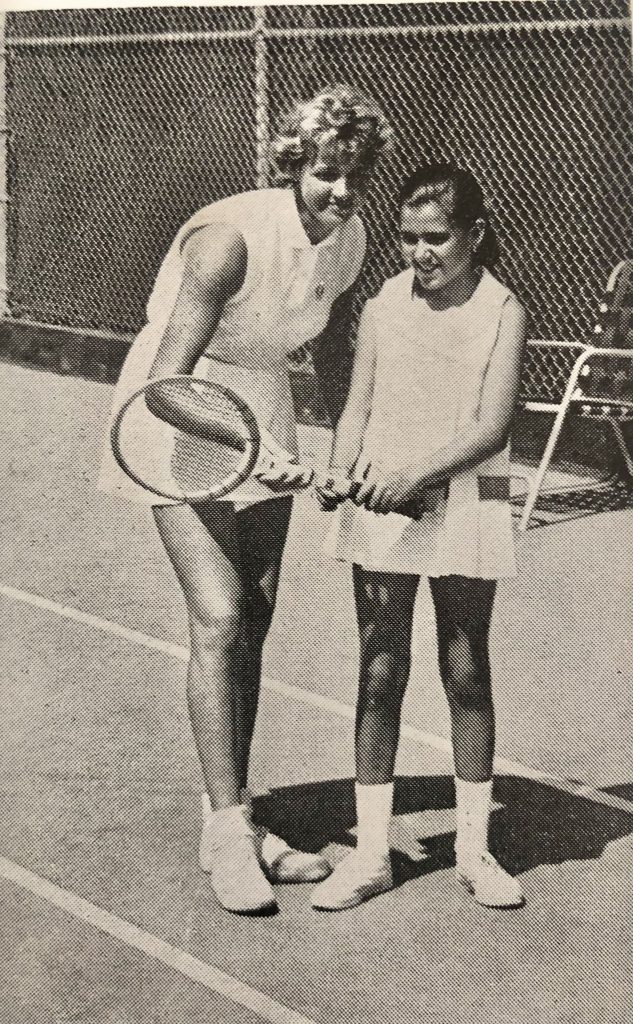
Braschi was born into an affluent, entrepreneurial family in San Juan at the start of the newly established Commonwealth of Puerto Rico that was ratified by the Congress of the United States on 25 July 1952, just months before the poet’s birth on 5 February 1953. Braschi grew up in the hotel resort area of Condado Beach with music, sports, and fashion as early life passions. Known for her fierce discipline, abounding humor and a passion for style, Braschi was a founding member of the Children’s Choir of San Juan, a tennis champion, and a teen model who frequently appeared in the society pages of island news and fashion magazines. She attended the Colegio de las Madres and the Universidad del Sagrado Corazón before pursuing studies abroad in comparative literature and philosophy in Florence, London, Madrid, and Rouen. During her time at the Universidad Complutense in Madrid (1972–1974), she was mentored by Spanish poets such as Claudio Rodríguez, Carlos Bousoño, and Blas de Otero. The defining validation, however, came from Jorge Luis Borges who, upon hearing Braschi recite her first and only poem, offered a verdict that effectively launched her career: “You’ve got something original there. You have it” (Rivera, “El poder” 183).
Academic Career in Spanish Classics: Blueprints for Literary Innovation
Braschi’s scholarship sheds light on a range of Spanish classics across a sweep of literary history, including the Golden Age, Romanticism, and Modernism. With a Ph.D. from the State University of New York, Stony Brook (1980), she taught at Rutgers University, Colgate University, and the City University of New York in the 1980s and 1990s. Her academic writings—on the totalizing poetics of Cervantes, Garcilaso, Machado, Lorca, and Bécquer—chart the fascinations and ambitions of a young writer who will create her own totalizing poetics. She abandoned literary criticism in 1986 to devote full force to her creative practice, acknowledging that her doctoral and postdoctoral research taught her how to write great books. At the age of 24, she published her first academic essay in Cuadernos Hispanoamericanos entitled “Cinco personajes fugaces en el camino de Don Quijote” (“Five Fleeting Characters on Don Quixote’s Path”) which centers on the quixotic ideals: love, poetry, chivalry, liberty, and justice. Braschi stated, “Whether I write in Spanish, Spanglish, or English, and no matter the genre, I always have these quixotic ideals in my heart and in my mind” (Morgado, “Giannina Braschi gana”).
Decolonizing the Mind: Declaration of Puerto Rican Independence
Braschi is an advocate for Puerto Rican independence. An overarching objective of her writing project is to decolonize the mind, the being, the self—and, by extension, create a work of art that allows readers to imagine, through a wholly unique theatrical lens, new possibilities for Puerto Rico and its relationships with the wider Caribbean, Latin America, the United States, and beyond—new conditions, new alliances, and Convivencia. Her poetry underscores that liberty is not an option, but an unalienable human right.
The emotional, cultural, spiritual, and financial tolls of being born and raised in a colony of the United States mark Braschi’s writing in significant and symbolic ways:
Soy boricua. In spite of my family and in spite of my country—I’m writing the process of the Puerto Rican mind—taking it out of context—as a native and a foreigner—expressing it through Spanish, Spanglish, and English—Independencia, Estado Libre Asociado, and Estadidad—from the position of a nation, a colony, and a state—Wishy, Wishy-Washy, and Washy—not as one political party that is parted into piddly parts and partied out. Todos los partidos están partidos y son unos partidos. (Banana 47)
Ultimately, Braschi’s poetics collapses the boundaries between the psychological, the political, and the aesthetic, transforming the restrictions of a colonial condition into an expansive avant-garde territory where art and language serve as catalysts for liberation.
Braschi’s Major Works: Cross-Genre Literature in Spanish, Spanglish, and English
Each of Braschi’s titles is part of one sweeping continuum—an epic series of highly stylized books within books that have shared characters, cross-genre structures, a chorus of anonymous voices speaking on behalf of the masses, a prophet or seer—and a namesake provocateur, Giannina, whose interjections and exclamations provide a humorous thread line. As Sergio Gutiérrez Negrón observes, the contemporary reader is often “at odds to explain what is happening, how it is allowed to happen, and why—despite all this—it works so well” (Negrón 2021).
El imperio de los sueños (1988)
El imperio de los sueños (1988) [Empire of Dreams, 1994) is a collection of six books of poetry and fiction written in Spanish during the 1980s in New York City. The work is organized in three parts: Asalto al tiempo [Assault on Time] (1981), La comedia profana [Profane Comedy] (1985), and Diario íntimo de la soledad [Intimate Diary of Solitude] (1986). American poet Alicia Ostriker hailed Empire of Dreams a masterpiece, praising its relentless intensity and inventiveness. The work cross-dresses poetry in the garb of advertisement, love letter, TV commercial, diary, movie criticism, celebrity confession, literary theory, bastinado, and manifesto (Ostriker ix).
At its core, Empire of Dreams is a high-voltage love letter to New York City, written by a young immigrant electrified by the frenetic energy of her new home. In the midsection, “Pastoral; or the Inquisition of Memories” (1983), Braschi upends the Spanish Golden Age by unleashing a bucolic invasion of the Big Apple. Here, ancient elegies no longer mourn a lost Arcadia; instead, they mobilize a migrant revolution on Fifth Avenue. This radical reclamation—a “reverse colonization” where the marginalized seize the quintessential American skyline—reaches its apotheosis on the city’s iconic landmark:
On the top floor of the Empire State a shepherd has stood up to sing and dance. What a wonderful thing. That New York City has been invaded by so many shepherds. That work has stopped and there is only singing and dancing…. Shepherds have invaded New York. They have conquered New York. They have colonized New York…. Now there is only song. Now there is only dance. Now we do whatever we please. Whatever we please. Whatever we damn well please. (Empire of Dreams 114)
Braschi not only poeticizes the evolution of the Spanish language across historical ages, but also across shifting geographical terrains of the Spanish diaspora. Though the poems are set in New York, there are “allusions to the Quartier Latin, the barrios chinos of Barcelona and Seville, the Borgesian labyrinths of Buenos Aires, San Juan’s colonial architecture, and loci from literatures and societies of the past and present” (Carrión 447). Chilean novelist Carlos Labbé described Braschi’s language as “anti-Spanish colonized by the United States, from the imperial Castilian lexicon of Golden Age poetry that barely conceals the Mozarabic, the Berber, the Saharawi, and the Sephardic, from the Taíno syntax that defiantly survives in street-corner chatter” (Labbé, “Braschian Wave”).
By recasting New York as a theater of liberation for nomadic characters and writing (Loustau 21), Braschi dissolves the borders between the Golden Age and the digital era, effectively propelling the immigrant from the periphery to the vanguard of a new cultural empire (Cruz-Malavé 801).
Yo-Yo Boing! (1998)
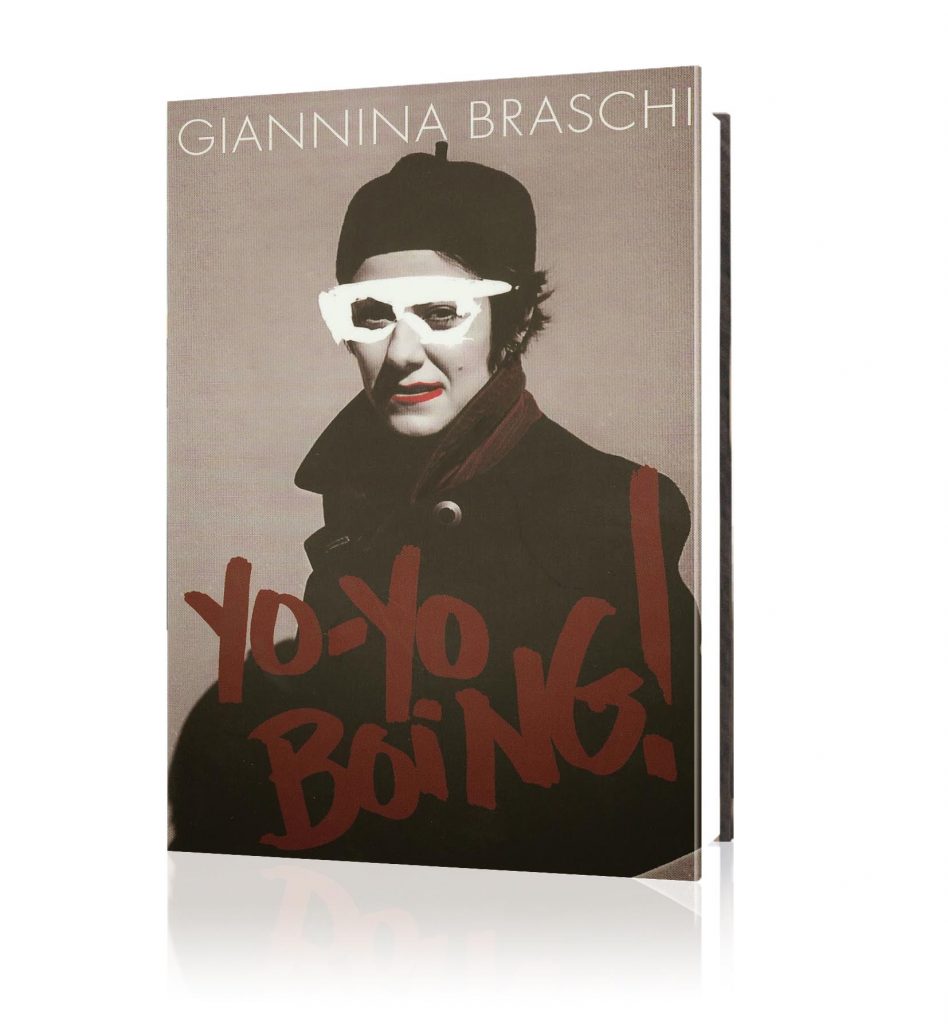
Hailed as the first Spanglish novel, Yo-Yo Boing! (1998) signaled what Maritza Stanchich calls a ”Bilingual Big Bang”—Braschi’s explosion of linguistic boundaries that redefined the American literary landscape (Stanchich 229). Arriving as the United States was en route to becoming one of the largest Spanish-speaking countries in the world, the work’s radical bilingualism unfolds in three parts: “Close-Up”, written entirely in Spanish; “Blow-Up”, in a virtuosic blend of Spanish, Spanglish, and English; and “Black-Out”, returning to Spanish.
Sociolinguist Francisco Moreno-Fernández describes Yo-Yo Boing! as the “perfect illustration of a translingual practice” (60). He argues that the work goes beyond simple code-switching between languages and conjures a liquidity that illustrates how thought and speech flow. While bilingual critics—including Ilan Stavans, Doris Sommer, and Jean Franco—celebrated its translingual mastery, English-only reviewers met the work with friction, considering it an “unabashed assault on the reader” and labeling it both a “literary liberation and a frustrating challenge” (González 106). Braschi fully anticipated that English-only readers would consider the work an affront—and predicted that her work would be widely embraced by a future readership who could “easily decode both languages in order to co-construct the storyworld” (González 106).
If I respected languages like you do, I wouldn’t write at all. El muro de Berlín fue derribado. Why can’t I do the same. Desde la torre de Babel, las lenguas han sido siempre una forma de divorciarnos del resto de la humanidad. Poetry must find ways of breaking distance. I’m not reducing my audience. On the contrary, I’m going to have a bigger audience with the common markets–in Europe–in America. And besides, all languages are dialects that are made to break new grounds. I feel like Dante, Petrarca and Boccaccio, and I even feel like Garcilaso forging a new language. Saludo al nuevo siglo, el siglo del nuevo lenguaje de América, y le digo adiós a la retórica separatista y a los atavismos.
Saluda al sol, araña, no seas rencorosa.
Un beso,
Giannina Braschi (Yo-Yo 163)
Ultimately, Yo-Yo Boing! redefined the Hispanic American canon by elevating Spanglish to a high-art form and establishing translanguaging as a rigorous site of literary innovation (López-Gay 2024).
United States of Banana (2011)
United States of Banana, Braschi’s first work written in English, rewrites “radical politics as high art” by dramatizing the collapse of the Twin Towers as a metaphor for the fall of the American empire (Gonzalez 23). Described by Library Journal as “bizarre but intriguing” philosophical fiction for Nietzsche fans, the text targets a reader who is “heady, creative, and up for a challenging read” (Beck 2011; O’Dwyer 2021).
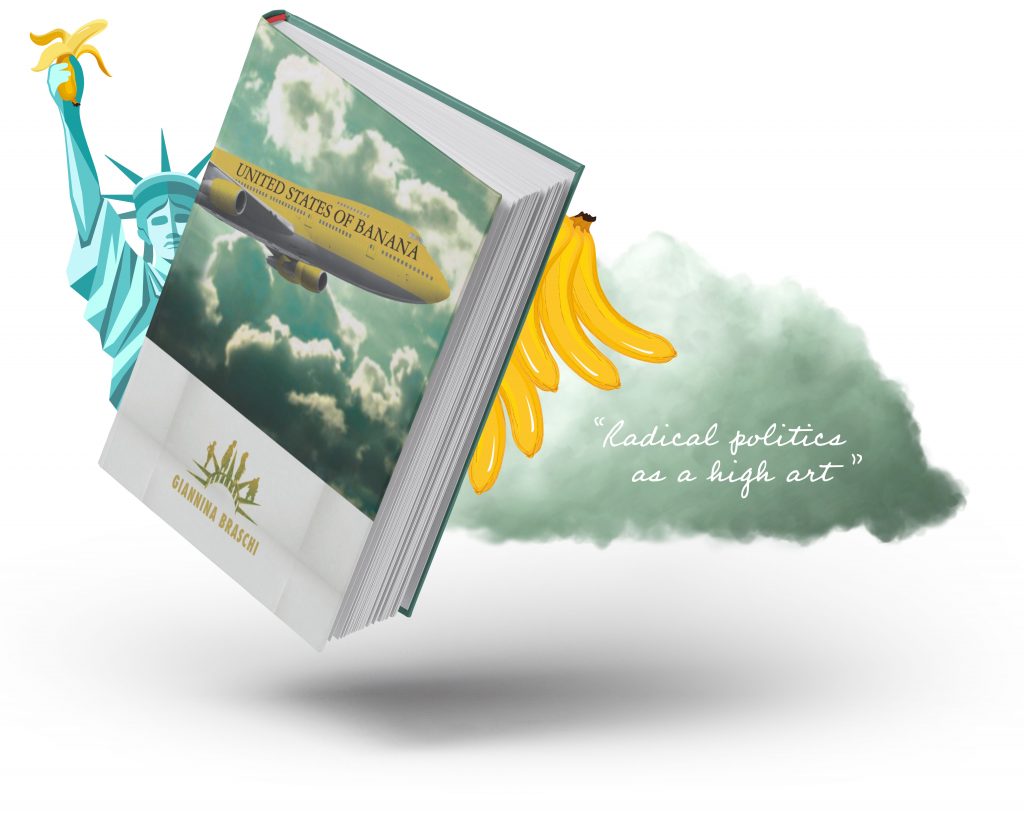
Cultural theorist Hamid Dabashi hails the work as one of the most brilliant postcolonial texts of the 9/11 era, “savagely critical of the predatory capitalism and its ravages in Puerto Rico and around the globe” (Dabashi 65). Opening at “Ground Zero” with a rhythmic series of sardonic meditations on life in the “Darwinist capital of the capitalist world”, the work pivots from ruin to revolution in Part Two (Banana 28). Here, high-levity theater recasts iconic figures from Shakespeare and Calderón de la Barca. In an absurdist coup, the melancholy Hamlet, the prophetic Zarathustra, and the revolutionary Giannina infiltrate the dungeon beneath the skirt of the Statue of Liberty to liberate the Puerto Rican prisoner Segismundo. In a desperate attempt to preserve the crumbling “United States of Banana”, King Basilio and Queen Gertrude plot to co-opt the revolution by offering statehood and American passports to all Latin Americans. Rejecting this “Imperial Pax Banana”, the insurgents wage an existential war of coconuts and philosophy against the empire (Mendoza-de Jesús 141). Giannina negotiates a New World Order with China, the United States’ creditor, by trading a lychee for a quenepa to settle the debt of independence. Through this theater of diplomacy, Braschi compels readers “to rethink what we mean by freedom, what we regard as a right, and what we understand by sovereign power” (Mendoza-de Jesús 153).
Ultimately, United States of Banana serves as “a masterclass on how to romper esquemas” (break with established norms) (Riofrio 32). By casting iconic literary figures alongside a “chorus of the masses”—undocumented immigrants and political prisoners—Braschi marshals a “literary multitude” at the intersection of theater, philosophy, and activism (Perisic 173). The work culminates in a reimagined Symposium where erudite humor peaks: Parmenides eats ice cream on a cloud, Diotima instructs Socrates, and a taxi driver named Hasib teaches Giannina the meaning of gratitude—redefining the Republic as a site where gratitude is the “eradication of envy” and the manifestation of a profound “love for life” (Morgado, “Love for Life”).
PUTINOIKA (2024)
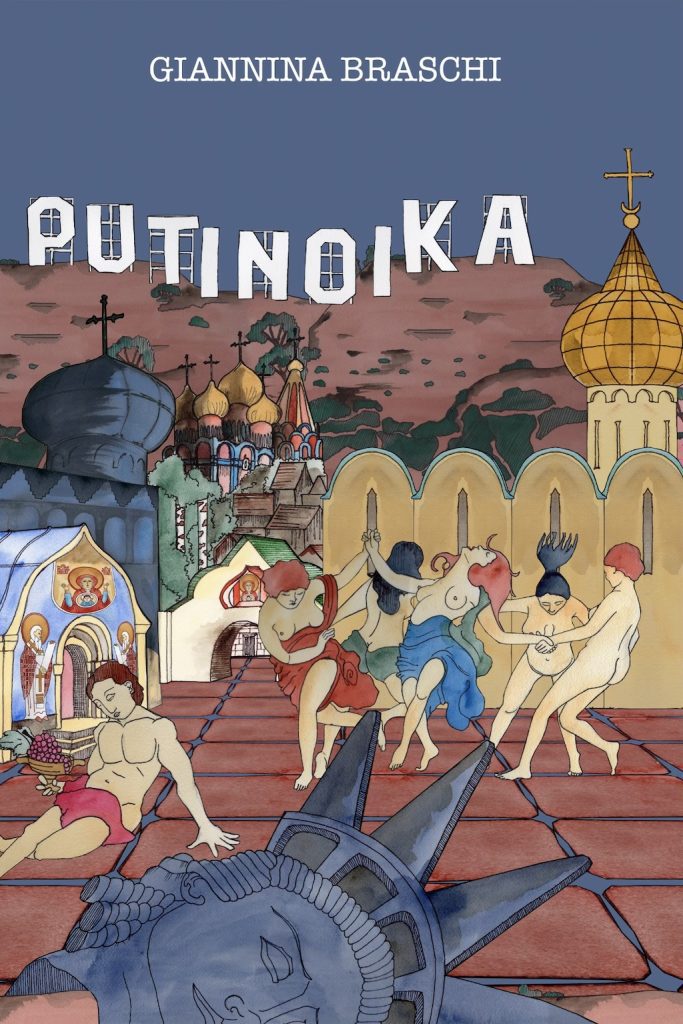
Inspired by the ancient Greek tragedies, PUTINOIKA (2024) is a multi-genre epic about frenzy and plague in the era of Vladimir Putin and Donald Trump. Braschi takes Trump’s America head-on, interrogating its rule of White supremacy, its disdain for immigrants, its response to the COVID-19 pandemic, the loneliness epidemic, tech addictions, election fraud, fake news, and the 2021 January 6 insurrection. She portrays the frenzy of a society-in-crisis that suffers from delusion, punctuating the work with a clarion call for the creation of new genres.
Pulitzer Prize-winning American poet Forrest Gander explained how the collision of global chaos and creative fire is precisely what makes Braschi’s churning imagination so urgent and essential:
In Braschi’s exuberant, upwelling, hilarious and mortifying performances of wonderment, howl, synchronic time, ethical insistence, and linguistic swirl, it’s not unusual to find words such as ‘generosity’ and ‘spirit’ leading, in the same sentence, to ‘welfare,’ ‘radiation,’ and ‘tax deductions.’ If, as in Ezra Pound’s translation of Aristotle, the ‘swift perception of relations’ is truly the ‘hallmark of genius,’ it’s in the brightly lit halls of Braschi’s books where poetry is tested and stamped with such a mark. Like her character, Frenzy, she’s a provocateur who believes in and pledges her fidelity only to ‘everything that exists’.
Forrest Gander (2024)
In a more ironic vein, Mexican playwright and novelist Carmen Boullosa posits that the work “is the best thing that Trump ever gave us” (Boullosa 2025).
The tripartite structure of PUTINOIKA—“Palinode”, “Bacchae”, and “Putinoika”—unleashes a symphony of voices against political and cultural rot. Through “excessive writing”, Braschi captures the frenzy of “unspeakable horrors”, bringing Bacchus, Oedipus, and Antigone into a Menippean circus alongside Putin, Trump (“Pendejo”), and icons like Maria Callas and Greta Thunberg (Hernández 2024). This energy is crystallized in comedic choral arrangements—the Muses of Bacchus, the Agents of Pendejo, and the Putinas of Putin—whose collective registers bridge ancient myth and modern theater. Braschi’s wit acts as a seismic force, dismantling the pomposity of tyrants through a visceral “anti-dystopian” lens (López-Gay 2024). In this arena, hope wins (Guzmán 2024). By pitting intellectual slapstick against high-stakes ruin, Braschi asserts loud and clear that our collective creativity is the only rival force to the state’s capacity for destruction.
Braschi’s Awards and Honors: From Aspiring Poet to Cultural Icon
Within months of the debut of Braschi’s first poetry book Asalto al tiempo (1981), news outlets in Barcelona, Mallorca, San Juan, and Mexico City were swift to praise the young poet’s originality and promise. El Mundo proclaimed the collection “one of the most illuminating documents in recent Puerto Rican poetry” (Martínez-Capó 1981). Braschi went on to receive awards and fellowships from the National Endowment for the Arts, the New York Foundation for the Arts, the Danforth Scholarship, the Ford Foundation, El Diario La Prensa, the Puerto Rican Institute for Culture, Rutgers University, and PEN America, which called Braschi one of the most revolutionary voices in contemporary Latin American literature.
This critical acclaim blossomed into a broader transatlantic dialogue. Braschi’s revolutionary aesthetic—celebrated for its capacity to rouse profound emotions of discovery—has been championed by Latin American masters like Roberto Bolaño, Carmen Boullosa, and Diamela Eltit, as well as European visionaries such as Mircea Cărtărescu and a Nordic vanguard including Ann Jäderlund, Helena Eriksson, Hanna Nordenhök, and Pia Tafdrup. This international recognition, echoed by influential American poets like Forrest Gander, D. Nurkse, and Alicia Ostriker, underscores Braschi’s stature as a vital architect of a new global era of literary innovation.
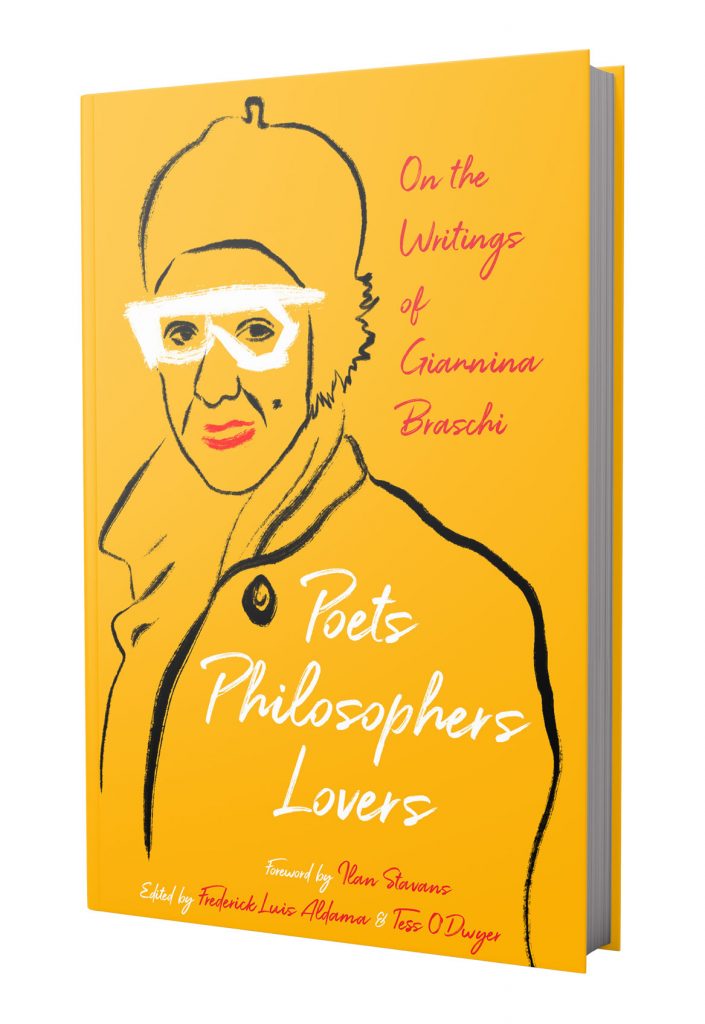
While peer influence grew steadily over decades, it is only after the publication of the landmark academic anthology Poets, Philosophers, Lovers: On the Writings of Giannina Braschi (edited by Frederick Luis Aldama and Tess O’Dwyer, 2020) that the Boricua writer receives a multitude of lifetime honors in close succession. In 2021, Braschi was honored by Cambio16 in Madrid for her life’s work in creating a literature of hope. In 2022, the North American Academy of the Spanish Language (ANLE), the US affiliate of the Royal Spanish Academy (RAE), granted Braschi the Enrique Anderson Imbert National Award for her contributions to the elevation and expansion of Hispanic letters and literatures in the United States in Spanish, Spanglish, and English (Morgado, “Giannina Braschi gana”). In 2024, Braschi was honored by her native City of San Juan for her global impact on Puerto Rican culture. In 2025, she received the Fray Luis de León Medal for Ibero-American Poetry from the City of Salamanca and recognition as Woman of the Year by the former president of Ecuador Rosalía Arteaga Serrano. Upon the publication of PUTINOIKA (2024), the American Studies Association recognized Braschi with the Angela Y. Davis Award, for her lifework in creating a body of writing that illuminates the structural inequities of her native Puerto Rico and American society at large. Braschi “not only reminds us of our individual responsibility to be creative but of our collective creative power—through metaphors, speeches, and revolutionary artforms, but also through direct appeals to government and through public manifestations” (Aldama, “Hispanic Writer”).
In the poet’s own words, “the role of literature is to create what has no specific role—no role at all. To get away from roles. To forge a new language—a new way of looking at the world that has not yet been voiced or recognized” (Braschi, “A Choral Response”). This refusal to be “useful” serves as a radical critique of a culture Braschi compares to a headless chicken—always running, always “doing”, yet never thinking (Garrigós 250). Art’s function, Braschi has argued, is “to be useless. And, in that uselessness, you find the real usefulness of art. It delivers us from the constant doing and returns us to the being” (Braschi, “A Choral Response”). Ultimately, by discarding the utilitarian constraints of entertainment and complacency, Braschi’s work creates a sanctuary for the imagination—one that does not just reflect the human condition but aims to uplift it.
Works Cited
Aldama, Frederick Luis. “Hispanic Writer Giannina Braschi Wins Lifetime Achievement Prize.” FlowerSong Press, 12 Nov. 2024. (Giannina Braschi biography)
—. “Interventions: Reimagining Storytelling with Giannina Braschi.” American Book Review, vol. 46, no. 2, 2025, pp. 59-64.
Aldama, Frederick Luis, and Tess O’Dwyer, editors. Poets, Philosophers, Lovers: On the Writings of Giannina Braschi. University of Pittsburgh Press, 2020. (Giannina Braschi biography)
Boullosa, Carmen. “Las rebeldes: PUTINOIKA.” Rebel Hispanoamerican Women Writers and Artists Series, Macaulay Honors College, 19 Feb. 2025.
Braschi, Giannina. “A Choral Response to Disaster: Mónica Ramón Ríos interviews Giannina Braschi on PUTINOIKA.” Adi Magazine, 19 Aug. 2025.
—. Drömmarnas imperium. Translated by Helena Eriksson and Hanna Nordenhök, Bokförlaget Tranan, 2012.
—. El imperio de los sueños. Anthropos Editorial, 1988.
—. Empire of Dreams. Translated by Tess O’Dwyer, Yale University Press, 1994.
—. PUTINOIKA. FlowerSong Press, 2024.
—. “This House Would Not Judge Yesterday’s Art by Today’s Politics.” The Cambridge Union, 19 July 2025.
—. United States of Banana. Amazon Crossing, 2011.
—. United States of Banana: A Graphic Novel. Illustrated by Joakim Lindengren, edited by Amanda M. Smith and Amy Sheeran, Mad Creek Books, 2021.
—. Yo-Yo Boing! Latin American Literary Review Press, 1998.
Broncano, Manuel. “Giannina Braschi’s Genealogy.” Latin American Literature Today, no. 28, Dec. 2023. (Giannina Braschi biography)
Carrión, María M. “Geography, (M)Other Tongues and the Role of Translation in Giannina Braschi’s El imperio de los sueños.” Studies in Twentieth Century Literature, vol. 20, no. 1, 1996, pp. 111-28.
Cruz-Malavé, Arnaldo. “‘Under the Skirt of Liberty’: Giannina Braschi Rewrites Empire.” American Quarterly, vol. 66, no. 3, 2014, pp. 801-29.
Dabashi, Hamid. “On Nations without Borders.” Global Middle East: Into the Twenty-First Century, edited by Asef Bayat and Linda Herrera, University of California Press, 2021, pp. 60-70.
Gander, Forrest. “Featured Fall Books: PUTINOIKA by Giannina Braschi.” Poets.org, Academy of American Poets, Nov. 2024.
Garrigós, Cristina. “Postmodernist Latinx Literature in the 21st Century? The Writings of Giannina Braschi.” American Studies After Postmodernism, edited by Theodora Tsimpouki et al., Springer Nature, 2023, pp. 247-64.
Gonzalez, Madelena. “United States of Banana (2011), Elizabeth Costello (2003), and Fury (2001): Portrait of the Writer as ‘Bad Subject’ of Globalisation.” Études Britanniques Contemporaines, no. 46, 2014.
González, Christopher. “Translingual Minds, Narrative Encounters: Reading Challenges in Piri Thomas’s Down These Mean Streets and Giannina Braschi’s Yo-Yo Boing!” Permissible Narratives: The Promise of Latino/a Literature, Ohio State University Press, 2017.
Gutiérrez Negrón, Sergio. Review of Poets, Philosophers, Lovers: On the Writings of Giannina Braschi, edited by Frederick Luis Aldama and Tess O’Dwyer. World Literature Today, vol. 95, no. 2, Summer 2021. (Giannina Braschi biography)
Guzmán, Sandra. “Give me more Putinas, por favor: A Conversation with Giannina Braschi.” World Literature Today, 24 Sep. 2024.
Hernández, Carmen Dolores. “PUTINOIKA: la sátira y el furor de Giannina Braschi frente a la tragedia moderna.” El Nuevo Día, 17 Nov. 2024.
Kuebler, Carolyn. Review of Empire of Dreams, by Giannina Braschi. Review of Contemporary Fiction, vol. 15, no. 1, 1995, p. 159.
La Torre Lagares, Elidio. “The Spiral That Explodes: Hyperglossia, Non-Space, and the Hauntology of Colonial Identity.” Hyperglossia and the Novel: The Production of (Non) Space, Routledge, 2026, pp. 160-90.
Labbé, Carlos. “The Braschian Wave: All the Solitude of an Empire in a Bottle Thrown into the Sea.” World Literature Today, 29 June 2023.
—. “PUTINOIKA by Giannina Braschi.” World Literature Today, May 2025.
Library of Congress. “Giannina Braschi: 2012 National Book Festival.” 22 Sep. 2012, https://hdl.loc.gov/loc.gdc/gdcwebcasts.nbf2012_gbraschi. (Giannina Braschi biography)
López-Gay, Patricia. “Alto y claro: La narrativa reciente de Giannina Braschi entre otros discursos antidistópicos.” Nueva Revista, 21 June 2024.
Loustau, Laura Rosa. Cuerpos errantes: literatura latina y latinoamericana en Estados Unidos. Rosario: Beatriz Viterbo Editora, 2002.
Martínez-Capó, Juan. “Asalto al tiempo por Giannina Braschi.” El Mundo, 1981.
Mendoza-de Jesús, Ronald. “Free-dom: United States of Banana and the Limits of Sovereignty.” Poets, Philosophers, Lovers: On the Writings of Giannina Braschi, edited by Frederick Luis Aldama and Tess O’Dwyer, University of Pittsburgh Press, 2020, pp. 117-29.
Moreno-Fernández, Francisco. “Yo-Yo Boing! Or Literature as a Translingual Practice.” Poets, Philosophers, Lovers: On the Writings of Giannina Braschi, edited by Frederick Luis Aldama and Tess O’Dwyer, University of Pittsburgh Press, 2020, pp. 54-62.
Morgado, Nuria. “Giannina Braschi gana el Premio Nacional Enrique Anderson Imbert 2022 de la ANLE.” Academia Norteamericana de la Lengua Española, 29 Apr. 2022. (Giannina Braschi biography)
—. “Love for Life: Notes on Giannina Braschi and United States of Banana.” Latin American Literature Today, no. 28, Dec. 2023. (Giannina Braschi biography)
O’Dwyer, Tess. “Popping Up in Pop Culture and Other Unlikely Spaces: Latinx Author Giannina Braschi Crosses Over.” World Literature Today, vol. 95, no. 2, 2021, pp. 19-21.
Ostriker, Alicia. Introduction. Empire of Dreams by Giannina Braschi, translated by Tess O’Dwyer, Yale University Press, 1994, pp. vii–xxi. (Giannina Braschi biography)
Paldao, Carlos E. “Giannina Braschi, Premio Nacional Enrique Anderson Imbert.” Revista de la Academia Norteamericana de la Lengua Española, vol. 10, no. 19-20, 2022, pp. 19-20. (Giannina Braschi biography)
Perisic, Alexandra. “Atlantic Undercommons.” Precarious Crossings: Immigration, Neoliberalism, and the Atlantic, Ohio State University Press, 2019, pp. 152-73.
Riofrio, John. “Rompiendo esquemas: Catastrophic Bravery in United States of Banana.” Poets, Philosophers, Lovers: On the Writings of Giannina Braschi, edited by Frederick Luis Aldama and Tess O’Dwyer, University of Pittsburgh Press, 2020, pp. 32-42.
Rioseco, Marcelo, and Alfred Dixon, editors. “Editor’s Note: December 2023.” Latin American Literature Today, no. 28, Dec. 2023. (Giannina Braschi biography)
Rivera, Carmen Haydée. “El poder de la palabra y la experiencia transnacional: una entrevista con Giannina Braschi.” Op. Cit. Revista del Centro de Investigaciones Históricas, no. 20, 2012, pp. 181-201.
—, editor. Diasporic Journeys: Interviews with Puerto Rican Writers in the United States. Centro Press, 2023. (Giannina Braschi biography)
Stanchich, Maritza. “Giannina Braschi.” The Encyclopedia of Contemporary American Fiction 1980–2020, edited by Patrick O’Donnell, Stephen J. Burn, and Lesley Wheeler, John Wiley & Sons, 2022. (Giannina Braschi biography)
5345 words: Giannina Braschi biography.
Citation: O’Dwyer, Tess. “Giannina Braschi”. The Literary Encyclopedia. First published 19 March 2026 [https://www.litencyc.com/php/speople.php?rec=true&UID=13027, accessed 25 March 2026.]
Last updated: August 2026