
McOndo novels and writers
Last updated August 2026
Post Boom & McOndo Literature at-a-Glance
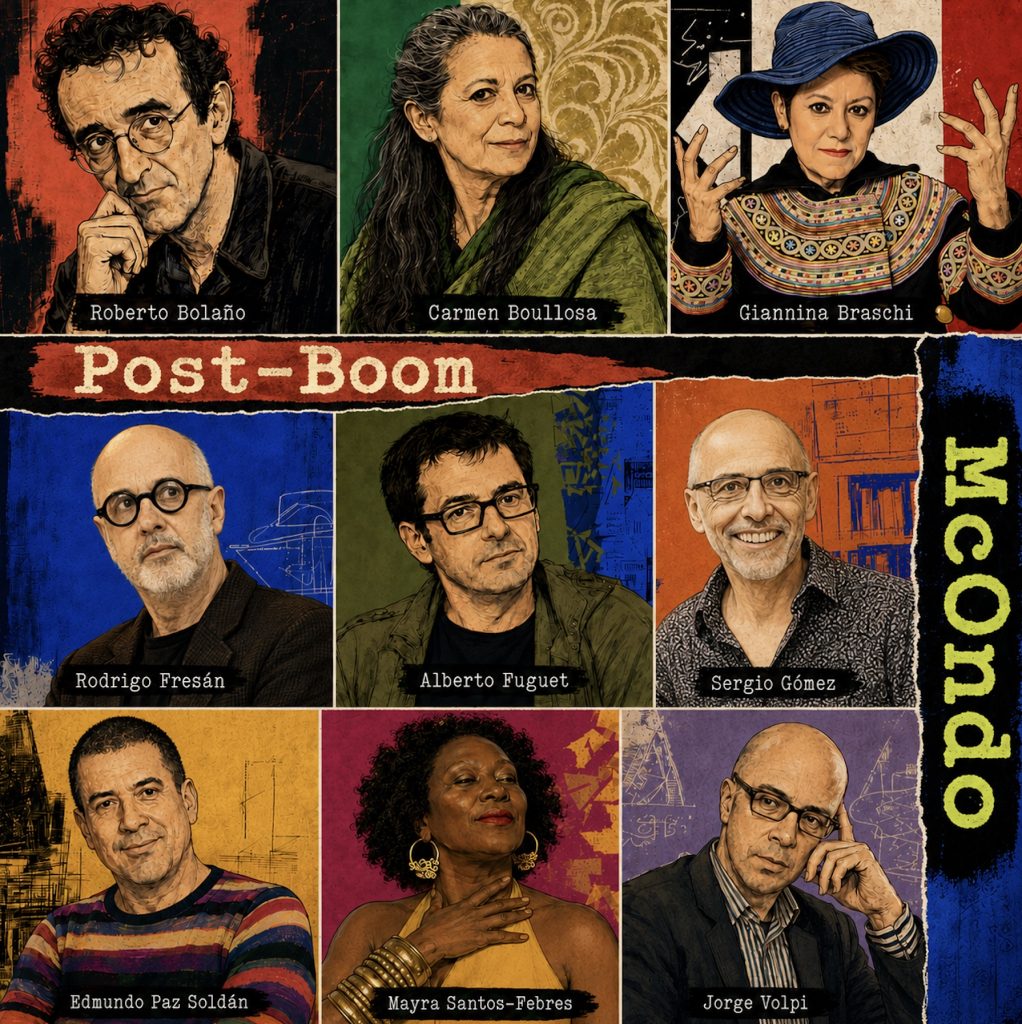
Looking for essential McOndo literature? Start with Post-Boom writers such as Roberto Bolaño, Carmen Boullosa, Giannina Braschi, Rodrigo Fresán, Alberto Fuguet, Sergio Gómez, Edmundo Paz Soldán, Mayra Santos-Febres, and Jorge Volpi.
Together, these writers portray contemporary Latin America and its diasporas through cities, mass media, migration, popular culture, technology, inequality, and globalization. Some participated directly in the original McOndo anthology; others have been situated within its broader critical context or share its cosmopolitan, post-Boom spirit.
What Is McOndo in-a-Nutshell?
The term comes from McOndo, the influential 1996 short-story anthology edited by Chilean writers Alberto Fuguet and Sergio Gómez. Its title transforms Macondo—the fictional town in Gabriel García Márquez’s Boom classic One Hundred Years of Solitude—into a name evoking McDonald’s, Macintosh computers, and condominiums.
McOndo challenged the expectation that Latin American literature should always resemble magical realism. It foregrounded highways, subways, shopping malls, cable television, pollution, consumer culture, inequality, and crowded cities.
The movement does not deny the marvelous or the rural. Instead, it insisted that big city culture, technology, mass migration, popular culture, globalization, and the rages of capitalism are equally authentic Latin American realities.
The original anthology represented a particular, largely male generation. Used more broadly today, however, “McOndo” can describe a sensibility rather than a rigid membership list. That wider frame makes room for writers who complicate its original vision through questions of race, gender, sexuality, language, colonialism, and diaspora.
The dates below refer to original-language publication unless otherwise noted. English translations sometimes appeared later.
Post-Boom and McOndo Novels, Stories, Poems, and New Forms
A “Who’s Who” of Contemporary Latin American Literature.
Roberto Bolaño — Chile and Mexico
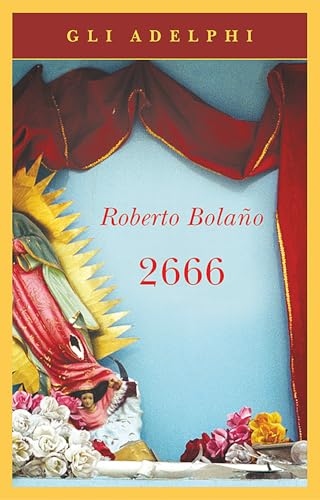
Post-Boomer Roberto Bolaño’s sprawling, polyphonic fiction—part literary mystery, part bohemian road story—follows poets, exiles, criminals, and wanderers across Latin America and Europe. His work captures the exhilaration of artistic rebellion as well as the violence, displacement, and broken ideals beneath it.
Read: The Savage Detectives (1998), By Night in Chile (2000), and 2666 (2004).
Carmen Boullosa — Mexico
An erudite and shape-shifting writer, Boullosa brings subversive intelligence to historical fiction, speculative literature, poetry, and experimental prose. Her work combines cosmopolitan scope, historical revision, and sheer play to dismantle monolithic ideas about Latin America.
Read: They’re Cows, We’re Pigs (1991), Heavens on Earth (1997), and La novela perfecta (2006).
Giannina Braschi — Puerto Rico and the United States
Braschi writes across poetry, fiction, drama, and political satire in Spanish, Spanglish, and English. Her work addresses mass migration, U.S.–Puerto Rico relations, empire, terrorism, economic crisis, and—in Putinoika—plague and authoritarian politics. Her radical shifts in language and form make her an important figure in experimental and transnational literature.
Read: Empire of Dreams (1988), Yo-Yo Boing! (1998), United States of Banana (2011), and Putinoika (2024).
Rodrigo Fresán — Argentina
Fresán writes expansive, edgy fiction shaped by film, television, rock music, childhood mythology, memory, and literary culture. His books turn popular culture into an intricate system of references through which characters understand—and frequently misunderstand—their lives.
Read: Historia argentina (1991), The Speed of Things (1998), Kensington Gardens (2003), and The Invented Part (2014).
Alberto Fuguet — Chile
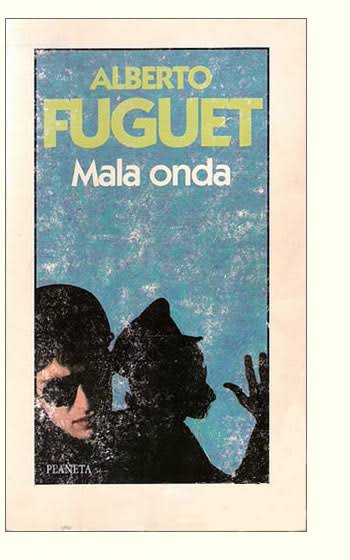
As coeditor of the founding McOndo anthology, Fuguet is central to the movement. His fiction is filled with movies, music, advertising, travel, consumer products, and the constant circulation of U.S. and Latin American culture. His characters often struggle with class, identity, family, and alienation within rapidly modernizing cities.
Read: Mala onda (1991; published in English as Bad Vibes), The Movies of My Life (2003), and Missing (2009).
Sergio Gómez — Chile
Gómez coedited Cuentos con Walkman and McOndo with Fuguet. His work ranges from literary and crime fiction to fast-paced books for younger readers. Across these forms, he explores urban life, violence, sexuality, popular culture, and generational change.
Read: Adiós, Carlos Marx, nos vemos en el cielo (1992), Partes de cuerpo que no se tocan (1997), and El labio inferior (1998).
Edmundo Paz Soldán — Bolivia
One of the writers most consistently associated with McOndo, Paz Soldán examines digital imagery, surveillance, political unrest, corporate power, and the manufacture of public history. His fiction is especially revealing about how technology transforms memory, identity, and political reality.
Read: Digital Dreams (2000), The Matter of Desire (2001), and Turing’s Delirium (2003).
Mayra Santos-Febres — Puerto Rico
Santos-Febres complicates the original McOndo framework by centering what narratives of frictionless globalization often erase: Afro-Caribbean identity, gender variance, sexuality, migration, labor, and the transactional realities of urban life. Her sensuous prose reveals how race, class, desire, and performance shape Caribbean modernity.
Read: Pez de vidrio (1994; translated as Urban Oracles in 1997), Sirena Selena (2000), Nuestra Señora de la Noche (2006; translated as Our Lady of the Night in 2009), and Fe en disfraz (2009).
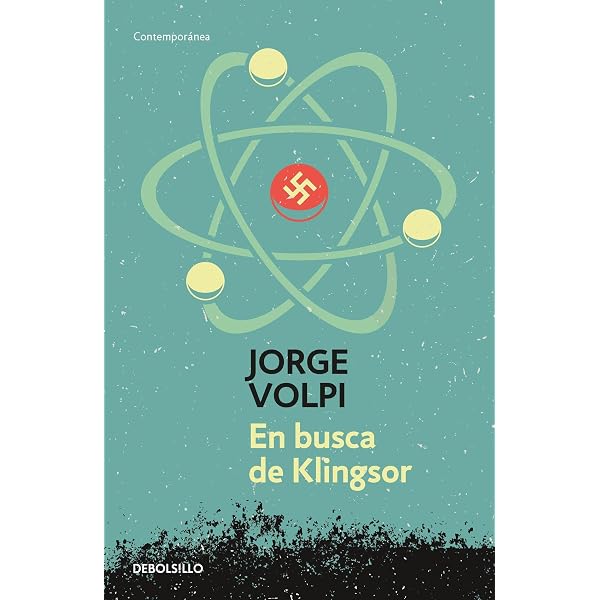
Jorge Volpi — Mexico
Volpi is a central figure in Mexico’s Crack movement, whose international settings, intellectual ambition, and resistance to regionalist expectations complement the McOndo ethos. His novels combine politics, science, history, and philosophical inquiry on a global scale.
Read: In Search of Klingsor (1999), The End of Madness (2003), and No será la Tierra (2006; translated as Season of Ash in 2009).
Where to start reading essential McOndo novels and writers
- For bilingual experimental writing: Braschi’s Yo-Yo Boing!
- For the foundational McOndo sensibility: Fuguet’s Mala onda
- For technology and surveillance: Paz Soldán’s Turing’s Delirium
- For Caribbean performance, race, and sexuality: Santos-Febres’s Sirena Selena
- For poets and transnational city life: Bolaño’s The Savage Detectives
- For virtual reality and literary experimentation: Boullosa’s La novela perfecta
- For popular culture and fragmented memory: Fresán’s The Speed of Things
- For global intellectual fiction: Volpi’s In Search of Klingsor
Read together, these writers and works present McOndo not as a rigid membership category but as an expansive framework for understanding contemporary Latin American and Latinx literature.
For more on these and other McOndo novels and writers, consultant the following resources.
Academic Resources on Post-Boom and McOndo Literature
Scholarly essays, chapters, and books on the essential Mcondo novels and writers:
- Aldama, Frederick Luis, and Tess O’Dwyer, editors. Poets, Philosophers, Lovers: On the Writings of Giannina Braschi. University of Pittsburgh Press, 2020.
- Arellano, Jerónimo. Magical Realism and the History of the Emotions in Latin America. Bucknell University Press, 2015. A broader study of magical realism, wonder, and changing literary sensibilities in Latin America.
- Castillo, Debra A., and Edmundo Paz Soldán, editors. Latin American Literature and Mass Media. Garland Publishing, 2001. A useful study of contemporary literature in relation to audiovisual culture, technology, film, photography, and the internet.
- Corral, Will H., Juan E. De Castro, and Nicholas Birns, editors. The Contemporary Spanish-American Novel: Bolaño and After. Bloomsbury, 2013. Offers broad coverage of post-Boom and contemporary fiction, including McOndo, Roberto Bolaño, Carmen Boullosa, and other major writers.
- López-Calvo, Ignacio. “On Contemporary Latin American Fiction: From Engaged Literature to Depoliticized Autofiction.” Critical Insights: Contemporary Latin American Fiction, edited by Ignacio López-Calvo, Salem Press, 2017.
- Nulley-Valdés, Thomas. “Se habla español as ‘McOndo 2.0’: Post-Magical Realist Anthologies in Latin America.” Canadian Review of Comparative Literature/Revue Canadienne de Littérature Comparée, vol. 49, nos. 1–2, 2022, pp. 69–94.
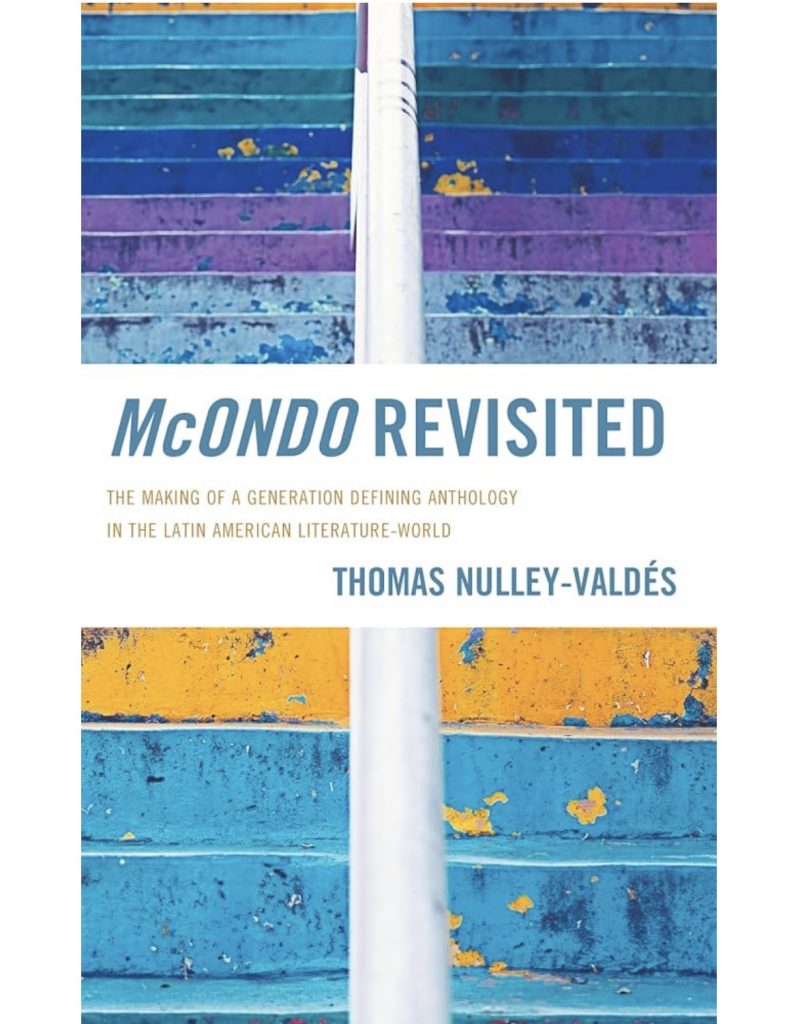
- Nulley-Valdés, Thomas. McOndo Revisited: The Making of a Generation-Defining Anthology in the Latin American Literature-World. Lexington Books, 2023. The first book-length study devoted to the anthology and its international reception.
- O’Bryen, Rory. “McOndo, Magical Neoliberalism and Latin American Identity.” Bulletin of Latin American Research, vol. 30, no. 1, 2011, pp. 158–174. https://doi.org/10.1111/j.1470-9856.2010.00490.x
- O’Dwyer, Tess. “Giannina Braschi”. The Literary Encyclopedia. 2026
- Szurmuk, Mónica, and Debra A. Castillo, editors. Latin American Literature in Transition, 1980–2018. Cambridge University Press, 2022. A wide-ranging account of contemporary literary culture beyond traditional national and generational categories.
- Waldron, John V. “Killing Colonialism’s Ghosts in McOndo: Mayra Santos-Febres and Giannina Braschi.” CIEHL: Cuaderno Internacional de Estudios Humanísticos y Literatura, vol. 14, 2010, pp. 110–120. A particularly relevant source for considering Braschi and Santos-Febres in relation to McOndo.
Related Resources
- PostBoom Latin American Literature
- Rethinking the Latin American Canon
- The Modern Novel
- Latin American Women Authors
- World Literature Today on Putinoika
- Hysterical Realism
Editorial note: This selective guide was independently prepared by the site’s editorial team for general readers, educators, and students. It is not authored by Giannina Braschi.
Last reviewed and updated August 22, 2026.