
American Feminist Epics in the Age of Disaster
What happens to the epic when the solitary male hero gives way to women, migrants, political prisoners, damaged landscapes, and collective voices? American feminist epics revise inherited forms to confront environmental catastrophe, colonialism, war, displacement, racial violence, and the struggle for linguistic and political freedom.
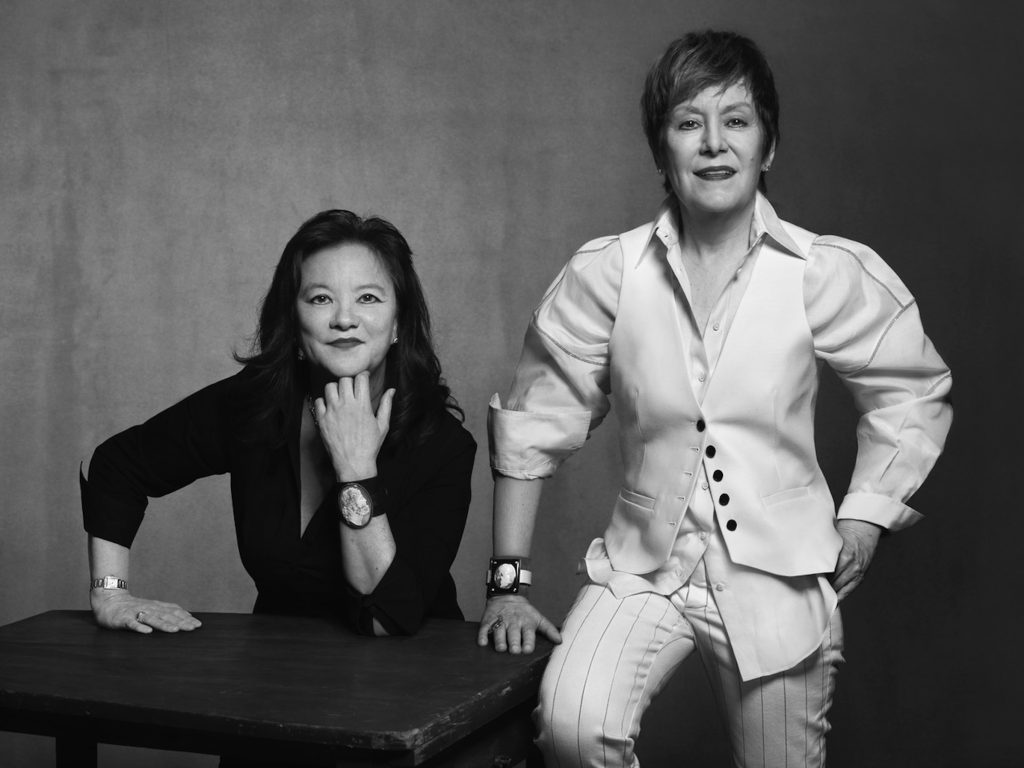
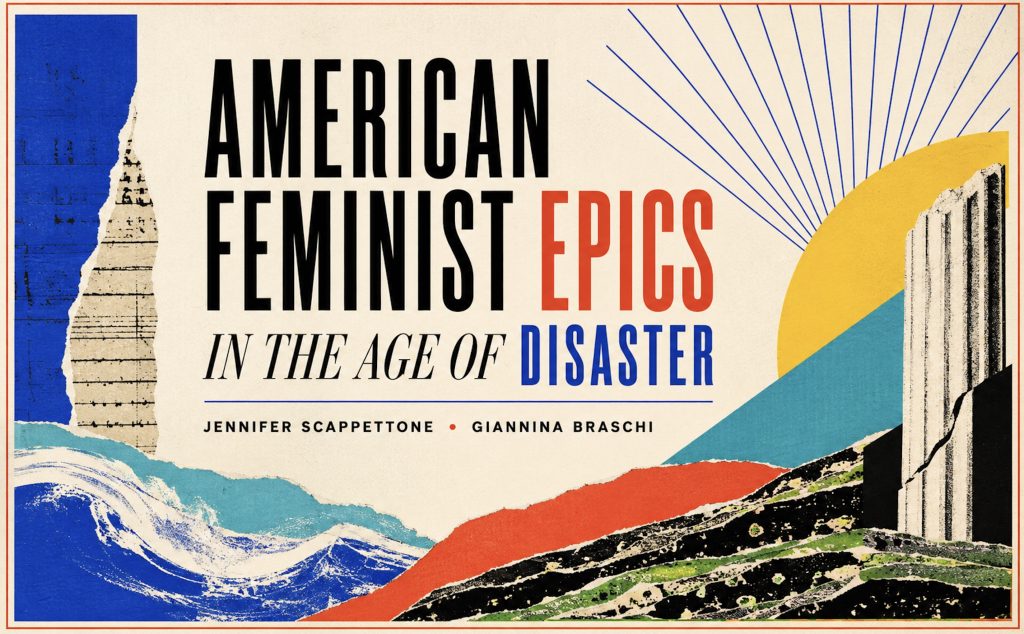
These questions shaped American Feminist Epics in the Age of Disaster, the Seventh International Seminar on Modern Anglo-American Poetry in Translation at the University of Udine. Directed by Professor Daniela Daniele, the 2023 seminar centered on the experimental writing of Jennifer Scappettone and Giannina Braschi, with translator Tess O’Dwyer participating in its exploration of epic literature across languages.
The seminar belongs to a larger history of American long poems and epic experiments—from Walt Whitman, H.D., William Carlos Williams, and Gwendolyn Brooks to Alice Notley and Derek Walcott. For that broader literary lineage, explore this companion guide to American epic poems.
International Seminar on Anglo-American Poetry in Translation
University: Università degli Studi di Udine
Dates: November 7–December 9, 2023
Director: Professor Daniela Daniele
Featured writers: Jennifer Scappettone and Giannina Braschi
Translator and seminar participant: Tess O’Dwyer
Program: American Feminist Epics in the Age of Disaster
The international seminar combined literary criticism, translation workshops, lectures, performance, visual art, and public readings. Its title positioned the feminist epic not simply as a long poem but as a form capable of absorbing the fragments and disasters of contemporary life.
What Makes an Epic Feminist?
Traditional epics often celebrate conquest, warfare, nation-building, and the heroic journey of an exceptional man. Feminist epics revise that inheritance. They may replace conquest with survival, the single hero with a chorus, and national triumph with the testimony of people and landscapes damaged by power.
Their methods include:
- Revising classical myths from the perspectives of women and other excluded figures
- Combining poetry with theater, documentary evidence, archives, translation, and visual art
- Treating environmental destruction, colonialism, slavery, migration, and political violence as epic subjects
- Moving among languages and resisting ideas of linguistic purity
- Transforming fragments, waste, interruption, and displacement into formal principles
- Reimagining heroism as endurance, collective action, liberation, or care
In the age of disaster, epic scale no longer requires a victorious empire. It may instead reveal what empire leaves behind.
Jennifer Scappettone: Environmental Disaster and the Epic of Detritus
Jennifer Scappettone is a poet, translator, scholar, and cross-media artist whose work moves among documentary poetry, book arts, performance, visual collage, environmental history, and choral sound. She teaches literature, creative writing, gender studies, and environmental humanities at the University of Chicago.
Her cross-media documentary poem The Republic of Exit 43: Outtakes & Scores from an Archaeology and Pop-Up Opera of the Corporate Dump excavates the hazardous-waste sites located near her childhood home. Legal records, contaminated landscapes, industrial materials, mythic figures, corporate language, and pop-up choruses form what the author calls a verbal and visual archaeology of the dump.
The work converts discarded matter into historical evidence. Its fragments expose the concealed environmental and human costs of postwar industry, deregulation, extraction, and real-estate development. Eurydice, Orpheus, sirens, corporate executives, chemical compounds, machines, and damaged communities inhabit the same unstable field.
At Udine, Scappettone’s lecture, “Murky Verges and Gatherings of Fragments: Detritus of the Epic in Feminist Poetry of the North American Continent,” examined how feminist poets construct epic form from remnants rather than monuments.
Learn more about The Republic of Exit 43 and Scappettone’s work in ecopoetics, translation, and cross-media performance.
Giannina Braschi: Epic Invention and Political Liberation
Giannina Braschi creates mixed-genre epics in Spanish, Spanglish, and English. Her writing moves among poetry, fiction, theater, philosophy, manifesto, musical structure, and political satire.
Empire of Dreams transforms New York City into a mythic territory invaded by shepherds, magicians, clowns, witches, artists, and other unruly figures. Its “Pastoral” culminates in a symbolic takeover of Fifth Avenue during the Puerto Rican Day Parade. Work stops; singing and dancing replace commerce; immigrants seize the monuments of the city.
Yo-Yo Boing! develops a polyphonic epic of migration, bilingualism, and cultural argument. Its shifting conversations resist linguistic purity and turn code-switching into a form of intellectual and comic abundance.
United States of Banana confronts post-9/11 American culture through political prisoners, mass incarceration, border control, rising nationalism, and Puerto Rico’s colonial condition. Hamlet, Zarathustra, and Giannina descend into the dungeon beneath the Statue of Liberty’s skirt to liberate Segismundo. His freedom produces a declaration of Puerto Rican independence and a new configuration of the Americas.
At Udine, the author’s lecture “To Create a Genre” considered literary form as an act of transformation rather than a fixed category. The seminar also featured translation workshops and the presentation of an illustrated Italian edition of Yo-Yo Boing!.
Seminar Highlights
- Daniela Daniele introduced “American Feminist Epics in the Age of Disaster.”
- Jennifer Scappettone delivered “Murky Verges and Gatherings of Fragments: Detritus of the Epic in Feminist Poetry of the North American Continent.”
- Translation workshops examined texts by Scappettone and Braschi.
- Scappettone lectured on plural voices, xenoglossia, and global English in poetry of the United States.
- Braschi presented “To Create a Genre.”
- Anna Scannavini presented the illustrated Italian edition of Yo-Yo Boing! from Campanotto Editore.
- Daniele Pomilio presented visual work inspired by Leonardo da Vinci’s drawing A Deluge.
- Giannina Braschi and Tess O’Dwyer gave a bilingual reading at Il Museo del Louvre in Rome.
The seminar treated translation as more than the transfer of meaning between languages. Translation became a method of testing poetic form, staging multiple voices, and carrying experimental American writing into new cultural settings.
Daniela Daniele, Seminar Director
Daniela Daniele, Ph.D., is an American studies scholar at the University of Udine whose research encompasses experimental American writing, women’s literature, urban modernity, and performance. She is the author of Città senza mappa: Paesaggi urbani e racconto postmoderno in America, The Woman of the Crowd: Urban Displacement and Failed Encounters in Surrealist and Postmodern Writing, and Scrittori e finzioni d’America. She also edited Undici settembre: Contro-narrazioni americane, an anthology of American responses to 9/11 that included writing by Toni Morrison, Don DeLillo, David Foster Wallace, Jonathan Franzen, Paul Auster, Grace Paley, Patti Smith, and Giannina Braschi. In the anthology Poets, Philosophers, Lovers, Daniele contributed the essay “Gamifying World Literature: Giannina Braschi’s United States of Banana,” which examines Braschi’s playful reinvention of literary tradition and her critique of US imperialism. Daniele directed the Seventh International Seminar on Modern Anglo-American Poetry in Translation at Udine.
Selected Feminist Epics and Epic-Scale Works of the Americas
The works below extend the seminar’s inquiry across periods, genres, and geographies. Except for Jennifer Scappettone and Giannina Braschi, the following authors were not subjects of the University of Udine seminar.
Sor Juana Inés de la Cruz, Primero sueño (1692)
This philosophical dream vision follows the soul’s attempt to comprehend the universe. Sor Juana transforms intellectual inquiry into a cosmic journey while asserting a woman’s authority to pursue knowledge in colonial Mexico.
Muriel Rukeyser, The Book of the Dead (1938)
This documentary poem investigates the Hawk’s Nest Tunnel disaster in West Virginia, where workers—many of them Black migrants—were exposed to lethal silica dust. Testimony, statistics, lyric poetry, photographs, and legal evidence create an epic of industrial catastrophe and suppressed history.
Gwendolyn Brooks, Annie Allen (1949)
The sequence known as “The Anniad” uses mock-heroic conventions to chronicle the aspirations, marriage, disappointments, and developing consciousness of a Black woman in Chicago. Brooks redirects epic attention from warfare and conquest to race, gender, domestic life, and urban experience.
H.D., Helen in Egypt (1961)
H.D. rewrites the Trojan War around Helen’s consciousness. Myth becomes a site of psychological, spiritual, and feminist revision as Helen questions the stories that made her both an emblem of beauty and the alleged cause of war.
Gwendolyn MacEwen, The T.E. Lawrence Poems (1982)
The Canadian poet dismantles the heroic legend of Lawrence of Arabia through dramatic voices, historical fragments, psychological inquiry, and skepticism about empire.
Toni Morrison, Beloved (1987)
Morrison’s epic-scale novel confronts the national trauma of slavery through memory, haunting, motherhood, and the struggle to reclaim a self after enslavement. The supernatural does not obscure history; it reveals how history remains alive within the body and home.
Giannina Braschi, Empire of Dreams (1988)
This postmodern epic transforms New York into a stage for immigration, artistic revolt, linguistic invention, and comic insurrection. The work crosses poetry, prose, theater, pastoral, and manifesto.
Gioconda Belli, The Inhabited Woman (1988)
The Nicaraguan novel connects a modern woman’s participation in revolutionary resistance with the presence of an Indigenous woman who fought Spanish conquest. Personal transformation, political struggle, and ancestral memory occupy the same narrative.
Leslie Marmon Silko, Almanac of the Dead (1991)
Silko’s sprawling prose epic moves across the Americas through Indigenous prophecy, colonial history, environmental destruction, migration, capitalism, and resistance. Its many characters and narrative lines reject the national border as the limit of American history.
Alice Notley, The Descent of Alette (1996)
Notley reimagines the epic descent into the underworld through a female protagonist traveling across a dark subway system. Alette confronts patriarchal power and seeks collective liberation rather than personal conquest.
Jennifer Scappettone, The Republic of Exit 43 (2016)
Fragments, archives, landfill debris, legal disputes, mythic voices, and performance scores form an environmental epic of toxic inheritance. The damaged landscape becomes both archive and protagonist.
Feminist Epics Across Wider Traditions
Enheduanna, The Exaltation of Inanna (c. 23rd century BCE)
The earliest named author in literary history writes of divine power, political exile, humiliation, and restoration. Her hymn to Inanna establishes an ancient precedent for a woman speaking with religious, poetic, and political authority.
Margherita Sarrocchi, La Scanderbeide (1606; expanded edition 1623)
Sarrocchi entered the male-dominated tradition of the military epic with a learned poem about the Albanian commander Scanderbeg’s resistance to Ottoman expansion. Its authorship challenged assumptions about women’s participation in classical and martial literary forms.
Elizabeth Barrett Browning, Aurora Leigh (1856)
This book-length verse novel follows a woman’s development as a poet. Barrett Browning places female artistic ambition, education, labor, social inequality, and love within the scale of the nineteenth-century epic.
Maryse Condé, Segu (1984–85)
Condé’s historical novels follow generations of a Bambara family through warfare, slavery, religious conflict, colonial expansion, and the transformations of West Africa and the Atlantic world. The family saga becomes an epic critique of history told through competing cultures and beliefs.
From the American Epic to the Feminist Epic
American epic poetry has always struggled with the scale and contradictions of the Americas: democracy and conquest, migration and belonging, industry and landscape, cultural plurality and national myth.
Feminist epic does not simply insert women into an inherited heroic structure. It changes what counts as history, who may speak for a people, and what qualifies as heroic action. The form may be documentary, multilingual, theatrical, fragmented, ecological, or collective. Its protagonists may be poets, mothers, migrants, workers, political prisoners, contaminated communities, or landscapes struggling to survive.
The Udine seminar demonstrated that epic remains alive precisely because contemporary writers continue to dismantle and rebuild it. In an age of disaster, the epic becomes less a monument to power than a form for confronting its consequences.
Related Reading
Editorial note: This guide was prepared by the GianninaBraschi.com editorial team from the University of Udine seminar program and other related literary sources. It is not written by Giannina Braschi. It was reviewed and updated on August 22, 2026.