
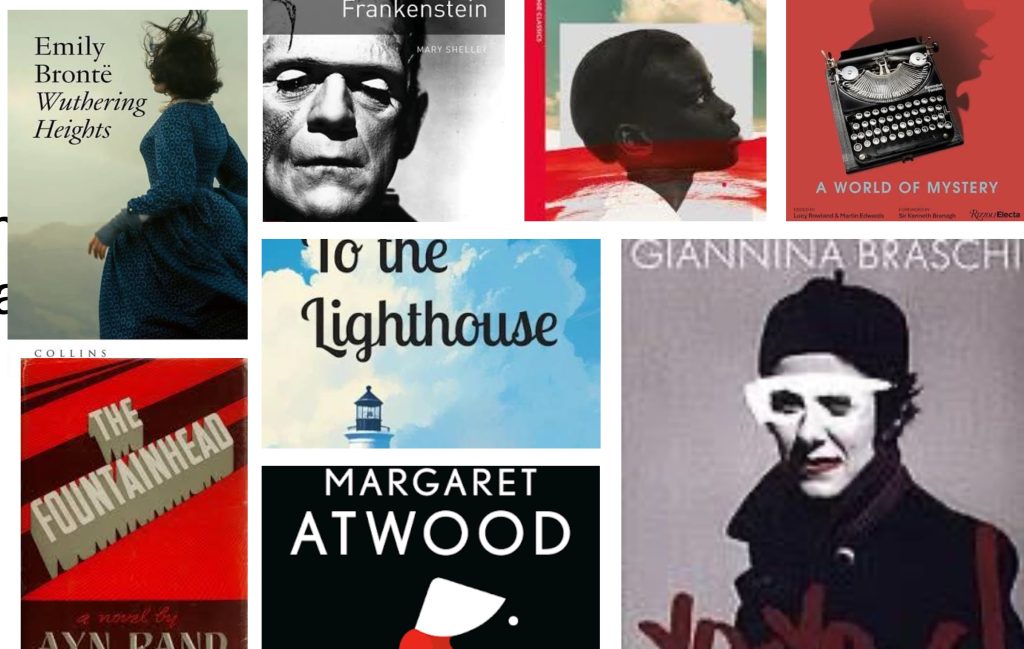
Women’s Voices in Literature: 21 Influential Authors
From Mary Shelley’s Gothic imagination and the Victorian worlds of George Eliot and the Brontë sisters, this survey moves through Virginia Woolf’s modernism, Toni Morrison’s transformation of American narrative, and Susan Sontag’s cultural criticism. It arrives at a strikingly varied contemporary field: Margaret Atwood’s speculative fiction, Amy Tan’s intergenerational immigrant narratives, Giannina Braschi’s multilingual experimentation, Naomi Klein’s political nonfiction, and the global fantasy and dystopian worlds of J. K. Rowling and Suzanne Collins.

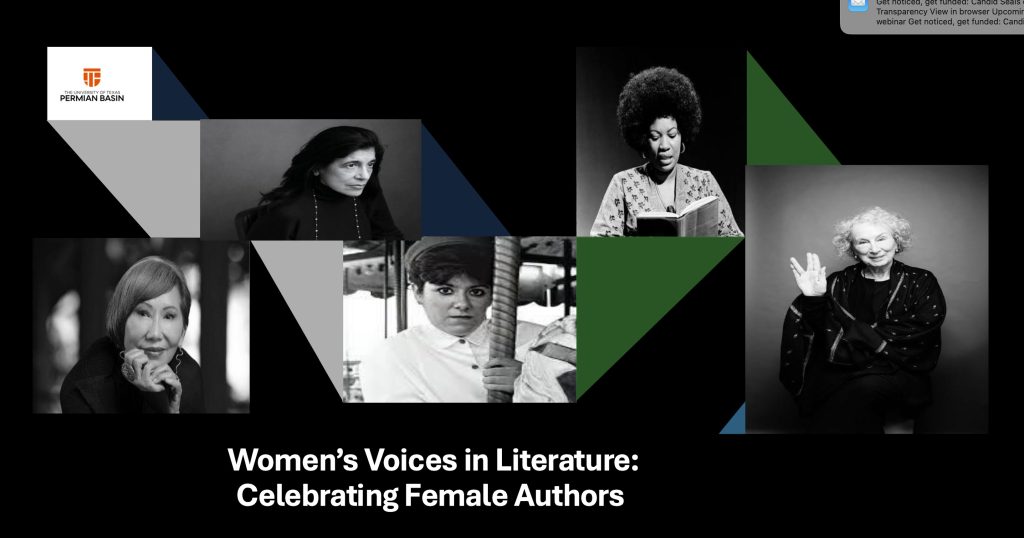
The University of Texas Permian Basin brought these writers together in “Women’s Voices in Literature: Celebrating Female Authors.” Spanning two centuries, the selection crosses novels, poetry, essays, criticism, memoir, political writing, fantasy, and experimental literature—an unusual company of canonical, popular, radical, and genre-defying writers.
How Teachers, Students, and Writers Can Use This Guide
Teachers can use the list to construct comparative readings across periods and forms: Mary Shelley and Anne Rice on the reinvention of Gothic fiction; Virginia Woolf and Toni Morrison on time, memory, and consciousness; Susan Sontag and Naomi Klein on criticism and public argument; and Margaret Atwood, Giannina Braschi, and Suzanne Collins on political imagination.
Students can use each author as a point of departure for research into literary movements, historical periods, narrative techniques, major works, and debates surrounding gender, race, class, language, and political power.
Writers can read the list as a study in craft: Gothic atmosphere, psychological realism, interior monologue, detective plotting, satire, speculative world-building, multilingual voice, cultural criticism, and the crossing of established literary genres.
Editor’s note: The author descriptions below are reproduced from the University of Texas Permian Basin article and retained in their original wording.
The 21 Influential Women Authors
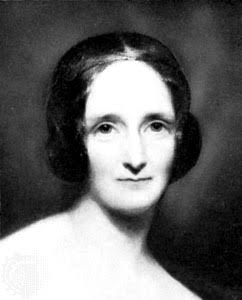
Mary Shelley
Shelley is best known for publishing the celebrated novel “Frankenstein; or, The Modern Prometheus” in 1818. Though not the first horror novel, it is probably the first to have such a lasting influence. “Frankenstein” predated Bram Stoker’s “Dracula” by 79 years.
George Eliot
Born Mary Ann Evans, Eliot published under a man’s name to be taken seriously and not have her work prejudged by 19th century society. She’s known for the multi-part novel “Middlemarch” and “Silas Marner,” the latter of which is still required reading in many U.S. high schools.
The Brontë Sisters
If ever a family were defined by literature, it’s the Brontës: Charlotte, Emily, and Anne. They collectively published a poetry collection under the masculine-sounding names Currer, Ellis, and Acton Bell, respectively. As Currer, Charlotte published “Jane Eyre,” a novel which challenged the conventions of society and female protagonists of the time. The same year, Emily (as Ellis) published her sole novel, “Wuthering Heights,” which broke with Victorian decorum through emotionally driven characters. Though lesser-known than her sisters, Anne authored “The Tenant of Wildfell Hall,” which may be the world’s first-ever feminist novel.
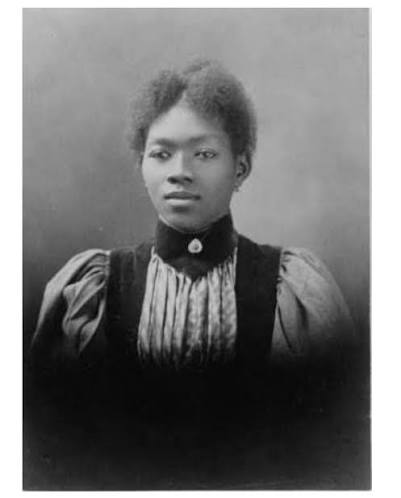
Harriet E. Wilson
Wilson was the first Black person to publish a novel in the United States, albeit anonymously. It’s noteworthy that when her novel was published in 1859, slavery still existed in the nation.
Louisa May Alcott
The semiautobiographical novel “Little Women,” penned by Alcott, features female characters who defy traditional gender roles and exhibits other feminist themes. A suffragette and women’s rights advocate, Alcott holds the distinction of being Concord, Massachusetts’s first female registered voter.
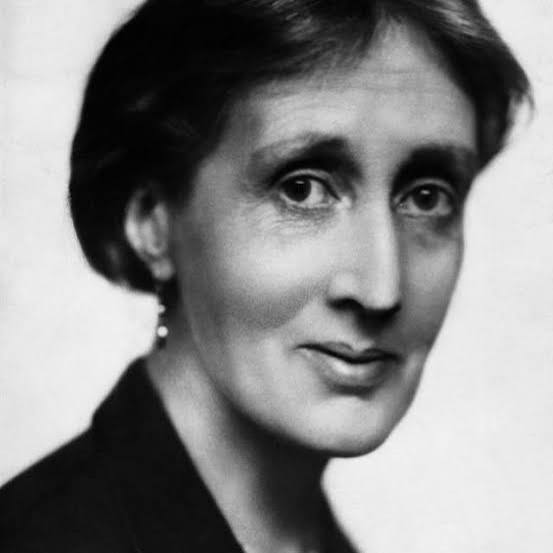
Virginia Woolf
Author of “Mrs. Dalloway” and “To the Lighthouse,” Woolf was known for a modernist style that broke narrative norms by incorporating narrative devices including stream-of-consciousness and interior monologue.
Agatha Christie
Christie authored 66 detective novels, including “Death on the Nile” and “Murder on the Orient Express.” Her name remains synonymous with the mystery genre.
Ayn Rand
Though no friend to feminism, Rand was very influential in individualist thought, and her books, including “Atlas Shrugged” and “The Fountainhead,” feature strong, self-driven female characters.
Anne Rice
Rice’s oeuvre runs the gamut from erotica to Christian themes, but she’s best known for her gothic horror stories, including “Interview With the Vampire.”
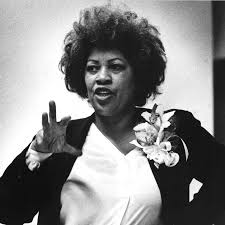
Toni Morrison
Morrison was a book editor who eventually decided to write her own books, starting with the highly influential “The Bluest Eye.” Among her accolades are a Pulitzer Prize, a Presidential Medal of Freedom, and a Nobel Prize in Literature—the first to be awarded to a Black woman.
Susan Sontag
Renowned for her essays and novels, Sontag wrote on topics ranging from AIDS to human rights to war to literature itself. Sontag was also a feature film director and activist. Her works include “Against Interpretation” and “The Way We Live Now.”
Erma Bombeck
Bombeck is celebrated for her humorous novels and nonfiction, with motherhood being a prevailing theme. These include “The Grass Is Always Greener Over the Septic Tank” and “Motherhood: The Second Oldest Profession.” In the late 1970s, she was a staunch advocate for the Equal Rights Amendment (ERA) as a member of the Presidential Advisory Committee for Women.
Erica Jong
A seminal work of second-wave feminism, Jong’s “Fear of Flying” shocked readers—and sold millions of copies—with its nonjudgmental first-person account of a female protagonist’s desire for sexual freedom.
Margaret Atwood
Author of the novel “The Handmaid’s Tale”—later a feature film and an acclaimed TV series—Atwood is primarily a writer of adult literary fiction and speculative fiction, often focusing on feminist and environmental themes.
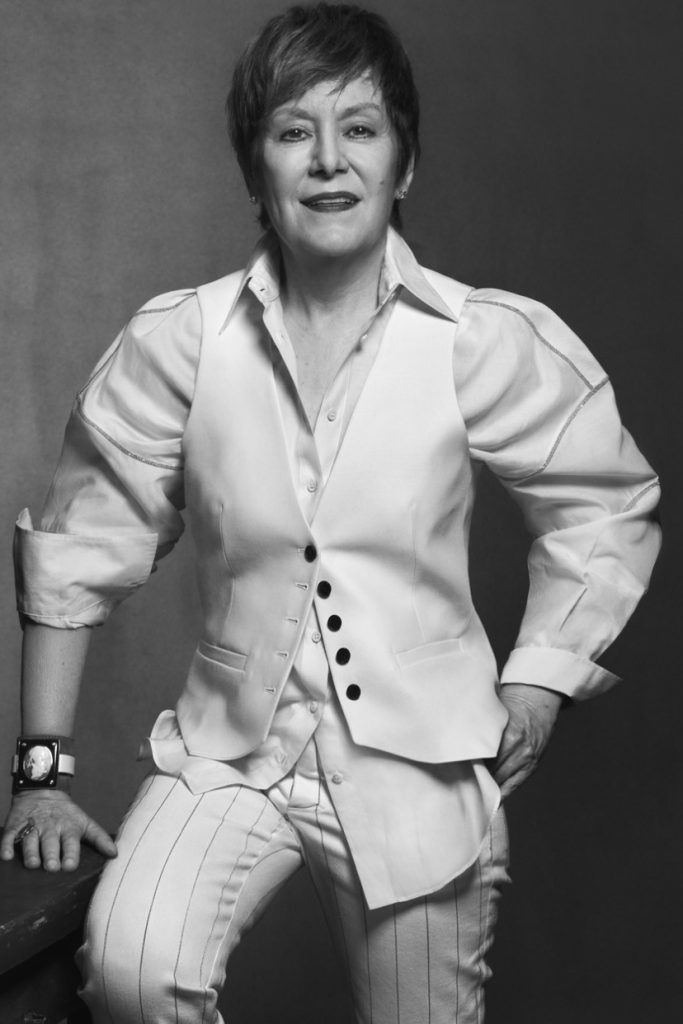
Giannina Braschi
A leading voice in “Spanglish” literature, Puerto Rico-born Braschi has authored absurdist and experimental poetry and novels including “Empire of Dreams” and “Yo-Yo Boing!”
Amy Tan
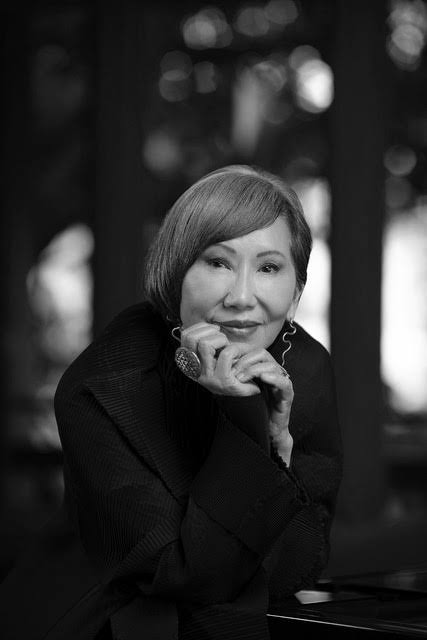
Born to Chinese parents in the U.S., Tan used her experience in an immigrant family as inspiration for acclaimed novels such as “The Joy Luck Club.”
Naomi Klein
An educator, activist, and bestselling author, Klein has published nonfiction books on topics ranging from politics to business and economic issues to the environment.
J.K. Rowling
As a single mother on government support, Rowling transformed her writing abilities into a multi-billion-dollar business empire with the “Harry Potter” books, films, and related projects and merchandise.
Suzanne Collins
Collins has made a name for herself as a writer of young adult fiction with strong central female characters, including the dystopian “Hunger Games” series.
A Reading Map Across Genres
Taken together, these writers offer numerous pathways through literary history. Readers can move from the Gothic imagination of Mary Shelley and Anne Rice to the psychological and formal experiments of George Eliot and Virginia Woolf; from Toni Morrison’s historical reckoning to Susan Sontag’s cultural criticism; and from Margaret Atwood’s speculative worlds to the multilingual, cross-genre writing of Giannina Braschi.
The selection also unsettles the idea that women’s literature constitutes a single genre. Detective fiction, domestic comedy, political nonfiction, immigrant narrative, Gothic fiction, dystopian literature, philosophical fiction, experimental poetry, and young-adult fantasy all occupy the same field.
Related Reading
- Latin American Women Authors
- Latin American Women Philosophers
- Nuyorican Women Leaders
- Spanglish Poets and Writers
- Spanish Caribbean Poets
Source: “Women’s Voices in Literature: Celebrating Female Authors,” University of Texas Permian Basin, Apollidon Content Team. Accessed September 19, 2026.