
Discover major Spanish Caribbean poets and essential poetry books from Puerto Rico, Cuba, and the Dominican Republic, beginning with Carlos Labbé’s essay on Giannina Braschi’s postmodern epic Empire of Dreams.
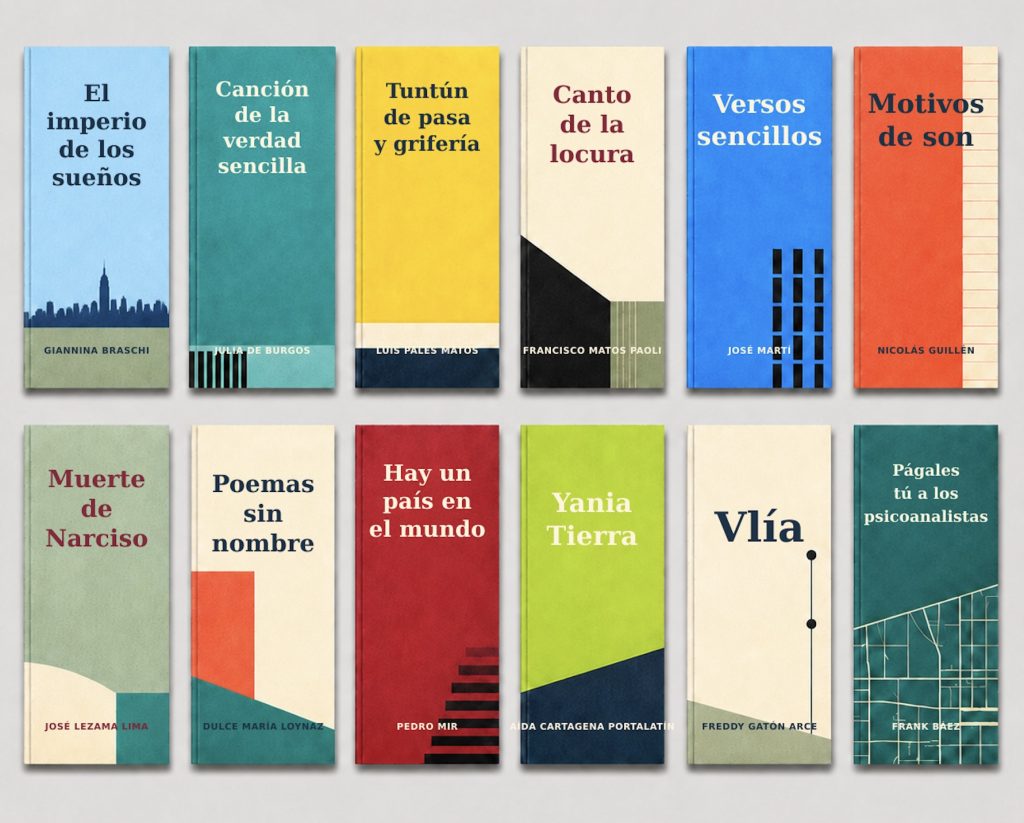
Spanish Caribbean poetry encompasses centuries of writing shaped by colonialism and independence, African and Indigenous inheritances, migration, exile, multilingualism, and artistic experiment. This guide begins with Carlos Labbé’s meditation on Giannina Braschi and Empire of Dreams, originally published by World Literature Today. It then places Braschi in a wider literary constellation, introducing foundational and contemporary poets from Puerto Rico, Cuba, and the Dominican Republic, along with essential books and bilingual anthologies for further reading.
In its most established literary sense, the Spanish Caribbean or Hispanic Caribbean refers principally to Cuba, Puerto Rico, and the Dominican Republic. The region’s poetry, however, has never remained within island borders. It also lives in New York, Miami, Madrid, and numerous communities of migration and exile. That wider circulation is especially important to understanding Braschi, Julia de Burgos, José Martí, Pedro Pietri, Nancy Morejón, Pedro Mir, and many of the poets gathered below.

Carlos Labbé on Giannina Braschi’s Empire of Dreams
The following essay by Carlos Labbé was originally published by World Literature Today. It is presented intact, with its original authorial attribution. David Auerbach translated the essay into English.
Spanish Caribbean Epic Poetry
The Braschian Wave: All the Solitude of an Empire in a Bottle Thrown into the Sea
June 29, 2023
by Carlos Labbé
Carlos Labbé wonders whether it is “still possible to speak of experimental writing when we live in a reality where facts are constantly written in a language already programmed by someone else.” Examining the work of Giannina Braschi, he makes a case that it is, indeed, still possible.
The long work of Boricua Giannina Braschi (b. 1953) is so short that it can’t be subjected to any measurement, since even if it includes books that can be counted on the fingers of a single hand, it is immeasurable. In the functional dimensions of a literature of characters contained in a box, of narratives that are pure anecdote because they confuse the need for a hook to lure in readers with the propensity to be all claws and jaws, of the metamorphic lyricism of Empire of Dreams (1988), and even the geopolitical urgency of Braschi’s new book, Putinoika, there always seems to be an imminent wave about to break over the harbor that is customary literary language. And Braschi’s voice confirms it every time: whoever knows the ocean knows that waves never break.
Well, for anyone who reads even one of her books, it becomes transparent—after the last page—that for there to be a wave there must be an ocean, movements of large bodies of water—what else are we?—superficial and clandestine currents of freshness, inexplicable warmth, and that more-warm-than-cold network of all flowing that circles this sphere that we call the planet. This long work by the Atlantic Braschi, as plural as her project is, must have an influence on Latin American, Spanish and European, New York, Caribbean and Western literature, in all of those niches to which the title of each of her books directly alludes; as if her influence were always on the verge of finally passing into the mainstream. “She is such a respected figure in Puerto Rico for the air of mystery and eccentricity that she always carries with her,” a poet friend confided to me. Each of her books has been well received in their time as much as a volume of poetic prose that draws on tradition—as is the case with her aforementioned debut—as a contemporary novel—which can be said about Yo-Yo Boing (1998)—or as a cutting-edge hybrid text in terms of both genre and language—United States of Banana (2011).
The imminence of Braschi’s influence endures in the flow of time not only because of the impact of her subjects that mark an era, or because of the stylistic novelty that makes a certain voice unmistakable—including a range of other transient voices that never dwell entirely within the confines of her city—or because of the fluidity with which the oral language of a dominant cosmopolis, Manhattan, is translated in print from the rhythmic English of its neighborhoods, from the anti-Spanish colonized by the United States, from the imperial Castilian lexicon of Golden Age poetry that barely conceals the Mozarabic, the Berber, the Saharawi, and the Sephardic, from the Taíno syntax that defiantly survives in street-corner chatter, from verbal formulations where “things are beautiful when they work” (Empire of Dreams), and any definition of the literary is relational, performative: “art is function” (ibid.).
Perhaps Braschi’s influence is the most obvious “poetic egg” that enables us to go on living.
It is true, a wave is nothing more than the rest of the waves that only cease breaking when they wash back out to sea, one after the other. Imminence ceases to be if it is not always growing. In each ocean wave, everything comes and goes, and then there is the moon to entice the water—what else are we?—as it revolves around this sphere that we call the planet. Perhaps her influence is the most obvious “poetic egg” that enables us to go on living, if we accept the potentialities of this concept, which the author introduces in her first book so as to sow a long work that is always in gestation. In the same way, the wave and the moon grow only to achieve an eclipse in their greatness, becoming full in their minimum expression, without which there would be nothing in this world, and with that movement they carry us, and in this way, they make the current complementary: the subequatorial with the Mediterranean, Norway with the Gulf of Mexico, Brazil with Labrador.
And only in this way can those who read Braschi understand that there is no chance of calm along a seemingly placid Caribbean coastline, just as the pandemonium of New York is a harmony of noise, so that placidity never achieves eternal respite, and an island is always reminded that it is a mountain, the summit of something that is simmering in a struggle that has been boiling away since time immemorial and whose ultimate outcome can never be known, not because it hasn’t happened, but because we still don’t know how to read it, nor are we sure of the language in which it is to be related: the imminence of death that, once written, ceases to be and thus becomes transcendence through its execution:
All the characters were sighing or groaning or screaming or crying. They looked like souls torn from their bodies. And it wasn’t because their bodies were torn from their souls, but because their souls had been torn from their bodies. And, above all, they wept. They were like abandoned echoes. Like the echo of seashells. Let’s keep in mind that their voices simulated a chorus of echoes. … Solitude is not a voice, just an echo. When I say that it’s just an echo, I don’t mean that it imitates, but that it projects the voices of solitude with an unwonted repercussion. These characters were dead. And yet they had come to life. They were suddenly feeling the fire of death over the movement of the waves of the sea. They were bringing death’s movement to their own movement, slowly. … I’d dreamed of bringing to this rhythm a final dance that would invade the maritime continent of this book. (Empire of Dreams, 192–93)
El imperio de los sueños
Like every tidal flow written today, the imminence of Braschi’s work also derives from the poem-as-novel that is The Waves and extends toward the language of what we still don’t know, but what we can perhaps call literature. Is it still possible to speak of experimental writing when we live in a reality where facts are constantly written in a language already programmed by someone else? In the chapter “The Adventures of Mariquita Samper,” from the fourth book of Empire of Dreams, the homonymous protagonist understands that the only way to become independent for those who were born in Puerto Rico—for now, an “autonomous” territory belonging to the United States—is to travel to the Soviet Union at the very end of the Cold War, renounce our US citizenship, which is only effective outside the island, and, sheltered in the fictions of the enemy, finally become a foreign body: alien, Puerto Rican, Antillean, pre-Western, ancient, mysterious, and yet so common in any part of the Caribbean, which has nothing but which always has a beginning, a shore, and that wave which never breaks until it returns to the high seas.
And yet, the sand. Long before the present moment, when we were the embodiment of that algorithmic fantasy of certain California boys fascinated with computing and computer control as a response to the school bullying imposed on them by triumphalist postwar American education—we’re something else—before the collapse of the Twin Towers and the death of all those workers—many of them from all over the Caribbean—who became the sacrificial lambs for the end of a triumphalist financial system in 2001; even before the confines of New York City, as a no-man’s-land and everyone’s-land, offered a narrative to Nuyoricans displaced from their Boricua barrios, as United States of Banana attests; at the exact moment when Julia de Burgos inaugurated the tradition of the intellectual from the islands who travels to the great metropolis of the East Coast to become, at the epicenter of midcentury capitalism, a revolutionary in feminism, sexual diversity, and anarcho-socialism (all the more radical because those things would never be feasible except in their imminence); just after the Southern-gringo narco-musical imagination of Miami imposed throughout this sphere its overly inclusive rhythms, and the pure and ubiquitous performativity of Pitbull dancing doggy-style to Bad Bunny, Giannina Braschi proposed in her first novel that a fiction from Puerto Rico and from New York would be defined—from something as delimited, remote, and controlled as the easternmost island in this imperial sphere of influence—by the act of translation as survival.
Braschi proposed in her first novel that a fiction from Puerto Rico and from New York would be defined by the act of translation as survival.
Inevitably, “art is function” while literature has always been interpreting how my body would have to resonate among an endless number of languages without time for definitive places or historical contexts, and in the face of which, what is isolated becomes pure summit, mountain range, gully, or ditch, and in which each expression assumes a profoundly discordant meaning with respect to the main channel of the submissive narrative, which means the story of the City as community/local fragmentation or as globalization by design. “In order to write how the sea moves,” Braschi simply confesses in her “Requiem for Solitude,” the final chapter of Empire of Dreams—in an instant of blatant authenticity so rare in her long work that it immediately produces the most far-reaching disaffection—“I’ve had to cry and I’ve had to suffer.” That requiem, which she always seems to be about to explain, will never be a limited movement, and it will be without limits, like the human sea. And what else are we?
Carlos Labbé is a Chilean writer, editor, and translator based in Brooklyn. David Auerbach, a faculty member in the University of Puerto Rico’s Graduate Program in Translation, translated the essay into English.
What Is Spanish Caribbean Poetry?
The Spanish Caribbean is most often understood as the shared but distinct literary world of Puerto Rico, Cuba, and the Dominican Republic. Its poetry crosses the sea as readily as it crosses genres. Anticolonial struggle, race, gender, migration, music, exile, and the unsettled relationship between Spanish and English recur throughout the tradition, but no single theme or style defines it.
Carlos Labbé’s image of Giannina Braschi as a wave offers a way into the wider tradition. Her work carries echoes of José Martí’s revolutionary lyric, Julia de Burgos’s liberated self, Pedro Mir’s national epic, José Lezama Lima’s baroque imagination, and the multilingual performance of the Nuyorican movement. The poets below reveal other currents within this expansive literary sea. Together, they form points of departure rather than a closed canon.
Puerto Rican Poets
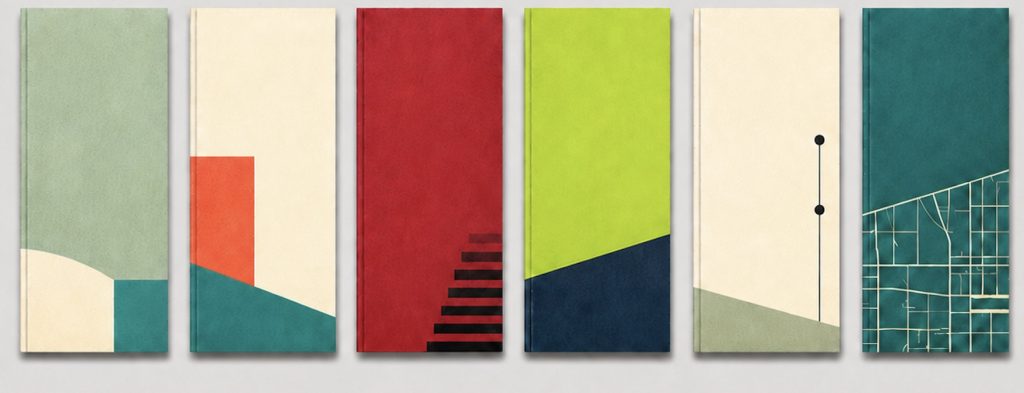
Puerto Rican poetry moves between the island and its diaspora, frequently making language itself a site of political and aesthetic struggle. Explore these Spanish Caribbean poets from Puerto Rico:
- Lola Rodríguez de Tió — Exiled more than once for her politics, she turned lyric poetry into a vehicle for abolition, women’s rights, and solidarity between Puerto Rico and Cuba.
- Luis Palés Matos — The percussion and theatricality of Tuntún de pasa y grifería made him a defining—and still debated—voice in Afro-Antillean poetry.
- Julia de Burgos — River, nation, and self flow into one another in poems that made her an enduring emblem of Puerto Rican freedom and feminist defiance.
- Clemente Soto Vélez — A nationalist and cultural organizer, he carried the avant-garde energy of Puerto Rico into New York’s migrant literary circles.
- Francisco Matos Paoli — Mysticism meets imprisonment and anticolonial conviction in verse that moves from private revelation to national destiny.
- Ángela María Dávila — Animal fiero y tierno speaks in a register at once intimate and insurgent, confronting Blackness, desire, vulnerability, and power.
- Giannina Braschi — Prophecy and revelation surge through Empire of Dreams, Yo-Yo Boing!, and Putinoika and across fiction, theater, and philosophy in Spanish, English, and Spanglish.
- Manuel Ramos Otero — Queer desire shapes stories of longing, estrangement, eroticism, and disease.
- Miguel Algarín — As cofounder of the Nuyorican Poets Cafe, he helped move poetry off the page and into a charged space of performance and community.
- Pedro Pietri — Puerto Rican Obituary turned the thwarted promises of New York into a landmark of wit, anger, and collective mourning.
- Víctor Hernández Cruz — Salsa, street speech, memory, and tropical geography give his poems their migratory rhythm.
- Sandra María Esteves — Motherhood, neighborhood, ancestry, and survival converge in poems rooted in Afro-Caribbean identity.
- Willie Perdomo — Barbershops, jazz, hip-hop, family lore, and Dominican-Puerto Rican life set the cadence.
- Urayoán Noel — Phones, algorithms, performance, and translation are instruments in his restless writing.
- Mara Pastor — Curious facts, ecological unease, and bodily comedy mark her poems.
- Roque Raquel Salas Rivera — Hurricane aftermath, colonial precarity, trans experience, displacement, and tenderness meet in inventive bilingual forms.
Cuban Poets
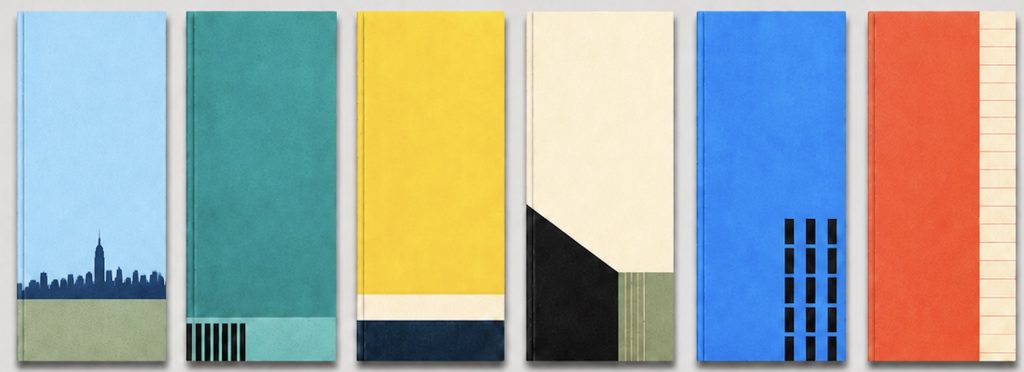
Cuban poetry encompasses romanticism and modernismo, anticolonial and Afro-Cuban poetics, the Orígenes circle, revolutionary writing, and a far-reaching literature of exile and diaspora. Explore these Spanish Caribbean poets from Cuba:
- José María Heredia — Niagara, volcanoes, and the dream of liberty gave his Romantic verse a scale that reached far beyond nineteenth-century Cuba.
- Gertrudis Gómez de Avellaneda — Both celebrated and constrained in her time, she challenged slavery and the roles assigned to women with dramatic force.
- José Martí — The apparent simplicity of Versos sencillos carries a revolutionary poetics of intimacy, ethics, nationhood, and American identity.
- Julián del Casal — Perfume, artifice, illness, and urban ennui fill his exquisitely wrought poems, which helped usher modernismo into being.
- Nicolás Guillén — Son rhythms drive poetry that made Black Cuban speech, history, humor, and political struggle impossible to marginalize.
- Dulce María Loynaz — Houses, gardens, and water become mysterious presences in the work of this Cervantes Prize winner.
- José Lezama Lima — Muerte de Narciso announces a baroque imagination of dazzling difficulty, where image generates its own system of knowledge.
- Virgilio Piñera — Few island poems are as merciless as “La isla en peso,” a vision of heat, flesh, fear, and insularity stripped of tropical romance.
- Fina García Marruz — Her contemplative gaze discovers flashes of transcendence in a cup, a room, a family memory, or an ordinary Havana afternoon.
- Gastón Baquero — The self passes through myth, childhood, Blackness, and exile in his expansive cosmopolitan poems.
- Heberto Padilla — An international controversy surrounding his arrest made him a symbol of censored dissent, but the irony and skepticism of his poetry merit attention on their own.
- Nancy Morejón — In “Mujer negra,” one woman’s journey from enslavement to revolution becomes a compressed history of Cuba voiced from within.
- Reina María Rodríguez — Rooftops, ruins, kitchens, and shortages supply the objective correlatives of her searching.
- Soleida Ríos — Dream notebooks, ritual language, and Afro-Cuban spiritual currents make her writing feel closer to an incantation than a conventional lyric.
- José Kozer — His prolific, densely textured poems turn meals, relatives, and Jewish memory into a vast archive of diasporic life.
- Legna Rodríguez Iglesias — Sardonic and deliberately unruly, her poems cut into gender, migration, family, and the absurd economies of exile.
Dominican Poets
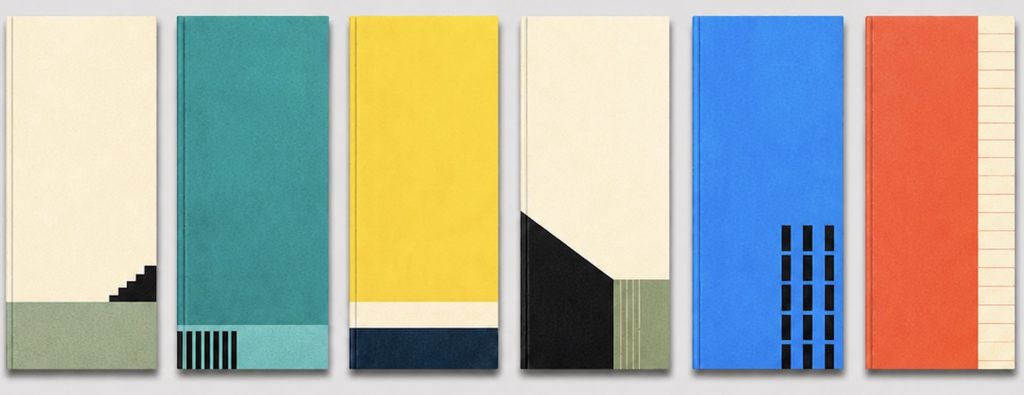
Dominican poetry brings together national and Antillean identity, Blackness, dictatorship, migration, feminist resistance, popular culture, and experimental form. Enjoy these Spanish Caribbean poets from the Dominican Republic.
- Salomé Ureña — Her civic verse imagined a nation built through education, while her teaching opened intellectual life to generations of Dominican women.
- Domingo Moreno Jimenes — Postumismo began with his rejection of imported ornament in favor of colloquial language, local landscape, and an unvarnished Dominican reality.
- Manuel del Cabral — In Compadre Mon, drumbeat, masculinity, labor, race, and legend combine in one of Afro-Dominican poetry’s most imposing figures.
- Héctor Incháustegui Cabral — Poverty and rural hardship enter his lines without picturesque softening, recasting the national landscape as an indictment.
- Franklin Mieses Burgos — Musical and metaphysical, his writing gave the Poesía Sorprendida movement some of its most polished lyric intensity.
- Pedro Mir — Hay un país en el mundo maps sugar, dispossession, foreign power, and popular endurance across an unforgettable national panorama.
- Freddy Gatón Arce — With Vlía, he expanded the Dominican prose poem into a dreamlike field of invented language and startling association.
- Aída Cartagena Portalatín — Yania Tierra recovers Dominican history through a Black female protagonist, joining epic ambition to feminist revision.
- Manuel Rueda — A concert pianist as well as a writer, he brought musical intelligence to pluralismo and other experiments in poetic structure.
- Jeannette Miller — Personal memory meets dictatorship and social violence in poems sharpened by her role as an art historian.
- Chiqui Vicioso — Her feminist voice crosses poetry, theater, biography, and activism, retrieving women too often left outside official Caribbean histories.
- León Félix Batista — Syntax bends, fractures, and recombines in his demanding poems, making language itself the scene of discovery.
- Aurora Arias — Airports, hotel rooms, city streets, and intimate encounters give her poems the alert perspective of a Caribbean traveler.
- Homero Pumarol — Traffic, advertising, neighborhood slang, pop music, and precarity crowd the page.
- Frank Báez — DJs, basketball, travel, and autobiography keep his conversational poems in motion.
- Rosa Silverio — Her direct, unsparing poems confront gendered violence, migration, and the difficult question of belonging.
Essential Spanish Caribbean Poetry Books
For a concise introduction to Spanish Caribbean poetry, begin with one defining work from each of its three principal traditions. From Cuba, José Martí’s Versos sencillos offers poems of deceptive clarity about exile, liberty, ethics, and nationhood. From the Dominican Republic, Pedro Mir’s Hay un país en el mundo transforms sugar, exploitation, foreign power, and popular endurance into a sweeping national poem. From Puerto Rico, Giannina Braschi’s Empire of Dreams stages a high-voltage pastoral revolution on Fifth Avenue, inspired by New York City’s Puerto Rican Day Parade. Together, these books reveal three distinctive ways Caribbean poets have joined personal experience to history, experiment, and the imagination of freedom.
Readers can explore additional recommendations in the sections on Puerto Rican poets, Cuban poets, and Dominican poets above.
Further Reading
- Puerto Rican Poetry
- Nuyorican Poets
- Latin American Women Writers
- Post-Boom Literature
- Experimental Fiction
- The Braschian Wave — World Literature Today
Editorial guide by the editors of GianninaBraschi.com. It is not authored by Giannina Braschi.
Last reviewed: August 2026.