
Nuyorican Women Playwrights
What we have here is a war—the war of matter and spirit. In the classical era, spirit was in harmony with matter. Matter used to condense spirit. What was unseen—the ghost of Hamlet’s father—was seen—in the conscience of the king. The spirit was trapped in the matter of theater. The theater made the unseen, seen. In the Romantic era, spirit overwhelms matter. The glass of champagne can’t contain the bubbles. But never in the history of humanity has spirit been at war with matter. And that is what we have today. The war of banks and religion. It’s what I wrote in “Prayers of the Dawn” (in Empire of Dreams) that in New York City, banks tower over cathedrals. Banks are the temples of America. This is a holy war.
Our economy is our religion.
–Giannina Braschi on writing theater
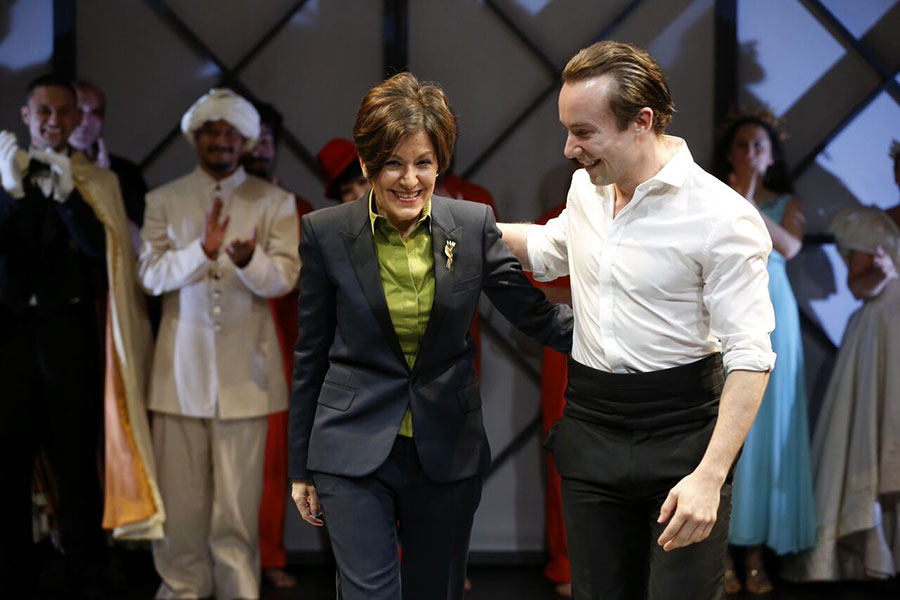
Diasporic Journeys with Puerto Rican Writers
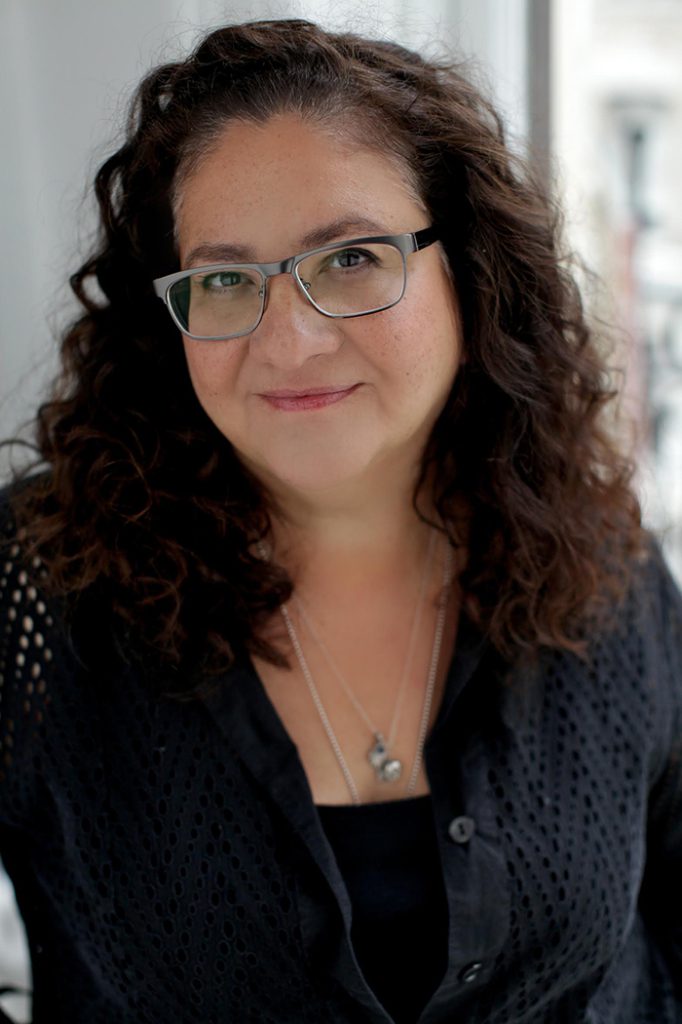
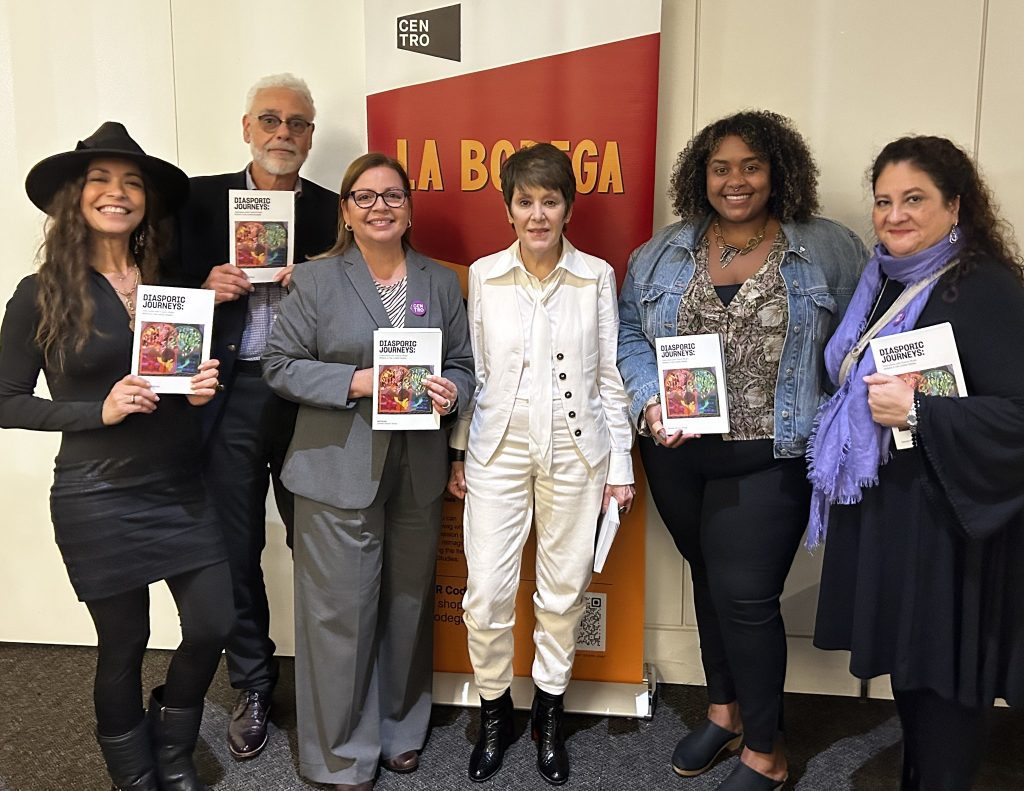
Diasporic Journeys: Interviews with Puerto Rican Writers in the United States brings together conversations with Puerto Rican and Nuyorican playwrights, poets, novelists, performers, and cultural critics working across the United States and abroad. Edited by Carmen Haydée Rivera, the collection considers migration, displacement, language, identity, gender, and the changing relationship between Puerto Rico and its diaspora.
Taken together, these interviews show that Puerto Rican writing in the United States is not simply an extension of an island tradition or a record of migration. It is a distinct literary field shaped by movement between places, languages, genres, and generations. Writers born or raised in the continental United States respond to earlier Puerto Rican authors while developing new theatrical and literary forms for contemporary American life.
Nuyorican women have been central to that development. Their theater moves between Broadway and experimental performance, spoken word and musical theater, family history and political allegory. It addresses colonialism, migration, racial and linguistic identity, gender, war, addiction, community memory, and the complicated desire to return “home.” These playwrights also frequently cross genres: they are poets, memoirists, performers, librettists, translators, novelists, and cultural organizers as well as dramatists.
The writers interviewed in Diasporic Journeys include Giannina Braschi, Aya de León, María Teresa “Mariposa” Fernández, Caridad de la Luz, Migdalia Cruz, Lin-Manuel Miranda, Quiara Alegría Hudes, Raquel Salas Rivera, and others. Their work can be read alongside the broader traditions surveyed in these guides to Puerto Rican playwrights, Puerto Rican poetry, Puerto Rican novels, and Puerto Rican philosophy books.
Puerto Rican and Nuyorican Playwrights of Note
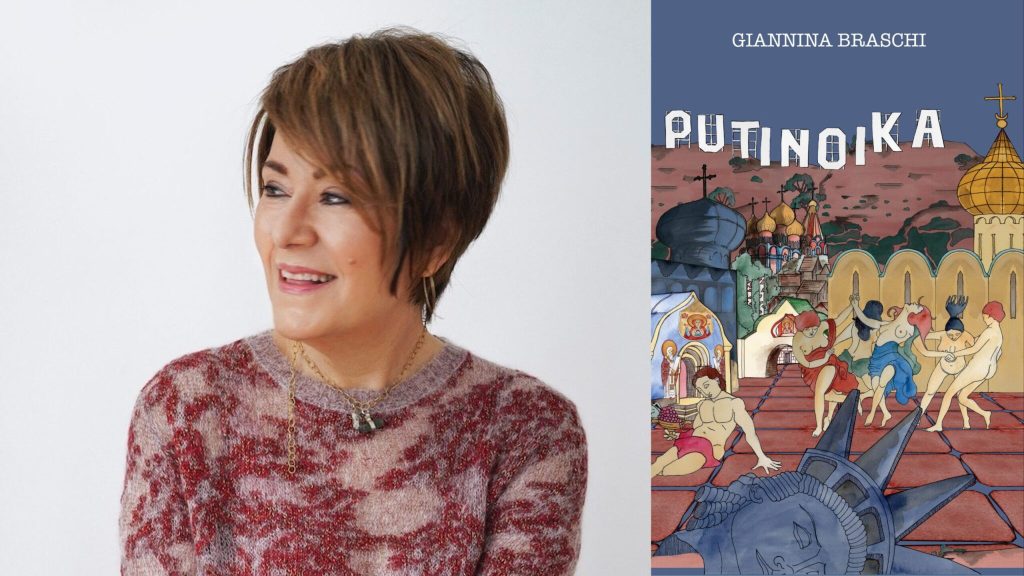
Giannina Braschi is a Puerto Rican poet, novelist, essayist, and playwright whose cross-genre writing moves between poetry, fiction, philosophical dialogue, political satire, and theater. Her work confronts empire, colonialism, migration, democracy, artistic freedom, and Puerto Rican independence while drawing on classical tragedy and the European dramatic tradition. United States of Banana stages the liberation of Puerto Rico through characters borrowed from Shakespeare, Calderón, and Nietzsche. PUTINOIKA transforms Euripides’ The Bacchae into a contemporary political tragedy of unchecked power, filial violence, and Bacchic frenzy.
Migdalia Cruz is a Bronx-born playwright of Puerto Rican parentage whose extensive body of work encompasses plays, opera, musical theater, translations, and screenwriting. A former member of New Dramatists, she developed her craft in María Irene Fornés’s influential Hispanic Playwrights-in-Residence Laboratory at INTAR. Cruz describes her aesthetic as “Latina Gothic,” a mode in which beauty and brutality, desire and violence, family memory and historical trauma exist side by side. Her plays have been produced in the United States, Puerto Rico, Europe, and Latin America. Major works include Miriam’s Flowers, FUR, Lolita de Lares, SALT, Never Moscow, How to Put Out a Fire, and El Grito del Bronx. Across these works, Cruz gives poetic and often mythic form to lives marked by migration, poverty, sexuality, political struggle, and the fierce emotional bonds of family.
“There is magic in what is real on the stage. I think my work is poetic realism… My characters have an entitlement to poetry, and they speak poetry in a real place and they come from a real place.”
— Migdalia Cruz
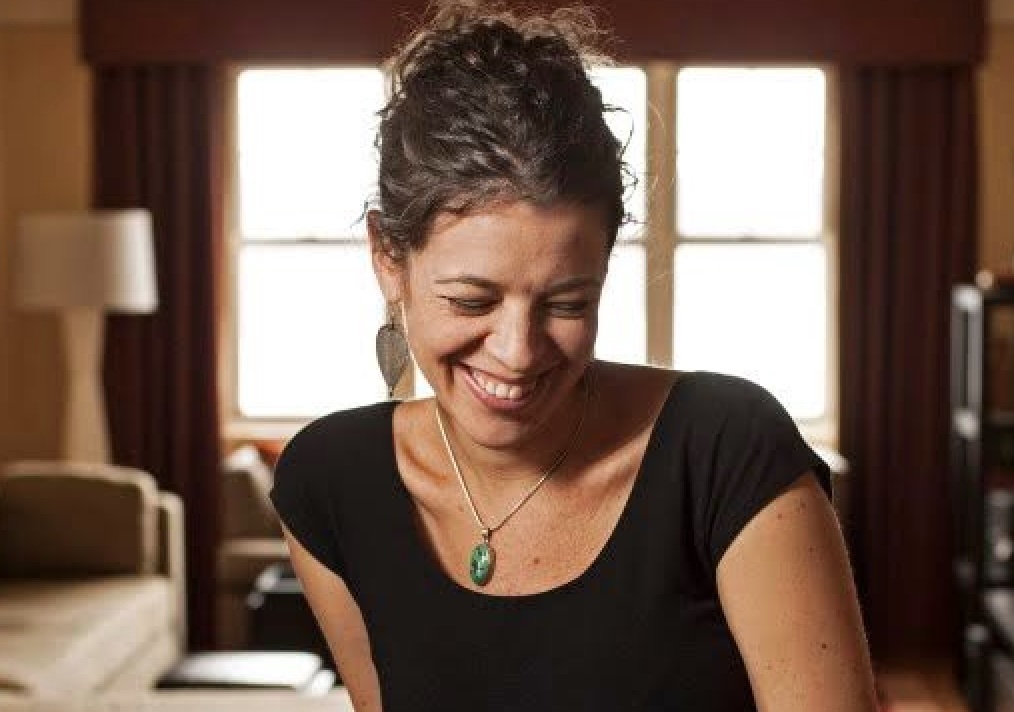
Quiara Alegría Hudes is a Philadelphia-born playwright, memoirist, novelist, and composer of Puerto Rican and Jewish heritage. She wrote the book for Lin-Manuel Miranda’s In the Heights, which won the Tony Award for Best Musical and became a landmark representation of a Latino neighborhood on Broadway. Hudes won the 2012 Pulitzer Prize for Drama for Water by the Spoonful, the second play in her Elliot trilogy; the first, Elliot, A Soldier’s Fugue, was also a Pulitzer finalist. Her theater connects Puerto Rican family histories with questions of war, addiction, disability, migration, music, and communal care. Works such as 26 Miles, Daphne’s Dive, and Miss You Like Hell extend her exploration of mothers and daughters, chosen families, and people rebuilding their lives after rupture. Her memoir is entitled My Broken Language.
Caridad de la Luz, known as La Bruja, is a Bronx-born poet, playwright, and cultural leader. She began performing at the Nuyorican Poets Cafe in 1996 and later became its executive director, helping guide the historic institution into a new period of renovation and programming. Her solo theatrical work Boogie Rican Blvd. brings multiple Bronx and Puerto Rican characters to the stage through spoken word, music, comedy, and dramatic monologue. La Bruja’s career demonstrates the close relationship between poetry and theater within the Nuyorican tradition: the poem becomes a voice, the voice becomes a character, and the performance becomes a form of community history.
Carmen Rivera is a New York–born Puerto Rican playwright, educator, and producer. She is best known for La Gringa, one of the longest-running Off-Broadway plays in New York theater history. The play follows María Elena García, a young Nuyorican woman who travels to Puerto Rico expecting to recover an uncomplicated cultural home but discovers that identity is negotiated rather than inherited whole. Rivera treats the familiar “return to the island” narrative with humor, tenderness, and an awareness of the linguistic and cultural tensions separating island-born and diasporic Puerto Ricans. Her other works include La caída de Rafael Trujillo and, with Cándido Tirado, Celia: The Life and Music of Celia Cruz.
Theatre is a space where we come together in the dark to witness human truth—unfiltered, raw, and present. It demands that we sit with each other’s humanity, that we listen to stories that may not be our own, and that we experience a shared heartbeats-per-minute rhythm that cannot be replicated by any screen.”
— Quiara Alegría Hudes
Research on Puerto Rican Theatre
Books about Puerto Rican and Nuyorican Plays

- Recent Puerto Rican Theater: Five Plays from New York * Editor: John V. Antush
- Pragmatic Liberation and the Politics of Puerto Rican Diasporic Drama * Author: Jon D. Rossini
- Poets, Philosophers, Lovers: On the Writings of Giannina Braschi * Editors: Frederick Luis Aldama and Tess O’Dwyer
- Nuestro New York: An Anthology of Puerto Rican Plays * Editor: John V. Antush
- Ricanness: Enduring Time in Anticolonial Performance * Author: Sandra Ruiz
- Performance, Trauma and Puerto Rico in Musical Theatre * Author: Colleen Rua
- The Puerto Rican Theater: Its Origins and Development * Author: Emilio S. Belaval
- Míriam Colón: Actor and Founder of the Puerto Rican Traveling Theater * Author: Glenda Y. Nieto-Cuebas
Hispanic American Theater Companies and Festivals
These institutions have provided essential stages for Puerto Rican, Nuyorican, Latin American, and Spanish-language theater. Their work includes producing new plays, preserving dramatic traditions, developing emerging artists, commissioning bilingual and experimental work, and connecting neighborhood audiences with theater from across the Americas.
- Aguijon Theater Company of Chicago
- Borimix
- Latea Theater
- INTAR Theatre
- Repertorio Español
- Pregones / Puerto Rican Traveling Theater
- Teatro SEA
- Teatro Circulo
- Thalia Hispanic Theatre
Related Readings
- Nuyorican Women Leaders (including Nuyorican Women in Theater)
- Nuyorican Poets
- Puerto Rican Essential Playwrights Across the Diaspora
- Latin American Women Authors
- Puerto Rican Philosophy
- Famous Puerto Rican Writers (including Nuyorican Women in Theater)


Editorial note: This introductory guide was posted by the editors of GianninaBraschi.com. It is not intended as a comprehensive history of Puerto Rican theater and was not written by Giannina Braschi. Last reviewed August 2026.