
What does freedom mean at 250, and who gets to decide?
That was the question behind 1776–2026: Visions of Freedom, the 36th biennial conference of the European Association for American Studies (EAAS), held at the University of Bologna from September 1 to 4, 2026. Marking the 250th anniversary of American independence, scholars from across Europe and the United States examined the “competing visions, promises, and limitations of freedom” in American history, politics, literature and culture.
Freedom at 250: a conference of competing visions
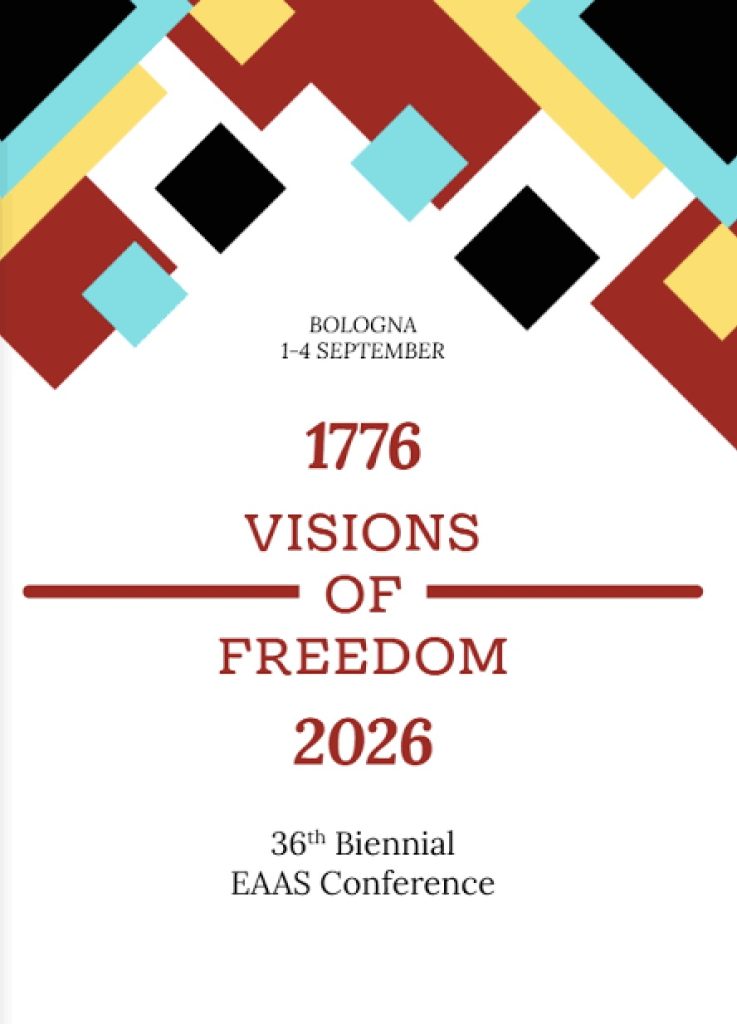
The program mapped a myriad of spaces where freedom is contested today. Papers traced the camp in the American literary imagination “from Ellis Island to Alligator Alcatraz.” Others took up reproductive freedom, Indigenous survival and sovereignty, Black women’s geographies of freedom-seeking, Angela Davis and the radical imagination of abolition, and data rights in the age of AI. Freedom, the conference made clear, is never one idea. It is an argument the country has been having with itself since 1776.
Creative insurgencies: freedom from below
One thread ran through Latinx literature and art under the heading “Creative Insurgencies: Reimagining Freedom from Below.” The papers included Beatrice Colina on speech and subjectivity in Gloria Anzaldúa’s borderlands theory, Esther Álvarez-López on Amalia Ortiz’s punk rock opera, Ewa Antoszek on art and hospitality in the borderlands, and Maria Antonia Oliver on death, healing and liberty in the poetry of ire’ne lara silva. Together they asked what freedom looks like when it is imagined by those the national story leaves out.
Cristina Garrigós on Putinoika: who controls the words?
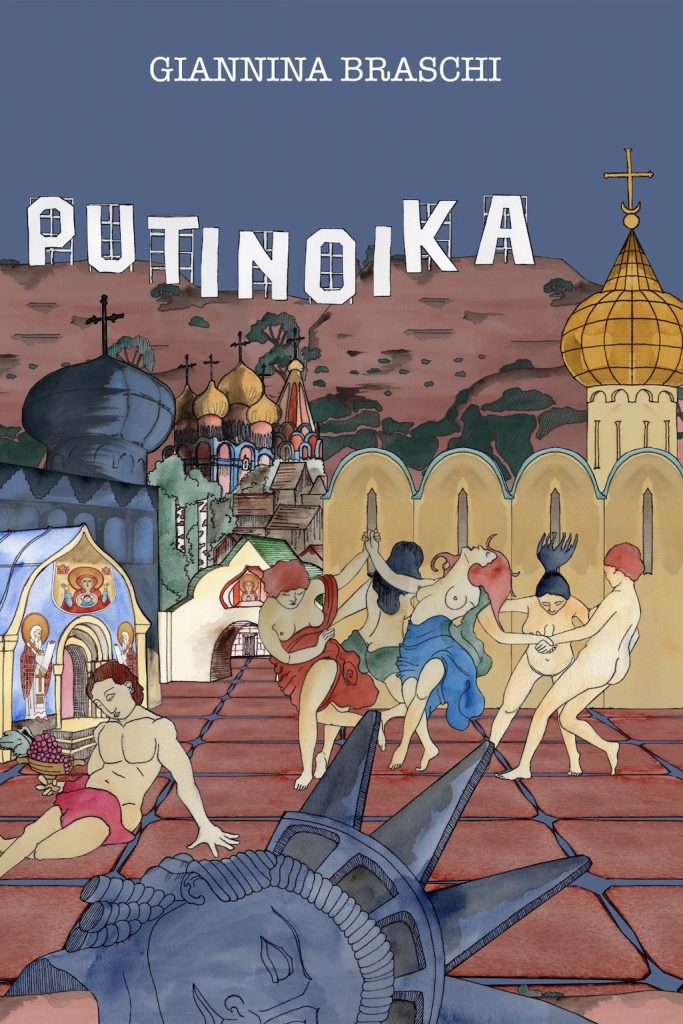
In “The Liberation of Wires: Creative Resistance, Power, and Freedom in Giannina Braschi’s Putinoika,” Cristina Garrigós, president of the Spanish Association for American Studies, turned to one of the most ambitious literary responses to the Trump era.
Putinoika (2024) is a multi-genre epic, with Trump himself as a character, that blends humor, tragedy and political critique. Inspired by ancient Greek drama, it explores frenzy, plague and authoritarianism in the age of Putin and Trump. Garrigós reads it as the culmination of a career-long pursuit of freedom that is “formal, linguistic, and political,” from Empire of Dreams (1988) and Yo-Yo Boing! (1998) to United States of Banana (2011). Across those books, Braschi dismantles the boundaries of genre, identity and nationhood, and confronts the colonial entanglements between Puerto Rico and the United States.
Central to the paper is the control of language as a mechanism of power. Garrigós quotes Braschi:
“Block words, block books, block testimony, block immigrants, block freedom of expression. They say it’s liberty. It’s not monarchy. It’s dictatorship.”
Against that blockade, Putinoika proposes what Garrigós calls a literary and existential unbinding, in Braschi’s words “the liberation of wires, the unraveling of a knot—or of many knots that should not be knotted together.” Creative resistance becomes a path to individual and collective emancipation.
Why literature matters in an age of authoritarianism
At a moment of unprecedented number of American book bans, contested testimony and closing borders, Garrigós’s reading makes a case that reaches well beyond one author. Authoritarianism works through language before it works through force: it decides which words may be spoken and which books may be read. Literature that refuses those limits, mixing genres, languages and voices, is not a retreat from politics. It is a practice of freedom. As Garrigós concludes, Braschi’s experimental poetics open “new imaginative, literary, and political pathways for understanding freedom, resistance, and identity in the contemporary moment.”
The 250th continues: Braschi in Macerata with Centro Studi Americani
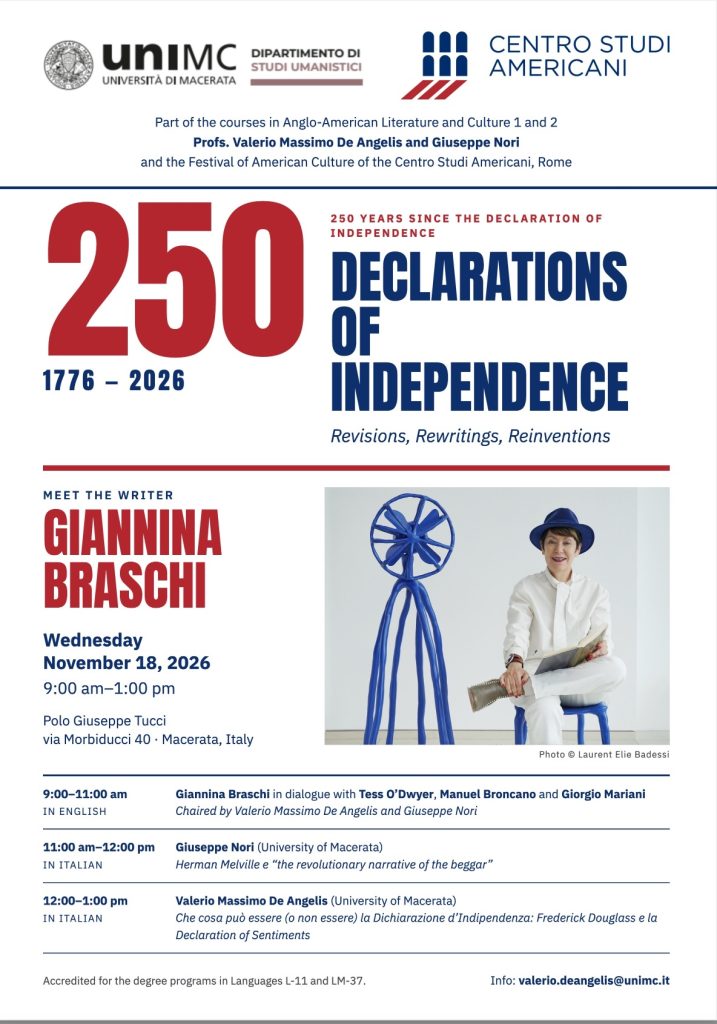
The United States Semiquincentennial conversation continues this autumn in Italy. On November 18, 2026, the University of Macerata hosts Dichiarazioni d’indipendenza: Revisioni, riscritture, reinvenzioni (Declarations of Independence: Revisions, Rewritings, Reinventions). It’s a symposium on how America’s founding declaration has been revised and reimagined. The opening session, in English, features Giannina Braschi in dialogue with Tess O’Dwyer (Academy of American Poets), Manuel Broncano (Texas A&M International University) and Giorgio Mariani (Sapienza University of Rome), chaired by Valerio Massimo De Angelis and Giuseppe Nori. The Italian session follows, with Nori on Herman Melville and “the revolutionary narrative of the beggar,” and De Angelis on Frederick Douglass and the Declaration of Sentiments.
About Cristina Garrigós
Cristina Garrigós is Professor of American Literature at the National University of Distance Education (UNED) in Spain and President of the Spanish Association for American Studies (SAAS). Her research spans contemporary US literature, film, music, memory studies, life-writing and gender. She has published on Kathy Acker, Gloria Anzaldúa, Giannina Braschi, Helena María Viramontes, Don DeLillo and Ruth Ozeki, among others. Her books include Women in Rock Memoirs: Music, History, and Life-Writing (Oxford University Press, 2023) and Alzheimer’s Disease in Contemporary US Fiction: Memory Lost (Routledge, 2021).
Garrigós has written about Braschi for several years. Her essay “Giannina and Braschi: A Polyphony of Voices” appears in Poets, Philosophers, Lovers: On the Writings of Giannina Braschi (University of Pittsburgh Press, 2020). Her chapter “Postmodernist Latinx Literature in the 21st Century? The Writings of Giannina Braschi,” in American Studies After Postmodernism (Palgrave Macmillan, 2023), asks whether “postmodernism” still fits Latinx writing that joins radical aesthetics to a political and ethical stance.
Related reading
Editorial note: Published October 2026 by the site’s editorial team. Conference details come from the European Association for American Studies (EAAS) and the 1776–2026: Visions of Freedom Book of Abstracts. Quotations from Putinoika are as cited in Cristina Garrigós’s abstract.