
Every Spanish poet worth reading has had to answer Gustavo Adolfo Bécquer. Machado did. Juan Ramón Jiménez did. Lorca did. More than a century and a half after his death, the shortest poems of Spanish Romanticism are still setting the terms for contemporary poetry in Spanish.
The Puerto Rican poet Giannina Braschi’s answer began with one word: but.
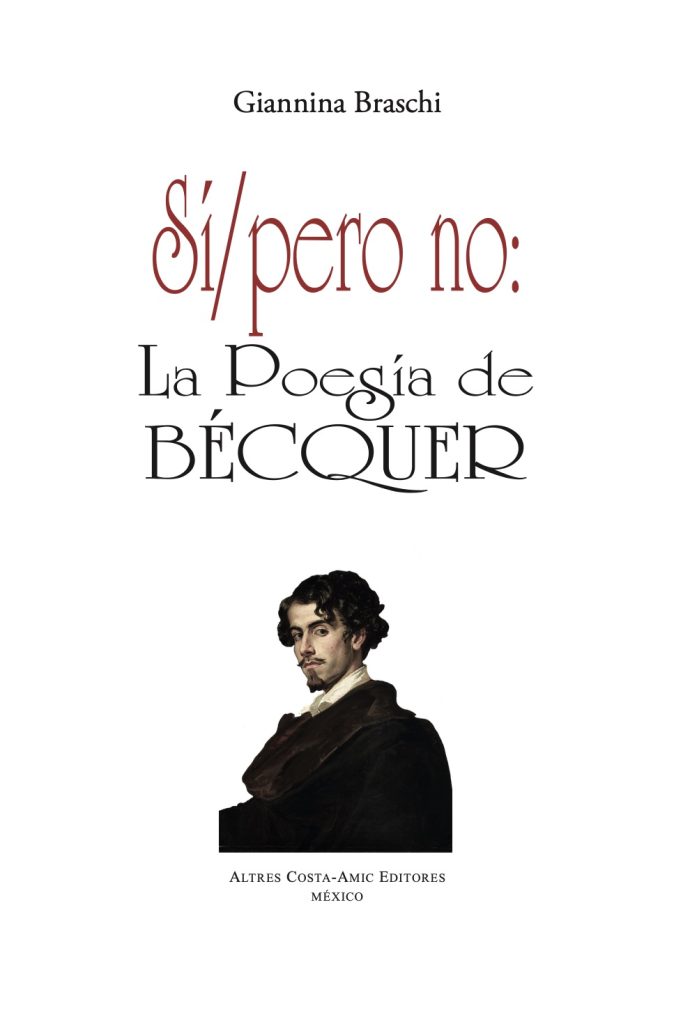
Bécquer’s poetry: brief poems, lasting influence
Bécquer (1836–1870) lived poor, wrote for newspapers in Madrid and died at thirty-four. His friends published his Rimas the year after his death. Where the Spanish Romantic poets before him declaimed, Bécquer spoke softly, in brief, intimate lyrics that sound simple and aren’t.
That quietness changed Spanish poetry. Modern Spanish lyric poetry starts with Bécquer, and his reach crosses languages. When Robert Lowell made the best-known English version of Bécquer’s swallows poem, “Will Not Come Back,” he said the original was as well known in Spanish as Tennyson’s “Tears, Idle Tears” is in English.
Sí/pero no: La poesía de Bécquer: a philosophy of Romantic poetry
Antonio Machado left a clue in a single sentence. In Bécquer, he wrote, “a principle of contradiction governs: yes, but no; they will return, but they will not return.”
In 1982 a young poet turned that sentence into a book. In Sí/pero no: La poesía de Bécquer, Braschi reads Bécquer alongside Coleridge, Keats and Kierkegaard. She finds a poet who “negates every value he affirms,” not out of doubt but as a method. The no clears the ground, and what grows there is a truth that is personal and lived, a truth logic can’t reach. Bécquer’s poetry doesn’t settle its contradictions. It moves through them.
Bécquer’s most famous stanza shows the turn:
Volverán las oscuras golondrinas
en tu balcón sus nidos a colgar,
y, otra vez, con el ala a sus cristales
jugando llamarán.
Pero aquellas que el vuelo refrenaban
tu hermosura y mi dicha a contemplar,
aquellas que aprendieron nuestros nombres…
esas… ¡no volverán!The dark swallows will return
to hang their nests on your balcony,
and once again, with their wings, will tap
playfully at its panes.
But those that slowed their flight
to gaze on your beauty and my joy,
those that learned our names…
those… will not return!
Everything returns, and everything turns on pero.
Asalto al tiempo: from lyric to dramatic poetry
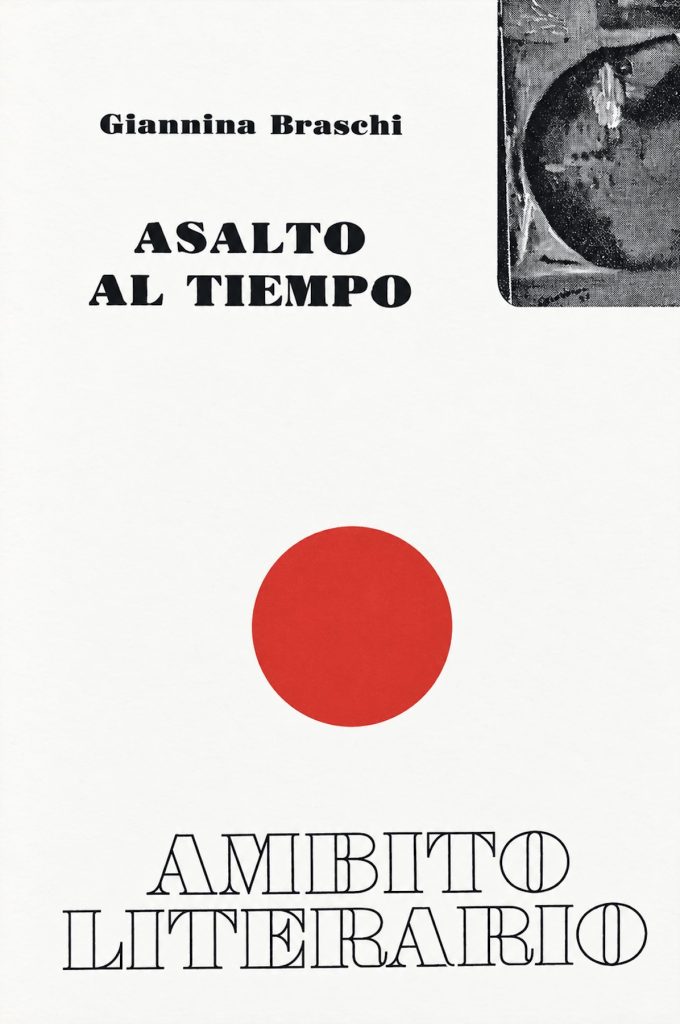
Braschi wrote the study at twenty-eight, at the same time as her first book of poems, Asalto al tiempo. The critic was naming the principle while the poet was putting it on stage. Asalto al tiempo is a dramatic dialogue, and it opens with Bécquer’s formula in her own voice:
Sí, es cierto. Las preguntas no cambian la verdad. Pero le dan movimiento.
Yes, it’s true. Questions don’t change the truth. But they give it movement.
What Bécquer kept inside one lyric I, Braschi split into an I and a you who argue, trade come for go and leave the door ajar. The Romantic lyric had become dramatic poetry. Her pero was already laughing, too: “I was wrong, it’s true… But being wrong is a great thing.”
Putinoika: a Puerto Rican poet’s chorus of voices
Mor than forty years later, in Putinoika (2024), the dialogue has grown into a chorus. Generals, senators, a First Lady, a reporter, a president named Pendejo, and even a Chair, a Wall and a Stair all affirm and deny in the same scene. “Facts are full of lies,” one voice insists, “and, for this reason, I don’t believe in facts.” It’s Bécquer’s distrust of logic at full volume. The Russian characters weigh “both sides of the argument: Da Nyet.”
This is the enduring impact of the Spanish Romantics at its most alive. Their influence shows up not as imitation but as a way of thinking that one poet hands to another, and that each poet transforms. A Sevillian Romantic’s yes, but no now speaks Spanish, English and Russian in the work of a Puerto Rican poet.
For teachers and scholars of Bécquer’s Poetry
- Teach the turn. Put Rima LIII next to the opening of Asalto al tiempo and ask students to find every pero. Then ask what each one costs the speaker.
- Read across languages. Compare Bécquer with Lowell’s “Will Not Come Back.” A free imitation is itself an act of yes, but no.
- Trace a lineage. Bécquer → Machado → Braschi makes a compact unit on how Spanish Romanticism becomes contemporary poetry in Spanish.
The book returns for a new generation of poets and scholars
First published by Costa-Amic in Mexico in 1982, Sí/pero no: La poesía de Bécquer returned in 2021 from Altres Costa-Amic. The book returns, but not the same, because it now has readers who know where its but would lead.
Get Sí/pero no: La poesía de Bécquer here
Related reading
- The Poetry of Giannina Braschi: Art and Magic in Assault on Time, Laura R. Loustau on Braschi’s first book of poems
- Contemporary Poetry in Spanish: 14 Essential Poets (en español)
- La poesía de Bécquer: el «sí/pero no» de Giannina Braschi, the Spanish companion to this post
- Giannina Braschi’s biography
Editorial note: The article is based on information provided by the publisher Costa-Amic. Last updated 2026.