
A guide to contemporary poets across Spain, Latin America, the United States, and the wider Spanish-speaking world
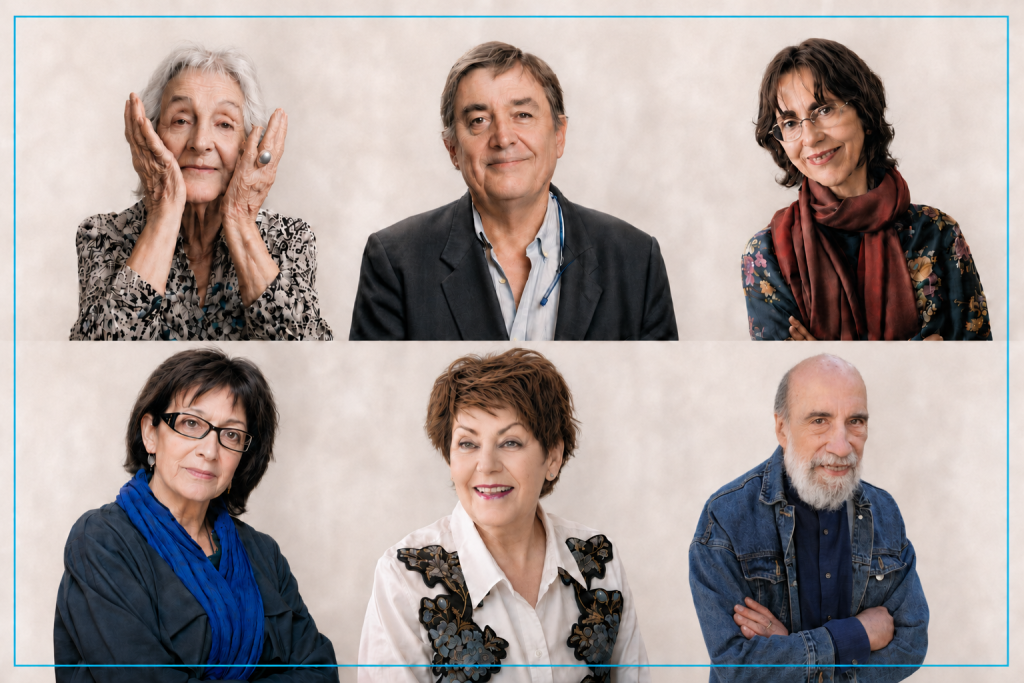
“Creativity starts where nothing works.”—Giannina Braschi
And then something ignites: a voice, an image, a burst of noise discovering what it did not know it could say. Across Madrid, Mexico City, Bogotá, Havana, Salamanca, San Juan, Santiago, Montevideo, and New York, poets turn silence, memory, exile, desire, and resistance into forms alive with urgency. Their poetry refuses to stay put—racing from the intimate to the insurgent, from the printed page to streets, stages, deserts, and skies.
Contemporary poetry in Spanish thrives on this restless charge. The poets gathered here write across borders, generations, and literary traditions, stretching what a poem can sound like, hold, and become.
Some have received the highest honors in Spanish-language literature. Others have transformed poetry by crossing into fiction, theater, philosophy, visual art, and performance. Alongside internationally celebrated figures such as Ida Vitale, Rafael Cadenas, Raúl Zurita, Carmen Boullosa, Giannina Braschi, and Cristina Peri Rossi, this guide also introduces two younger award-winning poets whose work points toward the future.
Presented as a guide rather than a ranking, these 14 poets reveal the extraordinary range of contemporary poetry written in Spanish across Spain, Latin America, the United States, Puerto Rico and the wider Spanish Caribbean.
The Evolving Landscape of Poetry in Spanish
There is no single school of contemporary Spanish-language poetry. Its writers draw on, disrupt, and extend a wide range of traditions: the lyric intensity of César Vallejo and Gabriela Mistral, the surrealist imagination of Vicente Aleixandre, the conversational poetry of postwar Latin America, the antipoetry of Nicanor Parra, and more recent experiments with performance, conceptual art, and multilingual writing.
What connects the poets in this guide is not a common style or movement, but a sustained engagement with the present. Their work confronts the promises and failures of democracy, the pressures of capitalism, migration, gender, memory, ecology, aging, desire, and the instability of language itself. Many move between countries, languages, and literary forms, demonstrating that poetry written in Spanish has never been confined by national borders.
A Constellation of Contemporary Poets Writing in Spanish
1. Ida Vitale — Uruguay
Ida Vitale is one of the essential voices of modern Uruguayan poetry and a central member of the country’s influential Generation of ’45. Her poems are known for their precision, wit, intellectual clarity, and close attention to the natural world. Rather than treating language as transparent, Vitale examines how a single word can sharpen perception—or expose its limits.
Her long career includes such collections as La luz de esta memoria, Jardín de sílice, and Mínimas de aguanieve. Exile took her from Uruguay to Mexico and later to the United States, giving her work a transnational dimension without diminishing its remarkable concentration. Vitale received the Miguel de Cervantes Prize in 2018, the most prestigious career honor in Spanish-language literature. Read more about Vitale and the award from the Government of Spain.
Start with: La luz de esta memoria and Mínimas de aguanieve.
In English: Reason Enough, translated by Sarah Pollack, and Garden of Silica, translated by Katherine M. Hedeen and Víctor Rodríguez Núñez.
2. Rafael Cadenas — Venezuela
Rafael Cadenas writes with deceptive simplicity. His restrained poems question authority, certainty, identity, and the ego of the poet. In books such as Los cuadernos del destierro, Falsas maniobras, Intemperie, and Amante, silence is not an absence but an active element of thought.
Cadenas emerged in the context of Venezuelan political repression and experienced exile as a young man. His later poetry moved away from grand declarations toward a spare, meditative language concerned with attention and ethical self-scrutiny. He received the Miguel de Cervantes Prize in 2022.
Start with: Falsas maniobras and Amante.
In English: The Land of Mild Light: Selected Poems, edited by Nidia Hernández, brings together translations by Robert Pinsky, Forrest Gander, Sophie Cabot Black, Rowena Hill, and others.
3. Cristina Peri Rossi — Uruguay and Spain
Poet, novelist, essayist, and translator Cristina Peri Rossi has built a body of work around exile, erotic desire, memory, and political power. Born in Uruguay and exiled during the dictatorship, she settled in Barcelona and became one of the defining transatlantic voices of contemporary literature in Spanish.
Collections including Evohé, Descripción de un naufragio, Babel bárbara, and Estado de exilio combine sensuality with irony and political intelligence. Her openly lesbian love poetry challenged literary conventions and expanded the vocabulary of desire in Spanish. Peri Rossi received the Miguel de Cervantes Prize in 2021.
Start with: Evohé and Estado de exilio.
In English: Erotic Poems, translated by Diana P. Decker, and State of Exile, translated by Marilyn Buck.
4. Raúl Zurita — Chile
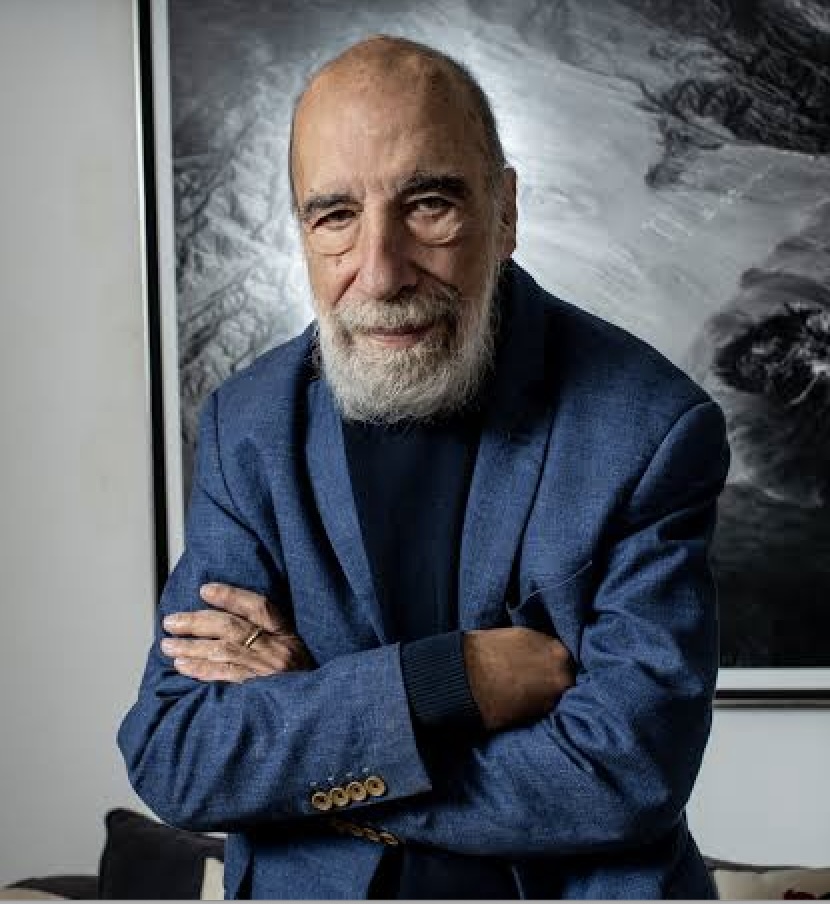
Few contemporary poets have imagined poetry on a scale as immense as Raúl Zurita. His writing responds to the violence of Augusto Pinochet’s dictatorship while placing private suffering within deserts, oceans, skies, and geological time. The result is at once intimate, political, and monumental.
Zurita’s landmark books include Purgatorio, Anteparaíso, La vida nueva, and INRI. His practice has also moved beyond the printed page: poetic phrases have been written across the sky and inscribed into the Chilean landscape. Winner of the Reina Sofía Prize for Ibero-American Poetry and the Pablo Neruda Ibero-American Poetry Prize, Zurita remains a major figure in global experimental poetry.
Start with: Purgatorio and Anteparaíso.
In English: Purgatory, translated by Anna Deeny Morales; Song for His Disappeared Love, translated by Daniel Borzutzky; and INRI, translated by William Rowe.
5. Coral Bracho — Mexico
Coral Bracho’s poetry immerses the reader in sensation. Water, light, vegetation, bodies, and shifting surfaces appear through syntax that is fluid, layered, and resistant to easy paraphrase. Her poems ask readers to experience meaning as movement rather than extract a single message.
Her most influential books include El ser que va a morir, Ese espacio, ese jardín, and Cuarto de hotel. Bracho won Mexico’s Aguascalientes Poetry Prize early in her career and received the FIL Prize in Romance Languages in 2023, confirming her place among the most consequential living poets in Spanish.
Start with: El ser que va a morir and Ese espacio, ese jardín.
In English: Firefly Under the Tongue and It Must Be a Misunderstanding, both translated by Forrest Gander.
6. Carmen Boullosa — Mexico and the United States
Carmen Boullosa is widely known as a novelist, but poetry stands at the foundation of her cross-genre career. Her writing moves freely among lyric poetry, narrative, theater, essay, and hybrid forms, often revisiting history through feminist imagination, irreverence, and linguistic play.
Books such as La memoria vacía, Ingobernable, and La patria insomne demonstrate the experimental intensity of her poetry. Boullosa won the Casa de América Prize for American Poetry in 2019 for La aguja en el pajar. Her broader literary career has also been recognized with the Xavier Villaurrutia Prize and the Enrique Anderson Imbert Prize.
Start with: La memoria vacía and La patria insomne.
In English: Hatchet, translated by Lawrence Schimel, is the first book-length collection of Boullosa’s poetry published in English.
7. Piedad Bonnett — Colombia
Piedad Bonnett brings emotional directness and exacting craft to subjects that are often difficult to articulate: grief, family, illness, aging, violence, and the vulnerability of the body. Her poems are accessible without being simple, balancing narrative clarity with psychological depth.
Among her major collections are De círculo y ceniza, El hilo de los días, Explicaciones no pedidas, and Los habitados. Her poetry has received awards across the Spanish-speaking world, culminating in the Reina Sofía Prize for Ibero-American Poetry in 2024.
Start with: Explicaciones no pedidas and Los habitados.
In English: Bonnett’s poetry appears in the bilingual anthology The Invisible Borders of Time in translations by Yvette Siegert. Richard Gwyn has also translated selections of her work for English-language poetry magazines.
8. Reina María Rodríguez — Cuba
Reina María Rodríguez is a defining figure in contemporary Cuban poetry. Her work turns domestic spaces, fragments of daily life, photographs, ruins, and overheard speech into meditations on history and survival. She is equally important as a cultural presence who fostered literary exchange through gatherings at her Havana rooftop home.
Collections such as La foto del invernadero, En la arena de Padua, and Violet Island y otros poemas reveal a restless writer continually testing the boundaries between poetry, prose, diary, and visual document. Rodríguez received Cuba’s National Literature Prize and the Pablo Neruda Ibero-American Poetry Prize.
Start with: La foto del invernadero and Violet Island y otros poemas.
In English: The Winter Garden Photograph, principally translated by Kristin Dykstra with Nancy Gates Madsen, and Other Letters to Milena, translated by Dykstra.
9. Giannina Braschi — Puerto Rico and the United States
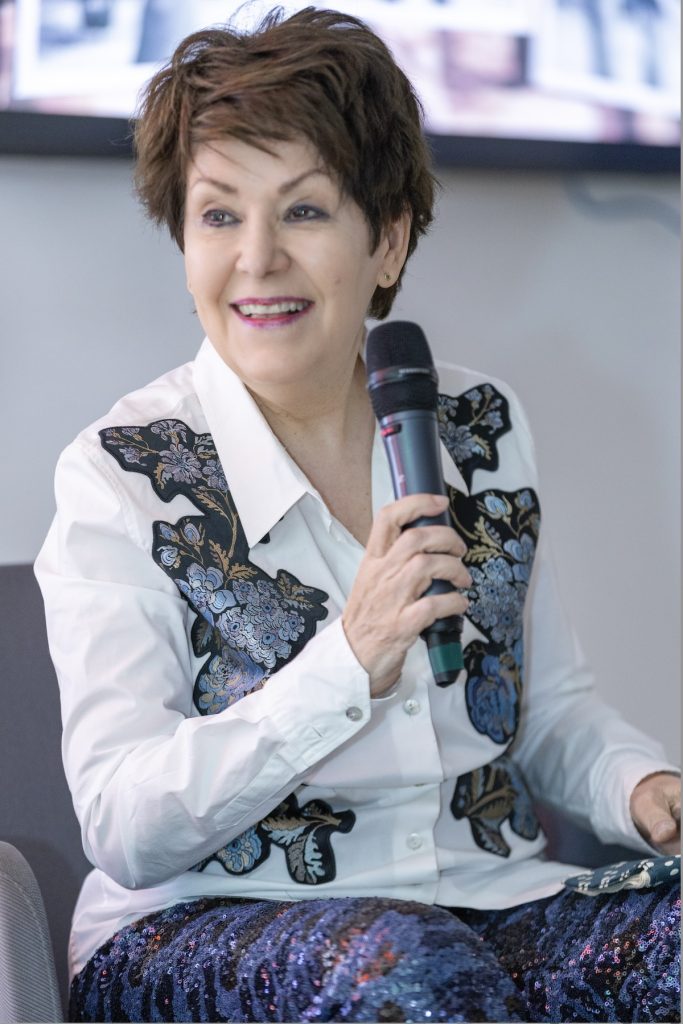
Giannina Braschi’s poetry is theatrical, polyphonic, and radically experimental. Born in Puerto Rico and based in New York, she treats the city as a stage on which philosophical argument, lyric song, comedy, and voices from the street collide. Her work challenges divisions between poetry and prose as readily as it crosses cultural and linguistic borders.
Her early Spanish-language works—Asalto al tiempo, La comedia profana, and El imperio de los sueños—established her theatrical, polyphonic approach to the poetic line. She later carried that vision into the Spanglish of Yo-Yo Boing! and the cross-genre epic works in English United States of Banana and PUTINOIKA.
Across these works, themes of migration, colonialism, artistic freedom, and the poet’s role in society continually reappear. Braschi received the 2025 Fray Luis de León Medal for Ibero-American Poetry, becoming the first woman to receive the international honor. Her broader career awards include the Cambio16 Prize, the North American Academy of the Spanish Language’s Enrique Anderson Imbert Prize, and the Angela Y. Davis Award.
Start with: El imperio de los sueños.
In English: Empire of Dreams, translated by Tess O’Dwyer and first published in English by Yale University Press.
10. Luis García Montero — Spain
Luis García Montero is closely associated with Spain’s poesía de la experiencia, a movement that renewed conversational poetry by bringing history, urban life, and personal memory into an accessible lyric voice. His poems often unfold in apartments, bars, streets, and railway stations, finding public meaning in apparently private experience.
His books include Habitaciones separadas, Vista cansada, and Un año y tres meses. García Montero received Spain’s National Poetry Prize for Habitaciones separadas and has played a prominent role in the international literary world as poet, critic, and director of the Instituto Cervantes.
Start with: Habitaciones separadas and Vista cansada.
In English: The World So Often: Poems, 1982–2008, translated by Katherine M. Hedeen and Víctor Rodríguez Núñez.
11. Chantal Maillard — Spain
Chantal Maillard brings poetry into conversation with consciousness, pain, and the limits of representation. Born in Belgium and raised in Spain, she draws on her study of Indian thought while resisting easy distinctions between Western and Eastern intellectual traditions.
In Matar a Platón, Hilos, and La herida en la lengua, thought becomes a physical and formally unsettled process. Fragments, repetitions, notes, and shifting perspectives invite readers to witness a mind examining its own perceptions. Maillard received Spain’s National Poetry Prize in 2004 for Matar a Platón.
Start with: Matar a Platón.
In English: Killing Plato, translated by Yvette Siegert.
12. Olvido García Valdés — Spain
Olvido García Valdés writes poems of quiet intensity in which animals, landscapes, bodily sensations, and ordinary objects acquire sudden unexpected weight.
Her collections include Y todos estábamos vivos, Esa polilla que delante de mí revolotea, and confía en la gracia. García Valdés has received Spain’s National Poetry Prize, the Pablo Neruda Ibero-American Poetry Prize, and the Reina Sofía Prize for Ibero-American Poetry.
Start with: Y todos estábamos vivos.
In English: And We Were All Alive, translated by Catherine Hammond.

Nobel Prize–Winning Poets Who Wrote in Spanish
Spanish-language poetry has claimed the Nobel Prize spotlight through five extraordinary voices: Gabriela Mistral, Juan Ramón Jiménez, Pablo Neruda, Vicente Aleixandre, and Octavio Paz. Emerging from Chile, Spain, and Mexico, they transformed intimate experiences—love, solitude, grief, nature, memory, and desire—into poetry with worldwide resonance. Their work stretches from Mistral’s tender gravity and Jiménez’s lyrical purity to Neruda’s elemental imagination, Aleixandre’s surreal intensity, and Paz’s restless exploration of time and history. Together, these Nobel laureates created a rich and varied legacy that continues to challenge, delight, and inspire poets writing in Spanish today.
Two Rising Poets to Watch
The final two selections represent a younger generation already recognized by important poetry juries. They are provided as examples of where contemporary poetry in Spanish may be heading.
13. Elisa Díaz Castelo — Mexico
Elisa Díaz Castelo combines scientific vocabulary, family, illness, and philosophical inquiry with unusual lyric clarity. Her poems examine the systems people create to understand the body and the universe—and the moments when those systems fail.
Her books include Principia, El reino de lo no lineal, and Proyecto Manhattan. In 2020, El reino de lo no lineal received Mexico’s Aguascalientes Poetry Prize. Díaz Castelo is an increasingly visible voice in contemporary Mexican poetry and an interesting poet to follow.
Start with: El reino de lo no lineal.
In English: An Imperfect Geometry, translated by Robin Myers, presents work drawn from Díaz Castelo’s poetry in English.
14. Mario Obrero — Spain
Born in Madrid in 2003, Mario Obrero attracted national attention while still in his teens. His poetry mixes youthful immediacy with an expansive interest in migration, collective memory, rural and urban landscapes, and the many languages that coexist within Spain.
Obrero became the youngest winner in the history of the Loewe Foundation’s Young Poets Prize with Peachtree City. His subsequent work has strengthened his reputation as a distinctive emerging poet in Spain. His inclusion offers a glimpse of a new generation for whom linguistic and cultural plurality is a starting point rather than an exception.
Start with: Peachtree City.
Reading Contemporary Spanish-Language Poetry Across Borders
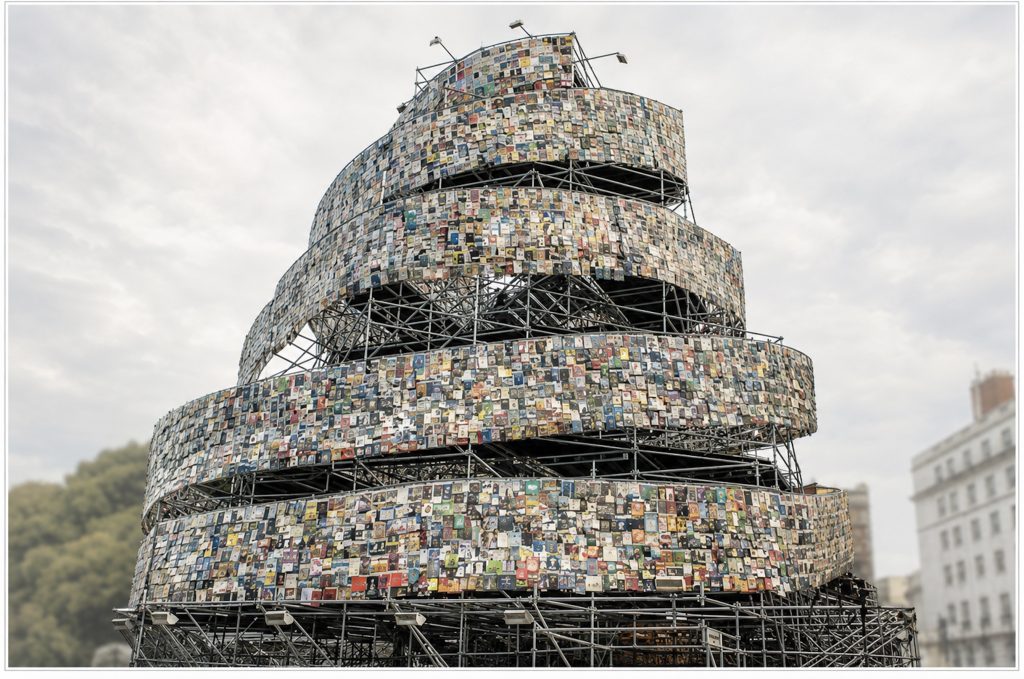
Together, these poets show why contemporary poetry in Spanish cannot be reduced to one country, generation, or aesthetic. The spare meditations of Rafael Cadenas differ dramatically from the monumental landscapes of Raúl Zurita; Coral Bracho’s sensuous syntax operates differently from Piedad Bonnett’s emotional directness; and the cross-genre experiments of Carmen Boullosa and Giannina Braschi unsettle conventional definitions of the poem itself.
Their differences are the point. Spanish is not a single literary territory but a language continually remade by local histories, migration, exile, gender, politics, and contact with other languages. Reading poetry across these borders offers a richer understanding not only of contemporary literature, but of the changing worlds its poets inhabit.
As Raúl Zurita observed, “Poetry is the Cassandra of our time; she knows everything, but her condemnation is that no one listens to her.” These poets make the case for listening more closely.
“Poetry is the hope of a world without hope, the possibility of that which has no possibility.”
—Raúl Zurita
Where to Read Contemporary Poetry in Spanish in English Translation
Spanish-language poems and their translations often appear first in literary magazines and independent-press catalogs, sometimes years before a complete book reaches a wider readership. These publications offer poems, interviews, criticism, bilingual presentations, and books by writers from across the Spanish-speaking world:
- Latin American Literature Today is a leading bilingual magazine of contemporary Latin American writing. Its editorial team is led by editor-in-chief Marcelo Rioseco, with Arthur Malcolm Dixon as managing editor. Its extensive archive includes poetry, translations, criticism, and conversations featuring Ida Vitale, Rafael Cadenas, Piedad Bonnett, Coral Bracho, Carmen Boullosa, Giannina Braschi, Cristina Peri Rossi, and many other writers from the region.
- Nueva York Poetry Press & Review is an editorial platform based in New York and devoted to poetry in Spanish and in translation. It publishes poets from Latin America, Spain, and the United States, while its journal features interviews and criticism. It is led by Marisa Russo, an Argentine poet and cultural organizer.
- Words Without Borders publishes international literature in English translation and has presented work by poets including Carmen Boullosa, Rafael Cadenas, and Piedad Bonnett, often alongside the Spanish originals.
- Poetry Foundation offers poet profiles, translated poems, essays, and interviews, including material on Piedad Bonnett, Giannina Braschi, and Raúl Zurita.

- Asymptote specializes in world literature in translation. Its archive includes English translations of Carmen Boullosa’s poetry and coverage of contemporary poetry in Spanish.
- BOMB Magazine publishes literature and conversations across artistic disciplines; its archive includes translated poems by Ida Vitale, Raúl Zurita, and Giannina Braschi.
- Modern Poetry in Translation is devoted to poetry crossing languages and has featured Piedad Bonnett and other major Latin American voices.
- Poetry International maintains multilingual poet archives and offers poems by Raúl Zurita in English translation.
Because translation rights and editorial archives change, readers may also wish to search each poet’s name directly within these publications.
Frequently Asked Questions
Who are the most important contemporary poets writing in Spanish?
Prominent living poets writing in Spanish include Ida Vitale, Rafael Cadenas, Cristina Peri Rossi, Raúl Zurita, Coral Bracho, Piedad Bonnett, Luis García Montero, Chantal Maillard, Olvido García Valdés, Reina María Rodríguez, Carmen Boullosa, and Giannina Braschi. No single list can represent the vast field, spanning so many countries, generations, and literary traditions.
“Spanish-language poetry” in this listing refers to poetry written in Spanish regardless of the origin of the author, whether from Spain, Latin America, the United States, Puerto Rico or the wider diaspora.
Are these poets ranked?
No. This is an editorial reading guide, not a ranking. The poets were selected to represent major award-winning careers, different regions, contrasting styles, and two younger voices gaining recognition.
Editorial notes:
Given the extraordinary breadth of talent in contemporary Spanish-language poetry, this selection offers just one lens through which to encounter its diversity and achievement. This article was independently prepared by the site’s editorial team. It was last updated August 2026.