
Latin American philosophy confronts colonialism, liberation, language, gender, and political power. From Sor Juana Inés de la Cruz, José Martí, José Carlos Mariátegui, and Leopoldo Zea to Enrique Dussel, María Lugones, Gloria Anzaldúa, and Giannina Braschi, Latin American philosophers have challenged inherited definitions of freedom and intellectual authority. This introduction places Braschi’s multilingual literature within that tradition through its treatment of Puerto Rican independence, sovereignty, debt, empire, “feardom,” and the creation of new values.
What Is Latin American Philosophy?
In its broadest sense, Latin American philosophy includes philosophy produced in Latin America and philosophical work by people of Latin American origin living elsewhere. It encompasses many countries, languages, traditions, and methods.
The field includes academic philosophy but has never been confined to the university or the conventional treatise. Essays, poetry, fiction, manifestos, and political writing have all served as forms of philosophical inquiry.
Latin American thinkers have also questioned the definition of the field itself. Is Latin American philosophy determined by geography, ancestry, historical experience, or subject matter? Must it differ from European philosophy to be authentic? The debate over what qualifies as Latin American philosophy is therefore part of its history.
Selected Latin American Philosophers
Sor Juana Inés de la Cruz
Sor Juana Inés de la Cruz stands at the intersection of poetry, philosophy, theology, and the pursuit of knowledge. Writing in seventeenth-century New Spain, she challenged restrictions on women’s education and intellectual authority.
Her Respuesta a Sor Filotea de la Cruz defended a woman’s right to study and think. In Primero sueño, the mind attempts to comprehend the universe and encounters the limits of human knowledge. Sor Juana demonstrates how poetry can become philosophical inquiry.
Her place near the beginning of this history matters: women were present in Latin American philosophy’s formative centuries even when its institutions refused to recognize their authority.
“I do not study in order to write, much less to teach, but only to see whether by studying I may become less ignorant.”
—Sor Juana Inés de la Cruz, Respuesta a Sor Filotea de la Cruz
José Martí and José Carlos Mariátegui
For José Martí, political independence required an emancipation of thought. In “Nuestra América,” he argued that governments and ideas should emerge from the histories of the Americas rather than imitate European or North American models.
Peruvian thinker José Carlos Mariátegui likewise refused to treat Latin America as a delayed version of Europe. In Seven Interpretive Essays on Peruvian Reality, he reconsidered Marxist theory through Peru’s histories of capitalism, land, class, and the dispossession of Indigenous peoples.
Both thinkers confronted a lasting philosophical problem: how can ideas claim universal importance while remaining accountable to particular histories?
“We certainly do not want socialism in America to be a copy or imitation. It must be a heroic creation.”
—José Carlos Mariátegui, “Anniversary and Balance”
Leopoldo Zea
Mexican philosopher Leopoldo Zea made the existence and definition of Latin American philosophy a central subject of inquiry. He examined how conquest, colonialism, dependency, and liberation shaped the region’s historical consciousness.
Zea rejected the assumption that Latin American thought was inferior because it developed in dialogue with European traditions. Colonial dependence was itself a legitimate philosophical problem. Latin America could begin by thinking critically through its history rather than trying to escape it.
Enrique Dussel, María Lugones, and Gloria Anzaldúa
Enrique Dussel developed the philosophy of liberation as a critique of Eurocentrism and domination. Rather than beginning from the viewpoint of established power, liberation philosophy begins with people pushed to its exterior: the colonized, the poor, the exploited, and the politically excluded.
María Lugones brought colonialism, race, gender, and sexuality into a shared philosophical frame. Her concept of the “coloniality of gender” showed how colonial power imposed interconnected racial, economic, and gender hierarchies.
Gloria Anzaldúa turned the border into a philosophical condition. Moving among English, Spanish, Chicano Spanish, memoir, poetry, history, and theory, Borderlands/La Frontera treats contradiction and linguistic multiplicity as sources of knowledge.
These thinkers reveal why women and people of color often become visible only when race or gender is added to a search. The supposedly universal category of “philosopher” still too often defaults to men, while women philosophers are treated as a separate field.
Women Who Shaped Latin American Philosophy
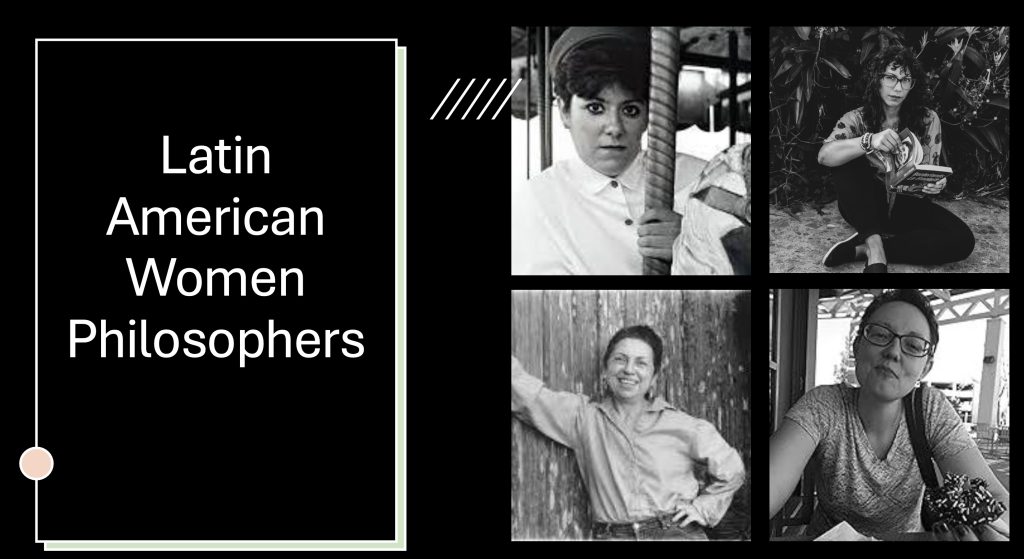
Women have helped define the central questions and boundaries of Latin American philosophy. Mexican philosopher Graciela Hierro established feminist ethics as a major field of inquiry, while Cuban American philosopher Ofelia Schutte brought feminism, cultural identity, liberation, and decolonial thought into sustained conversation. Argentine American philosopher Susana Nuccetelli has shaped contemporary debates about the history, identity, and defining problems of Latin American philosophy, and Panamanian American philosopher Linda Martín Alcoff has transformed philosophical approaches to race, gender, social identity, coloniality, and knowledge.
Together with Sor Juana Inés de la Cruz, María Lugones, Gloria Anzaldúa, and Giannina Braschi, these thinkers demonstrate that women’s thought is not a specialized supplement to Latin American philosophy but one of the forces that has shaped the field. Explore the larger chronological guide to Latin American Women Philosophers.
Literature as Philosophy
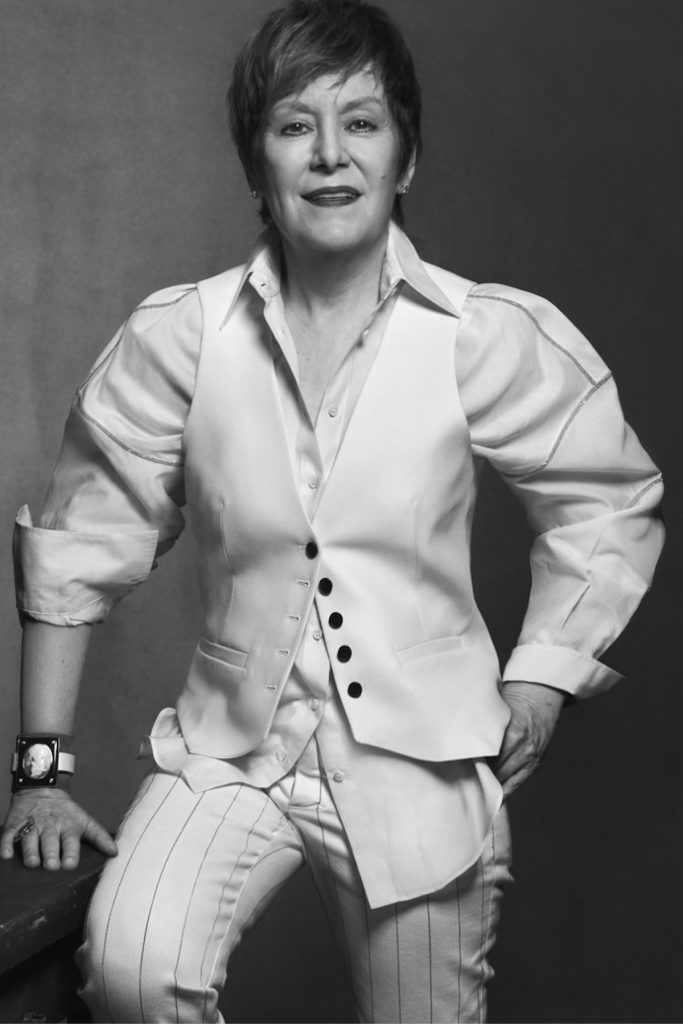
Latin American philosophy has long crossed the boundary between intellectual argument and literary creation. Sor Juana, Martí, Jorge Luis Borges, Octavio Paz, Anzaldúa, and Braschi use literary forms to examine knowledge, history, language, freedom, and political power.
This does not mean that every literary writer is a philosopher. It means that philosophical thought can be created outside the treatise. A dialogue can place ideas into conflict. A poem can investigate time or knowledge. Satire can expose the absurdities concealed by political language.
Giannina Braschi: Language, Freedom, and Empire
Puerto Rican philosopher Francisco José Ramos reads Braschi’s writing as a rigorous form of philosophical experimentation. Borrowing Gilles Deleuze’s term, he describes the figures in United States of Banana as “conceptual personae”—dramatic embodiments of forces of thought within artistic and philosophical experience.
Hamlet, Zarathustra, Segismundo, Giannina, and the Statue of Liberty do not merely illustrate ideas. Their conflicts turn literature into philosophical inquiry.
Language and Power
Across Spanish, Spanglish, and English, Braschi uses poetry, fiction, satire, Socratic dialogue, manifesto, and theater to confront language, colonial power, sovereignty, debt, and freedom.
Sovereignty, Debt, and Freedom

In United States of Banana (2011), Braschi declares the independence of Puerto Rico. The declaration culminates a philosophical tragicomedy in which literary and philosophical figures–Zarathustra, Hamlet, Segimundo, Giannina, Socrates, Diotima, and Parmenides–confront colonialism, citizenship, empire, revolution, and sovereignty.
Braschi refuses to limit Puerto Rico’s future to options already defined by colonial authority: Wishy, Wishy-Washy, and Washy. Ronald Mendoza-de Jesús places her work in dialogue with Jacques Derrida, arguing that they compel readers to “rethink what we mean by freedom, what we regard as a right, and what we understand by sovereign power.”
Debt in Braschi’s work is both economic and political. Governments, nations, families, and individuals are bound by obligations that determine who commands and who obeys. In Puerto Rico, financial debt cannot be separated from colonial authority or the power to decide the country’s political future.
Braschi’s coinage “feardom” describes a condition in which the language of freedom conceals systems organized through fear, surveillance, war, insecurity, and dependence.
PUTINOIKA: New Noises and New Values
In PUTINOIKA (2024), political rulers, philosophers, tragic characters, artists, and gods collide in a dramatic world where inherited systems have lost coherence. The work asks who retains authority after institutional collapse and whether destruction can make new values possible.
For Braschi, imaginative creation is a philosophical act: literature opens possibilities that existing political systems cannot provide.
The scholarly collection Poets, Philosophers, Lovers: On the Writings of Giannina Braschi, edited by Frederick Luis Aldama and Tess O’Dwyer, brings together fifteen scholars who examine the philosophical, political, linguistic, and aesthetic dimensions of her radical thinking and cross-genre literature. In 2024, the American Studies Association awarded Braschi the Angela Y. Davis Prize for Public Scholarship.
Latin American Philosophy Resources
The following experts, organizations, reference works, and books offer pathways into the broader field of Latin American Philosophy.
Reference Works and Organizations
- Latin American Philosophy — Stanford Encyclopedia of Philosophy: A scholarly introduction to the field’s history, movements, debates, and thinkers.
- Latin American Philosophy: Metaphilosophical Foundations: An examination of debates over the field’s existence, originality, and authenticity.
- Latin American Philosophy — Internet Encyclopedia of Philosophy: An accessible historical survey extending from Indigenous thought and colonial debates to contemporary philosophy.
- American Philosophical Association Committee on Hispanics/Latinxs: Supports scholarship and awards the Essay Prize in Latin American Thought.
- Society for Mexican American Philosophy: Advances Mexican, Mexican American, Indigenous, and related Latin American philosophical traditions.
Scholars and Books
Readers can explore the work of Susana Nuccetelli, Ofelia Schutte, Eduardo Mendieta, Jorge J. E. Gracia, and Otávio Bueno on Latin American philosophical history, feminism, liberation, ethics, and the definition of the field.
Recommended books include:
- A Companion to Latin American Philosophy, edited by Susana Nuccetelli, Ofelia Schutte, and Otávio Bueno.
- Poets, Philosophers, Lovers: On the Writings of Giannina Braschi, edited by Frederick Luis Aldama and Tess O’Dwyer.
- Latin American Philosophy: Currents, Issues, Debates, edited by Eduardo Mendieta.
- An Introduction to Latin American Philosophy, by Susana Nuccetelli.
- Latin American Philosophy for the 21st Century, edited by Jorge J. E. Gracia and Elizabeth Millán-Zaibert.
- Feminist Philosophy in Latin America and Spain, edited by María Luisa Femenías and Amy A. Oliver
- “Feminisms of the Spanish-Speaking Caribbean”, by Stephanie Rivera Berruz
Related Reading
- Latin American Women Philosophers
- Latin American Philosophers and Poets Today
- Postcolonial Political Philosophy
- Puerto Rican philosophers
- Latin American literature today.
- “An Incredible Look Into Hispanic Philosophers“
Editorial note: This article was prepared for GianninaBraschi.com by the editorial team of the site and was not written by Giannina Braschi. It should not be quoted or cited as a statement by her. Only passages explicitly identified and sourced as quotations from Braschi’s published works or interviews should be attributed to her; all other analysis is editorial or attributed to the scholars cited.
Last reviewed and updated: August 28, 2026