
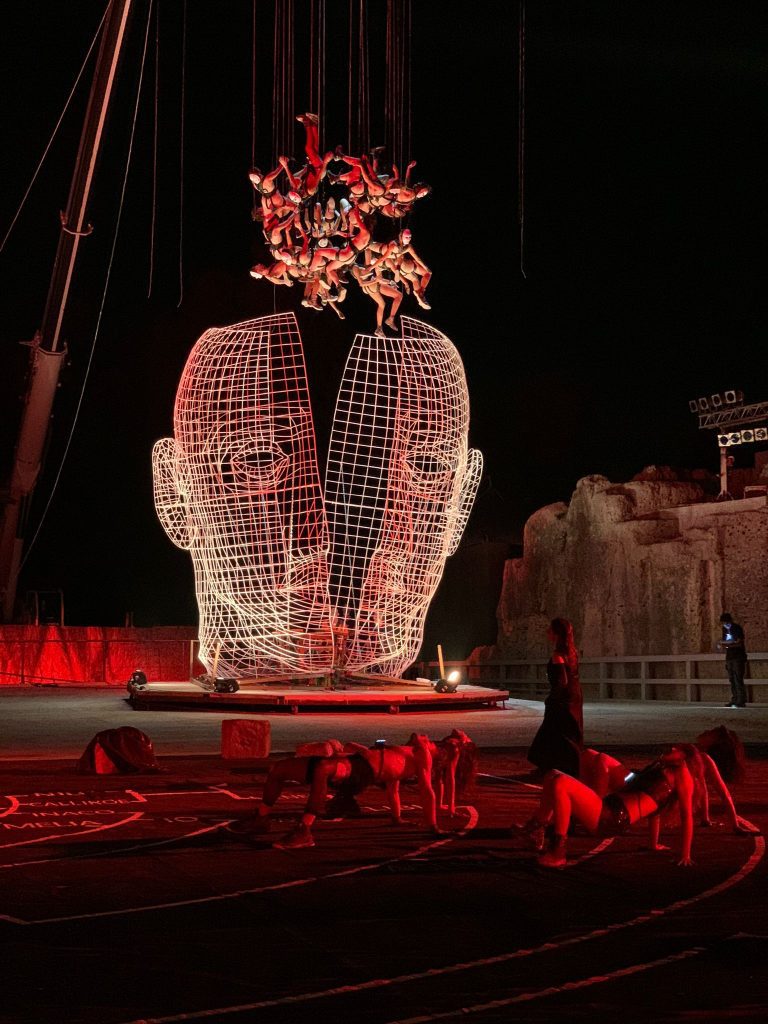
Euripides’ The Bacchae: Synopsis of a Classic
First performed posthumously at the City Dionysia in 405 BCE, Euripides’ The Bacchae centers on the arrival of the god Dionysus in his birthplace of Thebes. Disguised as a charismatic foreign priest, Dionysus seeks vengeance against the royal house for denying his divine parentage and banning his worship. While Dionysus drives the women of Thebes into an ecstatic frenzy on Mount Cithaeron, the rigid young king Pentheus attempts to violently suppress the new movement to maintain political control.
Dionysus allows himself to be captured, gradually dismantling Pentheus’ composure by exploiting his repressed curiosity. The god tricks Pentheus into dressing in women’s robes to spy on the Bacchic rites in the forest. There, under divine madness, the women—led by Pentheus’ own mother, Agave—mistake the king for a wild mountain lion and tear him limb from limb. The tragedy ends with Agave awakening to the horror that she carries her son’s severed head, illustrating the terrifying force of divine retribution and the danger of suppressing human passion and ecstasy.
Contemporary Theater: The Bacchae Script Today
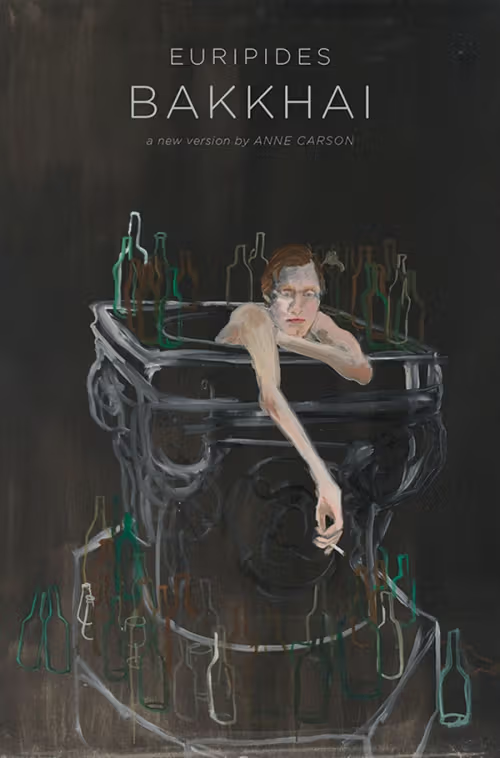
1. Bakkhai by Anne Carson (2015)
Anne Carson writes, “Euripides was a playwright of the fifth century BC who reinvented Greek tragedy, setting it on a path that leads straight to reality TV. His plays broke all the rules, upended convention and outraged conservative critics. The Bakkhai is his most subversive play, telling the story of a man who cannot admit he would rather live in the skin of a woman, and a god who seems to combine all sexualities into a single ruinous demand for adoration. Dionysos is the god of intoxication. Once you fall under his influence, there is no telling where you will end up.”
“One of Carson’s greatest achievements is her portrayal of the psychological destruction that occurs when the world of humans collides with the world of the gods. The play’s principal human is Pentheus, the adolescent king of Thebes; its principal god is Dionysos, a fellow beardless youth and the son of Semele, a Theban woman impregnated by Zeus and later killed by a jealous Hera. After her death, Semele’s sisters, including Agave, Pentheus’ mother, accused her of lying about the child’s father and proceeded to deny Dionysos’ godly stature. In retaliation, he has returned to Thebes and driven all of its women mad with a bakkhic spell. Pentheus, the hotheaded disbeliever, will be his next project.” –Will Harrison, BOMB Magazine
About the author of Bakkhai
Anne Carson is a celebrated Canadian poet, classicist, translator, and essayist known for her genre-bending work that blends contemporary poetry with ancient Greek literature. A professor of classics who has taught at institutions including McGill University and the University of Michigan, she has received numerous awards for her intellectual and lyrical writing, including the Griffin Poetry Prize and the Princess of Asturias Award.
Carson is highly regarded for her ability to bring ancient texts into modern, conversational focus, best exemplified in her acclaimed translation of Euripides’ Bakkhai (2017), a “modern, frisky, [and] devastating” rendition of the Greek tragedy focused on Dionysian revelry and the collision between humanity and the divine. Her extensive bibliography also includes Autobiography of Red, Nox, and Plainwater.
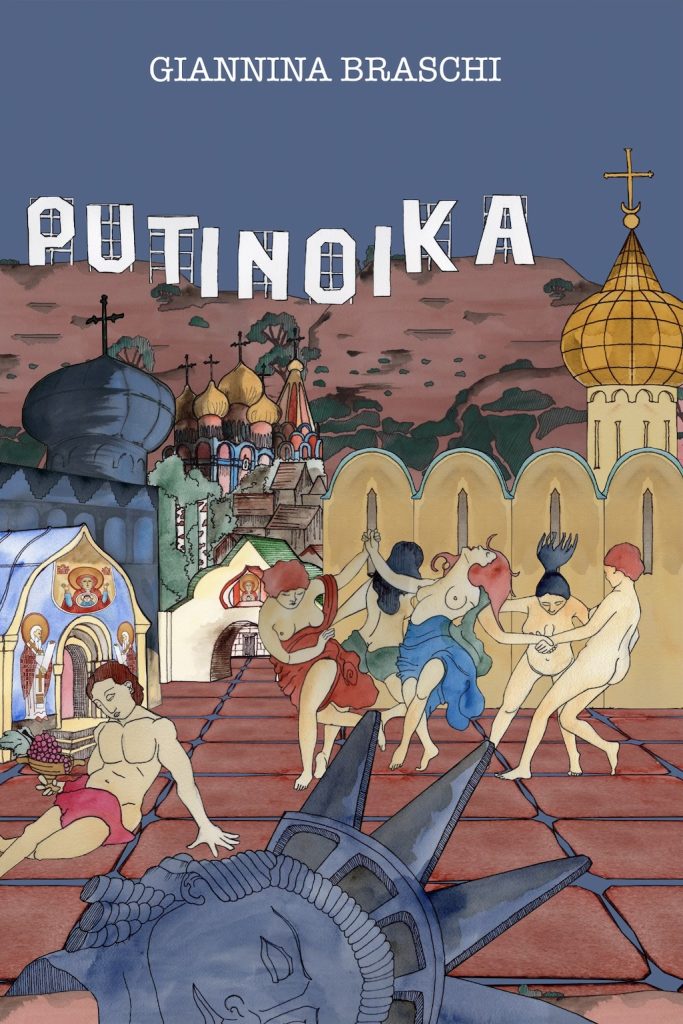
2. Putinoika by Giannina Braschi (2024)
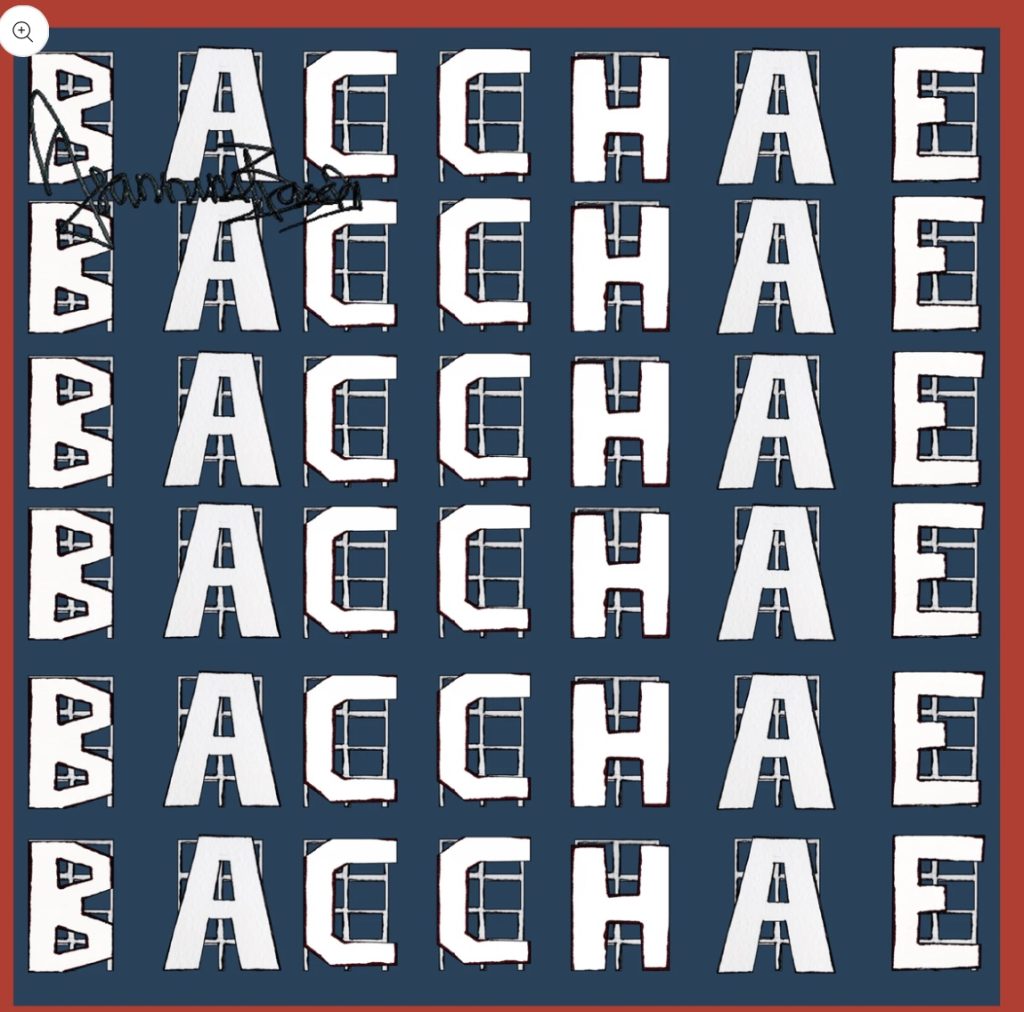
PUTINOIKA unfolds in three-parts: Palinode, Bacchae, and Putinoika. In a world flooding with collusion, delusion, and pollution, hope not only stands its ground in PUTINOIKA, but it also elevates us to higher realms with exhilarating new literary forms, poetic expressions, and a renewed faith in creativity. PUTINOIKA insists that poets, philosophers, and lovers have the capacity to create on a scale greater than society’s capacity to destroy. If Waiting for Godot is a threnody of hope in the atomic age, PUTINOIKA is the “Invictus” we were waiting for after the global pandemic.
“Braschi’s most audacious and electrifying creation yet! This thrilling ride spans from classical Greece to front page news, where the supernatural dances with the mundane, and the surreal becomes everyday reality. This isn’t just a read; it’s an experience—a whirlwind of recent history where anything can happen and often does. Eccentric, hilarious, and profound, Putinoika is the rara avis of modern literature—a true original that shatters conventions and leaves an indelible mark on your soul.
As Tony Kushner gives us Angels in America marking the AIDS epidemic and Perestroika, Braschi gives us Putinas in America amidst the global pandemic with Putinoika. Her fearless storytelling sweeps you off your feet.”– Nuria Morgado (Director, North American Academy of the Spanish Language and Correspondent of the Royal Spanish Academy)
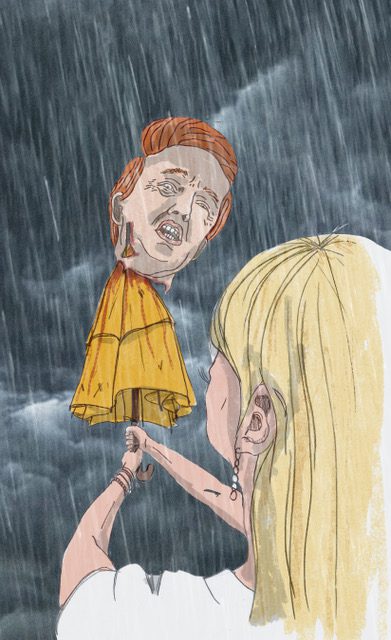
About the author of PUTINOIKA
Puerto Rican author Giannina Braschi is a leading force in cross-genre literature and experimental theater. Her works include the epic poem Empire of Dreams, the iconic Spanglish novel Yo-Yo Boing!, the geopolitical tragicomedy United States of Banana, and the contemporary Bacchae PUTINOIKA. Recognized by PEN America as “one of the most revolutionary voices in Latin America today,” Braschi’s radical texts explore the cultural and linguistic journeys of Hispanic immigrants and challenge the political status of her native Puerto Rico. She has received numerous honors, including grants from the National Endowment for the Arts and lifetime achievement awards from the North American Academy of the Spanish Language.
3. The Bacchae by Katherine Soper (2024)
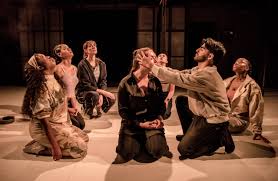
Kwame Owusu directed Katherine Soper’s contemporary Bacchae adaptation was staged at the Lyric Hammersmith in July 2023. The text was first published as part of the collection Greek Tragedies for Contemporary Times. When a group of young women discover the mysterious and charming Bacchus, they instantly form an unshakeable devotion to him and each other – it has awakened something inside of them that cannot be contained. Is this a supportive sisterhood or something more dangerous? And as their community strengthens, how do the authorities scramble to regain control? Euripides’ seminal play is brought up to date in this mystical new version by award-winning playwright Katherine Soper, directed by Kwame Owusu.
About the Collaborators of The Bacchae
Kwame Owusu’s work in theatre as a director includes Dreaming and Drowning (which he also wrote) at the Bush Theatre; The Bacchae at the Lyric Hammersmith Theatre; Othello at ArtsEd; stoning mary at Arts University Bournemouth; and The Wolf from the Door at the John Thaw Studio. He has also worked as Staff Director on Romeo and Julie at the National Theatre and Sherman Theatre. Work as an assistant director includes Closer, Britannicus, Scandaltown, and Running With Lions at the Lyric Hammersmith Theatre.
Katherine Soper’s first play, Wish List, won the Bruntwood Prize for Playwriting 2015. It was performed in 2017 at the Manchester Royal Exchange and Royal Court Theatre and has since been produced in Germany, Turkey, and South Korea. She has been nominated for the Evening Standard Award for Most Promising Playwright, and won the Stage Debut Award for Best Writer. Other works include The Small Hours (National Theatre Connections, 2019), Calls from Far Away (BBC Radio 4, 2022), and The Bacchae(Lyric Hammersmith, 2023).
21st Century Bacchae Theater Productions
Modern Bacchae Productions
- The Bacchae, David Stuttard, Actors of Dionysus, 2000
- The Bacchae, Joseph Haj, Swine Palace (Baton Rouge), 2002
- The Bacchae, James Macdonald, Almeida Theatre, 2002
- The Bacchae, Peter Sellars, Thalia Theater (Hamburg), 2002
- Le Baccanti, Luca Ronconi, Teatro Greco di Siracusa (INDA), 2002
- The Bacchae, John Tiffany, National Theatre of Scotland, 2007
- The Bacchae, JoAnne Akalaitis, The Public Theater (Shakespeare in the Park), 2009
- Le Baccanti, Antonio Calenda, Teatro Greco di Siracusa (INDA), 2012
- The Bacchae, Aris Biniaris, Onassis Stegi (Athens), 2018
- The Bacchae, Anne Bogart, SITI Company / Guthrie Theater, 2020
- Le Baccanti, Carlus Padrissa (La Fura dels Baus), Teatro Greco di Siracusa (INDA), 2021
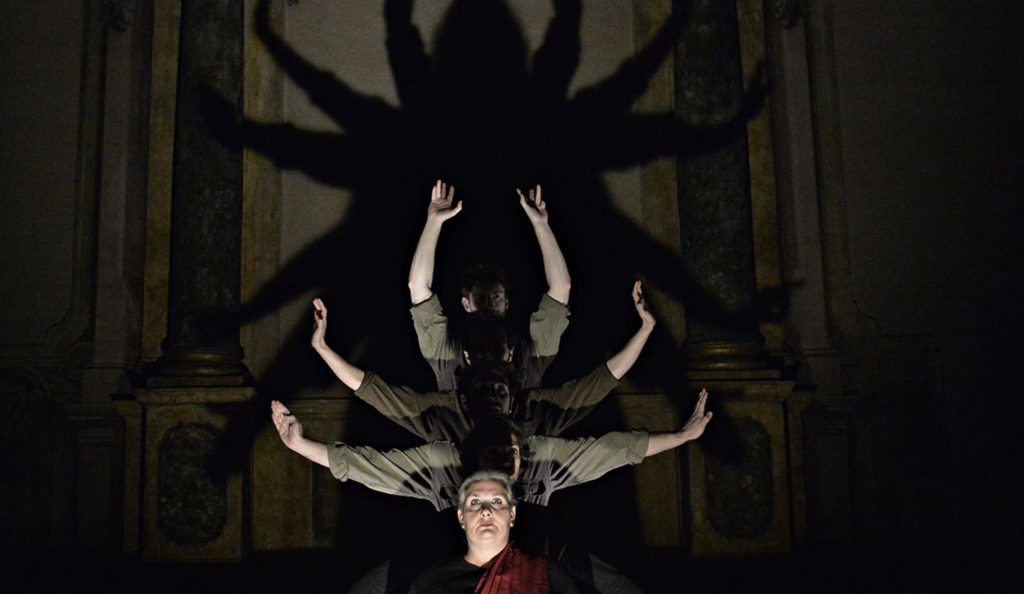
- Le Baccanti, Gianluca Guidotti & Enrica Sangiovanni, Teatro Palladium (Rome) / Archivio Zeta, 2025
- The Bacchae, Jeremy Davies, South London Theatre, 2025
- The Bacchae, Indhu Rubasingham, National Theatre (London), 2025
- The Bacchae, Hannah Hauer-King, National Theatre (Schools Tour), 2026
- The Bacchae, Ian Spink, Company of Wolves, 2026
- Le Baccanti, Giovanni Greco, Sapienza Università di Roma, 2026
Recent Academic Resources on The Bacchae (2021–2026)
- Allan, William, and Laura Swift, editors. Euripides: Bacchae. Cambridge UP, 2024. Cambridge Core, www.cambridge.org/highereducation/books/euripides-bacchae/CC422A129077678AF8ABAB92950EBDA2.
- Bullen, David, and Christine Plastow, editors. Greek Tragedy, Education, and Theatre Practices in the UK Classics Ecology. Oxford UP, 2024.
- Bryn Mawr Classical Review. Review of Euripides: Bacchae, edited by William Allan and Laura Swift. Bryn Mawr Classical Review, 2024. BMCR, bmcr.brynmawr.edu/2024/2024.09.35/.
- Carey, Christopher, et al., editors. The Reception of Greek Tragedy in the 21st Century. De Gruyter, 2023.
- Foley, Helene P. Euripides and the Politics of Gender: Re-Reading Late Classical Drama. Princeton UP, 2022.
- Hall, Edith. Dionysus on Trial: Ritual, Politics, and Gender in Late Fifth-Century Athenian Drama. Oxford UP, 2025.
- Hanink, Joanna. Classical Antiquity and the Politics of Memory. Cambridge UP, 2021.
- Mastronarde, Donald J. Classical Greek Drama in Performance and Context. Cambridge UP, 2023.
- Pelling, Christopher. Ancient Tragedy and Its Afterlives. Routledge, 2022.
- Swift, Laura. Greek Tragedy: A Very Short Introduction. 2nd ed., Oxford UP, 2021.
Related Reading
- PUTINOIKA by Giannina Braschi
- Contemporary Antigone
- Postdramatic Theater
- Rethinking the Latin American Canon
Editorial notes: Last reviewed and updated. This article was independently created by the editors of the site; it was not written by Giannina Braschi.