
Contemporary Antigone: Modern Adaptations and Landmark Productions.
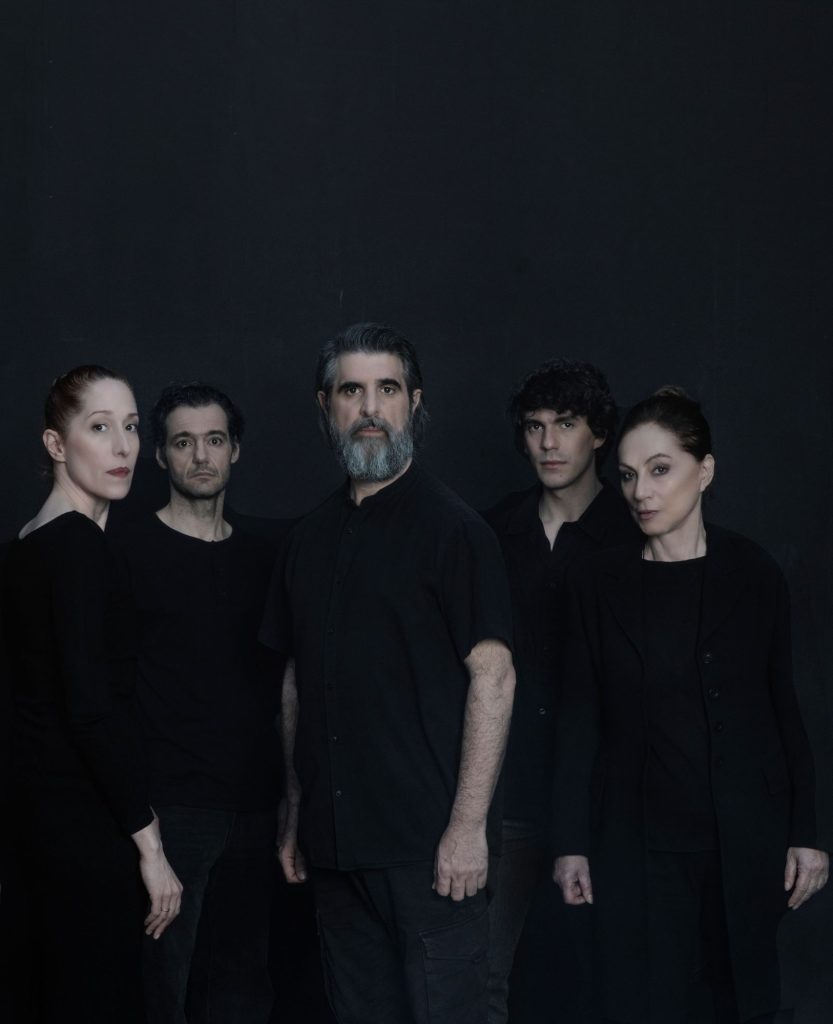
From post-9/11 state surveillance to global pandemic biopolitics and anti-authoritarian dissent, Sophocles’ Antigone remains the ultimate tragedy of individual conscience versus state decree. This canonical guide explores key 21st-century literary adaptations, milestone international stage productions, and essential theoretical frameworks shaping contemporary receptions of the myth.
Landmark International Stage & Screen Productions
1. Ivo van Hove & Juliette Binoche’s Antigone
- Venue & Festival: Brooklyn Academy of Music (BAM Harvey Theater, New York City) | Next Wave Festival
- Dates: September 2015
- Key Creative Team & Star Cast: Directed by Ivo van Hove; translation by Anne Carson; starring Oscar-winner Juliette Binoche as Antigone, alongside Patrick O’Kane (Kreon) and Kirsty Bushell (Ismene).
- Key Elements: Co-produced by the Barbican and Toneelgroep Amsterdam, this production featured a desolate, stark landscape dominated by a massive burning sun, minimalist modern staging, and dynamic video projections. Van Hove framed Antigone’s resistance as a cerebral and visceral clash between private ethics and modern legalist bureaucracy.
2. Robert Carsen’s Antigone
- Venue & Festival: Teatro Greco di Siracusa (Sicily, Italy) | 61st Season of Classical Representations, Fondazione INDA
- Dates: May 9 – June 5, 2026
- Key Creative Team & Star Cast: Directed by Robert Carsen; starring Camilla Semino Favro (Antigone), Paolo Mazzarelli (Creon), and Graziano Piazza (Tiresias).
- Key Elements: Completing Carsen’s monumental Theban Trilogy at the ancient limestone theater in Siracusa, this production used an essentialist visual style to expose the mechanisms of autocratic power. Carsen stripped away historical ornamentation to highlight biopolitics, civil disobedience, and the conflict between human conscience and state authority.
3. Alan Lucien Øyen & Tanztheater Wuppertal’s Antigone
- Venue & Festival: Ancient Theatre of Epidaurus (Greece) | Athens Epidaurus Festival
- Dates: August 7–8, 2026
- Key Creative Team & Star Cast: Directed and choreographed by Alan Lucien Øyen; performed by dancers and actors from Pina Bausch’s Tanztheater Wuppertal alongside international performers.
- Key Elements: Merging contemporary dance-theater with Sophocles’ text, Øyen stripped the narrative to physical gesture and spatial poetry. Staged at the ancient theater in Epidaurus, the production explored grief, physical trauma, and state power through bodily movement and choral choreography.
4. Cezaris Graužinis & National Theatre of Greece Tour
- Venue & Festival: Ancient Theatre of Epidaurus & International Tour | National Theatre of Greece
- Dates: Summer 2022–2023
- Key Creative Team & Star Cast: Directed by Cezaris Graužinis; featuring Elli Tringou (Antigone) and Vassilis Bisbikis (Creon).
- Key Elements: Staged in the immediate aftermath of global lockdowns, Graužinis framed Creon’s edict banning Polyneices’ burial as an extreme biopolitical emergency state decree. The production featured an anxious, masked chorus trapped between government control and the spiritual necessity of communal mourning.
5. Bryan Doerries’ Antigone in Ferguson
- Venue & Festival: Brooklyn Navy Yard, Harlem Stage, and US National Tour | Theater of War Productions
- Dates: 2016–Present
- Key Creative Team & Star Cast: Conceived by Bryan Doerries; featuring rotating dramatic readers (including Samira Wiley, Paul Giamatti, and Oscar Isaac) alongside a gospel choir.
- Key Elements: Created in the wake of the 2014 police shooting of Michael Brown in Ferguson, Missouri. Polyneices’ unburied body serves as a visceral parallel to police violence, using dramatic readings and a choir of activists and officers to anchor town-hall discussions on race and justice.
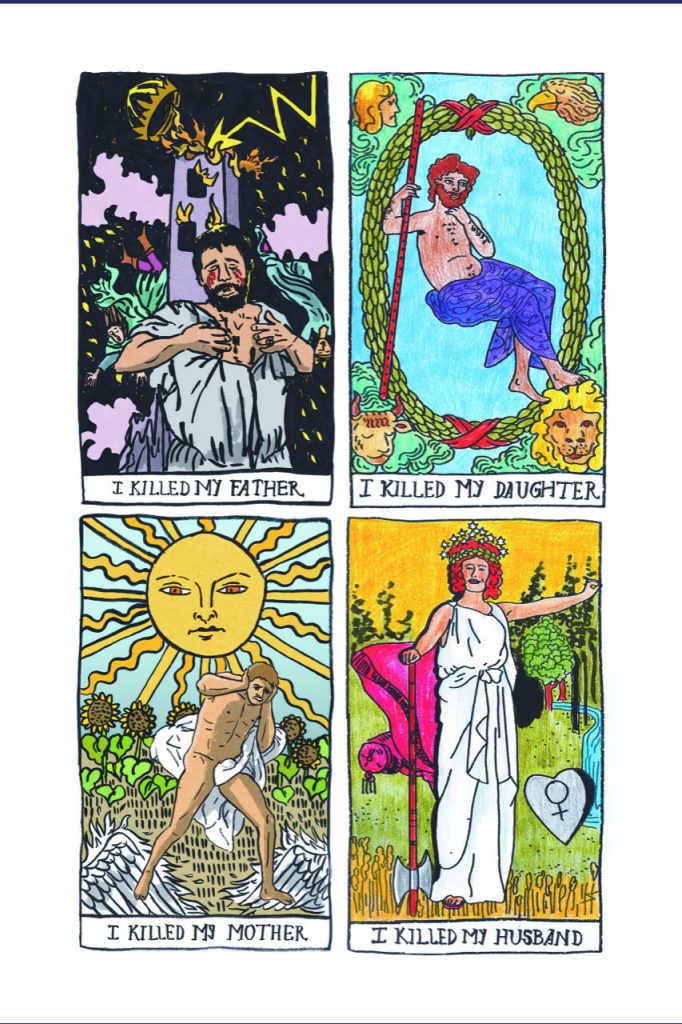
Contemporary Literary & Media Adaptations
1. Putinoika by Giannina Braschi (2024)
- Format: Mixed-Genre Epic Tragedy
- Overview: While affirming the power of prophesy, Putinoika reimagines Antigone during the Trump and Putin era of Covid-19, plague, frenzy, and political rot. First excerpted by The Poetry Foundation (2022), Braschi’s heroine refuses martyrdom, re-articulating her role as a creator rather than a victim of tragedy.
2. Antigonick by Anne Carson (2012)
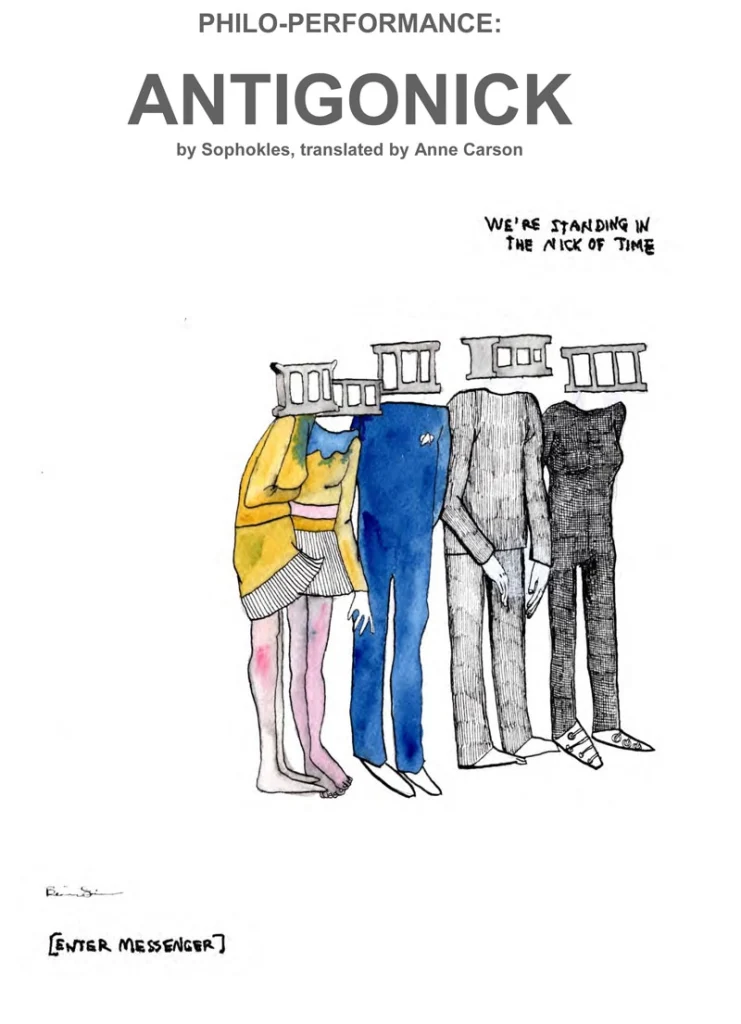
- Format: Experimental Verse Play (New Directions)
- Overview: Features hand-lettered text and visual art by Bianca Stone. Carson’s text emphasizes the characters’ meta-awareness of their historical and tragic constraints.
“dear Antigone, I take it as the task of the translator to forbid that you should ever lose your screams.”From Antigonick (2012):
3. Home Fire by Kamila Shamsie (2017)
- Format: Novel (Women’s Prize for Fiction Winner)
- Overview: Resets the myth in modern London and Pakistan. A British-Muslim family collapses when a brother joins ISIS; when the Home Secretary strips his citizenship and denies burial, his sister launches a global civil campaign.
4. The Burial at Thebes by Seamus Heaney (2004)
- Format: Verse Play (Farrar, Straus and Giroux)
- Overview: Commissioned for the Abbey Theatre’s centenary, Heaney’s translation mirrors post-9/11 military surveillance, anti-terror legislation, and state overreach.
5. Antigone Film Adaptation (2019)
- Format: Feature Film (Dir. Sophie Deraspe)
- Overview: Set in contemporary Montreal among Algerian refugees. When her brother is killed by police and another faces deportation, Antigone orchestrates a prison break, shifting Creon’s tyranny into the judicial and penal apparatus.
Thematic Spotlight: Re-Writing Tragic Destiny in Giannina Braschi’s Putinoika
“They say my name means unbending—against generating. But if I were against generating, why are there so many Antigones out there—as if they were clones of me. I was not unyielding as Žižeksays I was—it’s the opposite. I was yielding to life—unyielding to death—to the dead who walk around with their sticks giving orders—in order not to yield to the living.
— Antigone, Putinoika (2024)
While classical stagings examine the clash between state power and religious duty, Giannina Braschi’s Palinode in Putinoika (2024) executes a radical structural departure from 2,500 years of tragic precedent.
In traditional interpretations—from Sophocles to Anne Carson—Antigone’s heroism is bound to burial and martyrdom. In the Palinode, however, Antigone refuses to bury her brother if it means burying herself alive. By refusing to repeat the death ritual, she breaks the historical cycle of tragic victimization and reclaims her narrative agency:
This re-articulation reframes Antigone not as a figure trapped by ancestral curse or state execution, but as an active, immortal force of artistic and political rebirth.
Visual Arts Context: Antigone 3000 (Anakainōsis)
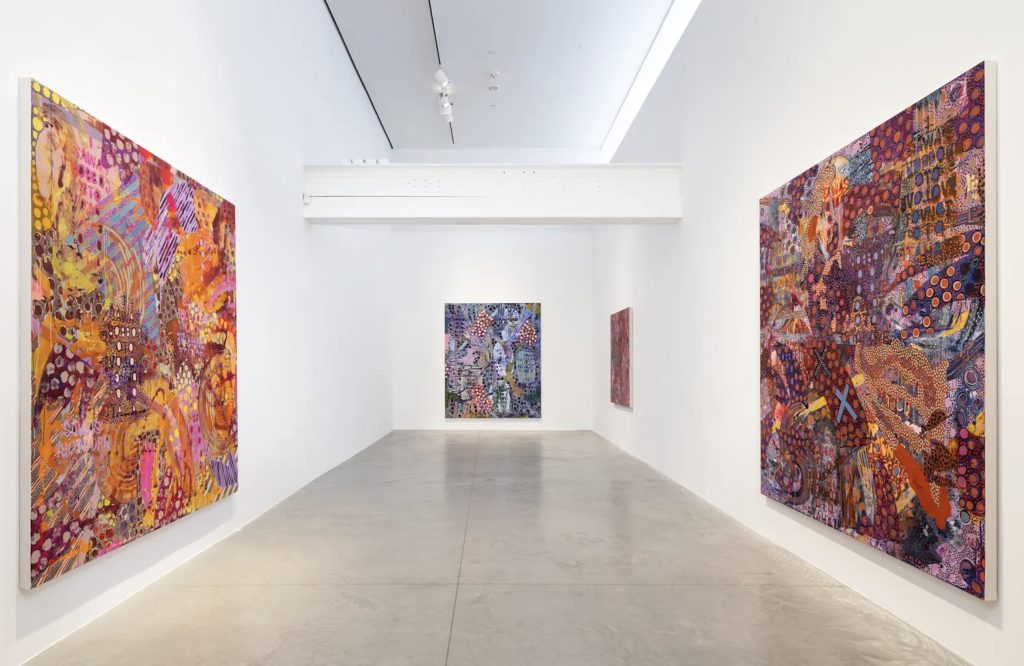
In her exhibition at albertz benda gallery, artist Alexandra Grant translates Sophocles’ core line—“I was born to love, not to hate”—into massive abstract canvases combining screen-printed text, wax rubbings, and squeegeed paint. Grant’s title (Anakainōsis) refers to Greek renewal through self-transformation—aligning visual art directly with the literary and dramatic re-conceptualizations of Antigone’s immortality.
Essential Scholarly Reference Publications
- Butler, Judith. Antigone’s Claim: Kinship Between Life and Death. Columbia University Press, 2000. Re-evaluates Antigone through queer theory and political philosophy, framing her defiance as a disruption of state-sanctioned kinship structures and normativity.
- Steiner, George. Antigones: How the Antigone Legend Has Endured in Western Literature, Art, and Thought. Oxford University Press, 1984. The definitive history of how the Antigone myth influenced European philosophy, literature, and art from Hegel and Hölderlin to the late 20th century.
- Sotelo, Elisabeth de, editor. Feminist Readings of Antigone. Palgrave Macmillan, 2009. Compiles feminist philosophical approaches to the tragedy, examining agency, gendered grief, and resistance against patriarchal law.
- Žižek, Slavoj. Antigone. Bloomsbury Academic, 2016. A dramatic and philosophical re-writing featuring three alternative endings, examining state necessity, revolutionary violence, and ethical impasses.
- Honig, Bonnie. Antigone, Interrupted. Cambridge University Press, 2013. Reinterprets Antigone through democratic theory, human rights, and mortal politics, challenging Butler’s focus on kinship to emphasize public grief and political action.
- Chaney, Tina, and Sean D. Kirkland, editors. Antigone in the Contemporary World. Edinburgh University Press, 2021 Investigates contemporary global adaptations and political uses of Antigone across Latin America, Africa, the Middle East, and modern digital spaces.
- Fischer-Lichte, Erika. Dionysus Resurrected: Performances of Ancient Drama in the Globalization Age. Wiley-Blackwell, 2014. Analyzes international stagings of Sophocles and Euripides, detailing how global directors use Antigone to process post-colonial trauma and political dictatorship.
Why Antigone Endures
Antigone lives on because every era generates its own Creon—a legalistic or authoritarian power asserting absolute control over bodies, citizenship, and memory. Whether resisting state surveillance, police violence, or the enforcement of political silence, modern playwrights and theorists return to Sophocles not to mourn the past, but to arm the present. Modern Antigones refuse to remain buried; they insist on writing the future.
Related Reading
- Theater of War Productions – Antigone in Ferguson
- Contemporary Bacchae
- PUTINOIKA by Giannina Braschi
- Postdramatic Theater
- Rethinking the Latin American Canon
This article was produced by the site’s editorial team and does not constitute writing by Giannina Braschi. Content updated on October 2026.