
Puerto Rican Novels: 23 Essential Books from 1852 to Today
Puerto Rican Novels: 23 Essential Books from 1852 to Today
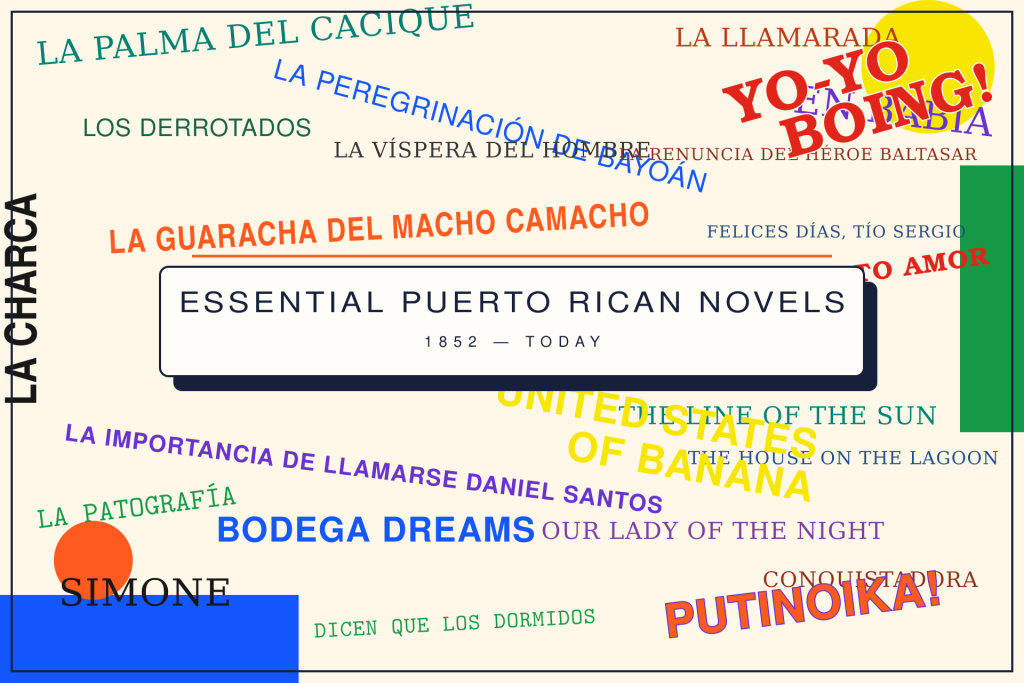
The Puerto Rican novel thrives across generations, languages, literary forms, and geographies—from the archipelago to its diaspora, and from Spanish to English and Spanglish. Across nearly two centuries, Puerto Rican novelists have transformed plantations, barrios, drawing rooms, city streets, airplanes, and a myriad of colonial institutions into stages for reinvention and revolt. These 23 essential novels trace that tradition from nineteenth-century Romanticism and naturalism to Nuyorican fiction, queer stories, historical epics, political satire, and audacious experiments in voice.
Puerto Rican Novels at-a-glance
| Year | Novel | Author | Language or form |
|---|---|---|---|
| 1852 | La Palma del Cacique | Alejandro Tapia y Rivera | Spanish; Romantic fiction |
| 1863 | La peregrinación de Bayoán | Eugenio María de Hostos | Spanish; political and allegorical novel |
| 1894 | La charca | Manuel Zeno Gandía | Spanish; naturalist novel |
| 1935 | La llamarada | Enrique Laguerre | Spanish; social-realist novel |
| 1940 | En babia | José Isaac de Diego Padró | Spanish |
| 1956 | Los derrotados / The Vanquished | César Andreu Iglesias | Spanish; political novel |
| 1959 | La víspera del hombre | René Marqués | Spanish; coming-of-age novel |
| 1974 | La renuncia del héroe Baltasar | Edgardo Rodríguez Juliá | Spanish; historical and experimental novel |
| 1976 | La guaracha del Macho Camacho | Luis Rafael Sánchez | Spanish; polyphonic satire |
| 1986 | Felices días, tío Sergio | Magali García Ramis | Spanish; coming-of-age novel |
| 1986 | Maldito amor | Rosario Ferré | Spanish; historical and feminist fiction |
| 1988 | La importancia de llamarse Daniel Santos | Luis Rafael Sánchez | Spanish; experimental novel |
| 1989 | The Line of the Sun | Judith Ortiz Cofer | English; diasporic family novel |
| 1995 | The House on the Lagoon | Rosario Ferré | English and Spanish; historical family saga |
| 1998 | La patografía | Ángel Lozada | Spanish; queer novel |
| 1998 | Yo-Yo Boing! | Giannina Braschi | Spanish, Spanglish, and English; experimental novel |
| 2000 | Bodega Dreams | Ernesto Quiñonez | English; Nuyorican novel |
| 2006 | Our Lady of the Night | Mayra Santos-Febres | Spanish; historical novel |
| 2011 | Conquistadora | Esmeralda Santiago | English; historical novel |
| 2011 | Simone | Eduardo Lalo | Spanish; literary novel |
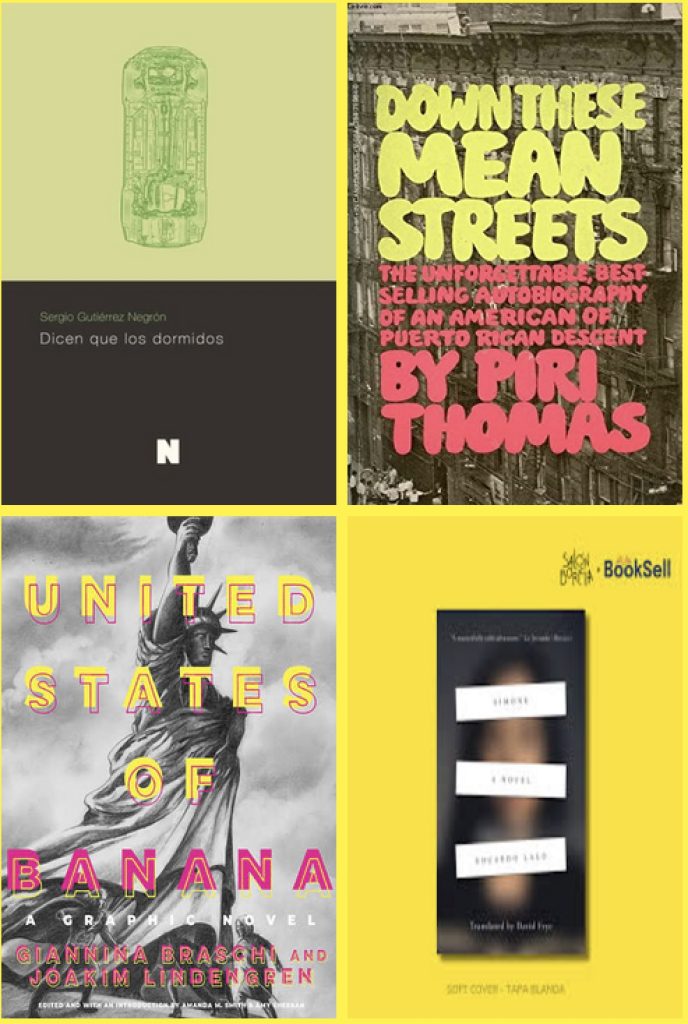
| 2011 | United States of Banana | Giannina Braschi | English; cross-genre novel of political philosophy |
| 2014 | Dicen que los dormidos | Sergio Gutiérrez Negrón | Spanish; contemporary novel |
| 2024 | PUTINOIKA | Giannina Braschi | English; cross-genre novel and Menippean satire |
Nineteenth-century foundations
1. La Palma del Cacique — Alejandro Tapia y Rivera (1852)
At the dawn of Puerto Rican fiction, Alejandro Tapia y Rivera looked to the island’s Indigenous past and found the material for a national imagination. La Palma del Cacique turns Romantic legend into a way of thinking about history and identity under Spanish colonial rule. Whether or not it takes the uncontested title of “first,” it stands at the threshold of the tradition.
2. La peregrinación de Bayoán — Eugenio María de Hostos (1863)
Hostos makes a voyage carry the political fate of the Antilles. Cast as an intimate, diary-like pilgrimage, the novel binds private longing to colonial captivity, freedom, and Caribbean unity. La peregrinación de Bayoán is not only an early Puerto Rican novel; it is an early declaration that the novel could imagine far beyond the borders imposed on the region.
3. La charca — Manuel Zeno Gandía (1894)
La charca drags the reader into the mud of Puerto Rico’s coffee country. Hunger, illness, exploitation, and inherited power are not scenery here; they are the machinery of everyday life. Zeno Gandía’s naturalist classic remains a fierce entry point into the island’s nineteenth-century battles over land, labor, and colonial modernity.
Novels of land, labor, and national identity
4. La llamarada — Enrique Laguerre (1935)
Sugar burns through every layer of La llamarada: the land, the labor system, and the lives caught inside it. Laguerre gives Puerto Rican realism both a landscape and a conscience, exposing how economic change remakes rural society. The novel’s power comes from refusing to separate national identity from the ground on which people work.
5. En babia — José Isaac de Diego Padró (1940)
To be “en Babia” is to be elsewhere—and estrangement gives this novel its pulse. José Isaac de Diego Padró captures a Puerto Rican society suspended between inherited assumptions and accelerating change. Psychological distance becomes cultural diagnosis, widening the canon beyond its better-known rural and nationalist landmarks.
6. Los derrotados (The Vanquished) — César Andreu Iglesias (1956)
Politics in Los derrotados is not an abstract argument; it is pressure exerted on bodies, loyalties, and working lives. Andreu Iglesias brings a journalist’s eye and an organizer’s intimacy to the collisions among nationalism, labor, and colonial power. Sidney W. Mintz’s English translation, The Vanquished, opens this bracing midcentury novel to a wider readership.
7. La víspera del hombre — René Marqués (1959)
One of Puerto Rico’s most influential playwrights, René Marqués turns adolescence into a pressure chamber in this novel. Masculinity, family expectation, modernity, and colonial dependence all bear down on the protagonist’s passage toward adulthood. La víspera del hombre works at once as a psychological portrait and as the anatomy of a generation taught to confuse inherited roles with destiny.
Experiment, memory, and cultural transformation
8. La renuncia del héroe Baltasar — Edgardo Rodríguez Juliá (1974)
Rodríguez Juliá raids the archive—and then invents a more treacherous one. Documents clash, voices compete, and authority slips from whoever claims it. Through Baltasar, the novel unsettles official stories of race, power, and colonial society, making history’s manufacture as gripping as history itself.
9. La guaracha del Macho Camacho (Macho Camacho’s Beat) — Luis Rafael Sánchez (1976)
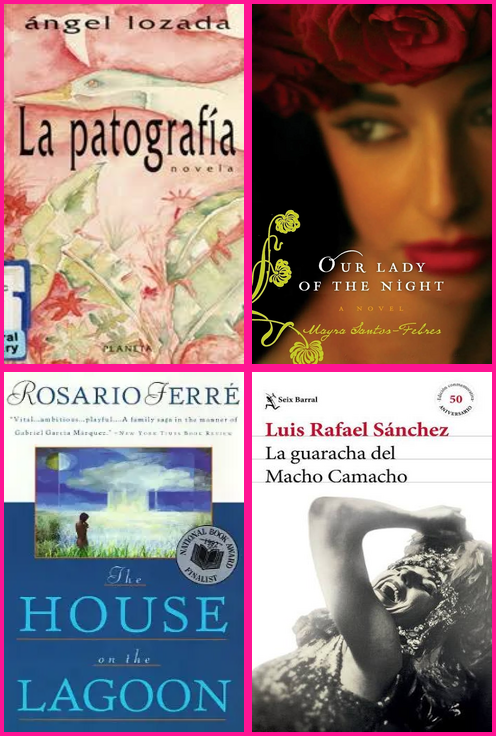
A traffic jam locks the city in place while a guaracha invades every mind. From that wickedly simple premise, Sánchez orchestrates a social cacophony of advertising, desire, class resentment, and verbal swagger. The novel does not merely describe consumer culture; it makes the reader hear its beat—and feel its trap.
10. Felices días, tío Sergio — Magali García Ramis (1986)
Uncle Sergio enters a respectable household and quietly rearranges its moral furniture. Through a girl’s devotion to him, García Ramis opens questions about art, politics, gender, and the rules that govern family life. Tender without becoming sentimental, the novel captures the instant affection turns into intellectual awakening.
11. Maldito amor — Rosario Ferré (1986)
Ferré enters the plantation house with a crowbar. Conflicting versions of race, class, gender, and inheritance splinter the family legend, until certainty itself looks like a privilege. Who owns the land? Who owns the story? Compact, venomous, and layered, Maldito amor is a cornerstone of Puerto Rican feminist fiction.
12. La importancia de llamarse Daniel Santos — Luis Rafael Sánchez (1988)
Daniel Santos travels through these pages less as a biographical subject than as a fever moving across Latin America. Sánchez draws on bolero, gossip, performance, criticism, and collective memory to probe masculinity, celebrity, and longing. The result is a novel that thinks in rhythm and argues in voices.
13. The Line of the Sun — Judith Ortiz Cofer (1989)
Ortiz Cofer carries a Puerto Rican family from rural legend into the hard geometry of a New Jersey housing project. Migration alters the landscape, the language, and the family’s account of itself—but never cleanly erases what came before. The Line of the Sun gives English-language Puerto Rican fiction one of its foundational family chronicles.
14. The House on the Lagoon / La casa de la laguna — Rosario Ferré (1995)
A marriage becomes a war of manuscripts. Husband and wife revise, contradict, and ambush one another’s versions of a family whose fortunes mirror Puerto Rico’s own. Race, gender, wealth, and politics stain every claim to truth. A National Book Award finalist, The House on the Lagoon is a grand saga with a knife hidden inside it.
15. La patografía — Ángel Lozada (1998)
La patografía refuses the clean body, the obedient believer, and the respectable queer subject. Lozada drives illness, desire, religion, migration, and institutional discipline into the same unruly narrative. Its irreverence blew open new space for Puerto Rican queer fiction at the close of the twentieth century.
16. Yo-Yo Boing! — Giannina Braschi (1998)
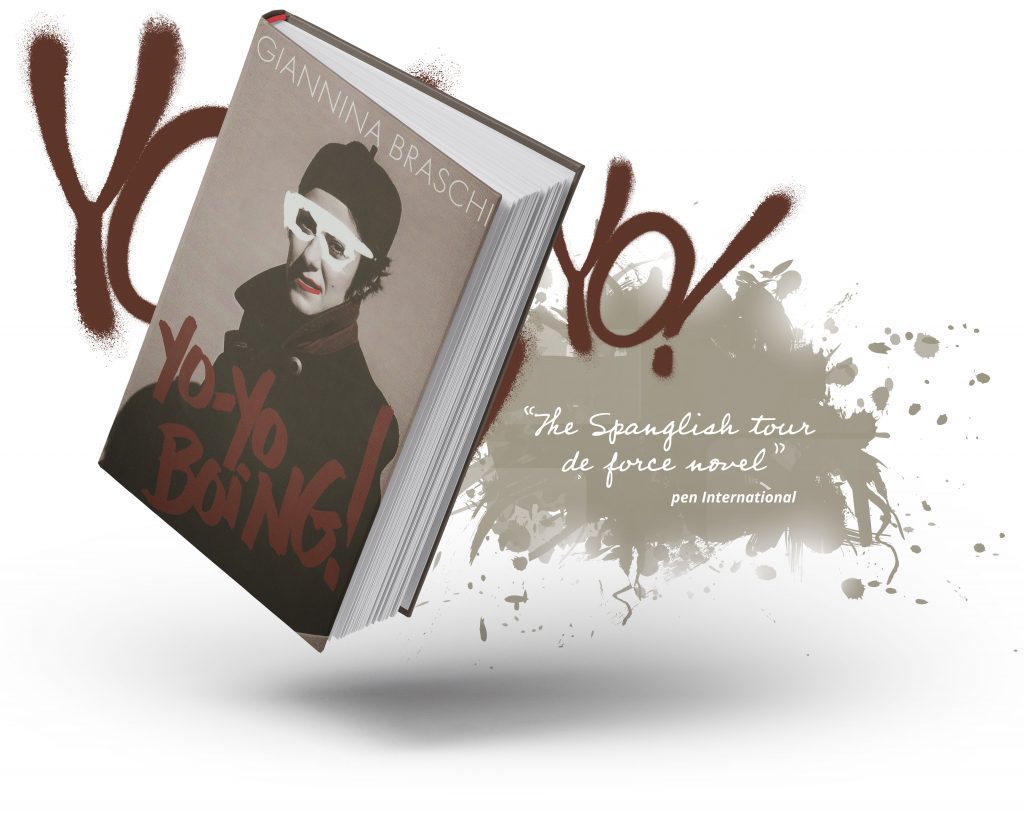
Yo-Yo Boing! does not simply code-switch; it ricochets. Spanish, Spanglish, and English collide in rapid-fire arguments about art, politics, sex, culture, and belonging. Braschi refuses to translate Puerto Rican identity into one dominant tongue. Linguistic fluidity becomes both the novel’s engine and its freedom.
Puerto Rican and Nuyorican novels since 2000
17. Bodega Dreams — Ernesto Quiñonez (2000)
Willie Bodega wants to rebuild East Harlem—and he is willing to finance the dream with crime. When Chino enters his orbit, neighborhood loyalty begins to look like both opportunity and debt. Quiñonez fuses noir momentum with barrio politics in a defining Nuyorican novel about who pays for collective ambition.
18. Our Lady of the Night / Nuestra señora de la noche — Mayra Santos-Febres (2006)
Desire is currency in Our Lady of the Night, but race and class still set the exchange rate. Inspired by the world of Isabel “La Negra” Luberza, Santos-Febres follows a woman who gains power inside a society determined to desire, use, and exclude her. The novel restores a marginalized history without embalming its protagonist as victim or icon.
19. Conquistadora — Esmeralda Santiago (2011)
Ana Larragoity crosses the Atlantic hungry for land, mastery, and a life larger than Spain will permit her. Puerto Rico offers all three—at the cost of enslaved lives. Santiago’s sweeping historical novel makes ambition inseparable from plantation violence and turns self-invention into a ruthless colonial bargain.
20. Simone — Eduardo Lalo (2011)
Anonymous messages puncture a writer’s isolation and send him through a San Juan charged with surveillance, longing, and cultural neglect. Lalo makes the city feel intimate and estranging at once. Winner of the Rómulo Gallegos International Novel Prize, Simone asks what it means to write—and desire—from a place the literary world has trained itself not to see.
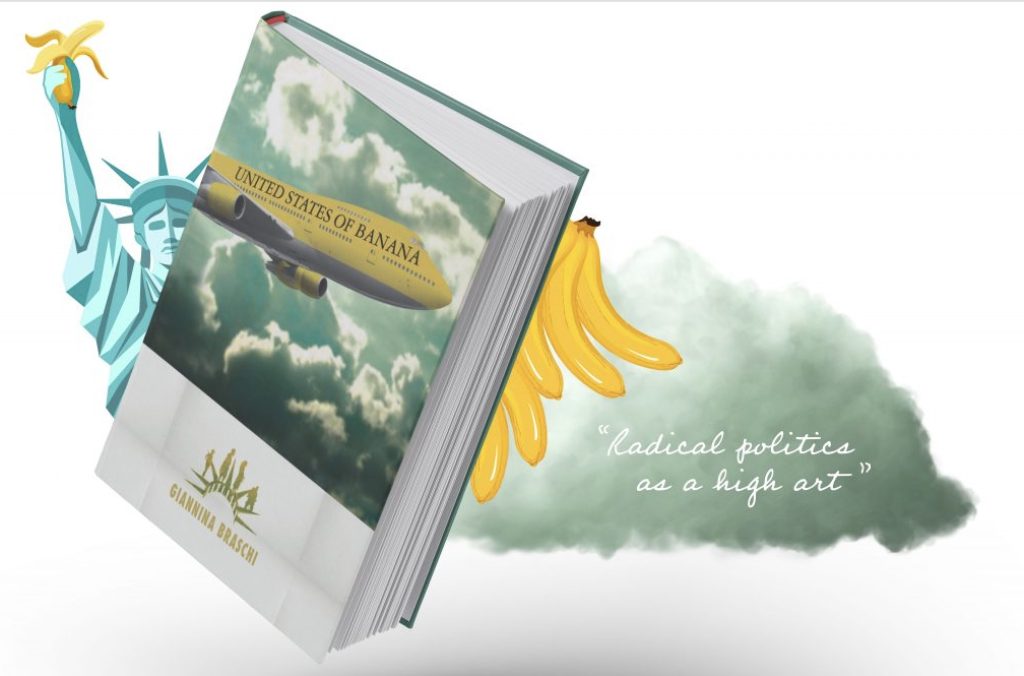
21. United States of Banana — Giannina Braschi (2011)
Giannina, Hamlet, and Zarathustra enter the dungeon beneath the Statue of Liberty to free the Puerto Rican prisoner Segismundo from captivity. From there, the novel detonates arguments about empire, debt, migration, terrorism, and Puerto Rico’s political status. Braschi stages philosophy as action and political satire as jailbreak.
22. Dicen que los dormidos — Sergio Gutiérrez Negrón (2014)
A family crisis tears open questions that memory has failed to settle. Gutiérrez Negrón writes with unnerving compression, letting violence, guilt, and grief reverberate beyond the novel’s compact frame. Dicen que los dormidos shows how the stories told after loss can shelter the living—or trap them.
23. PUTINOIKA — Giannina Braschi (2024)
PUTINOIKA hurls political frenzy, plague, propaganda, and the Trump–Putin era into a Menippean satire built for catastrophe. Tragicomic voices collide with philosophical argument as public language buckles under collusion and spectacle. Braschi answers political ruin with formal nerve, creative resistance, and outrageous humor.
Where should a new reader begin?
Choose a starting point based on the kind of novel you already enjoy:
- A nineteenth-century classic: La charca
- A modern satire: La guaracha del Macho Camacho
- A family saga: The House on the Lagoon
- A Nuyorican tale: Bodega Dreams
- A migration novel: The Line of the Sun
- A queer story: La patografía
- A historical epic: Conquistadora
- An experimental multilingual novel: Yo-Yo Boing!
- A political and philosophical novel: United States of Banana or PUTINOIKA
Frequently asked questions about Puerto Rican Literature
What is considered the first Puerto Rican novel?
There is no completely uncontested answer. However, Alejandro Tapia y Rivera’s La Palma del Cacique (1852) is often treated as an early foundational Puerto Rican novel, while Eugenio María de Hostos’s La peregrinación de Bayoán (1863) is also identified as the first. Manuel Zeno Gandía’s La charca (1894) is commonly treated as the foundational Puerto Rican naturalist novel. The answer depends on whether “first” means the earliest novelistic fiction, the first major national novel, or the first canonical naturalist novel.
Which Puerto Rican novels were written in English?
Major English-language examples include The Line of the Sun, The House on the Lagoon, Bodega Dreams, Conquistadora, United States of Banana, and PUTINOIKA.
Which Puerto Rican novel is written in Spanglish?
Giannina Braschi’s Yo-Yo Boing! is the clearest sustained example. The novel moves continuously among Spanish, Spanglish, and English, making code-switching part of its very structure.
Does this list include memoirs or short-story collections?
No. It is a list of Puerto Rican novels. Memoirs such as Piri Thomas’s Down These Mean Streets, short-story collections, plays, poetry, anthologies, and graphic novels are outside the list’s stated scope.
Further reading
- Frederick Luis Aldama and Tess O’Dwyer, editors, Poets, Philosophers, Lovers: On the Writings of Giannina Braschi (University of Pittsburgh Press, 2020)
- Nadia V. Celis and Juan Pablo Rivera, editors, Lección errante: Mayra Santos-Febres y el Caribe contemporáneo (Isla Negra Editores, 2011)
- José L. Torres-Padilla and Carmen Haydée Rivera, editors, Writing Off the Hyphen: New Critical Perspectives on the Literature of the Puerto Rican Diaspora (University of Washington Press, 2008)
- Carmen Haydée Rivera, Diasporic Journeys: Interviews with Puerto Rican Writers in the United States (University Press of Mississippi, 2023)
Related Posts
- Rethinking the Latin American Canon
- Puerto Rican Poetry
- Puerto Rican Philosophy Books
- Puerto Rican Thought
- Postboom Latin American Literature
Editorial note
This guide uses “Puerto Rican novels” to include island and diasporic fiction in Spanish, English, and Spanglish. The list is chronological, not a ranking. Publication years refer to the original works rather than later translations or reissues. This article was independently prepared by the site’s editorial team.
Reviewed and updated August 26, 2026.