
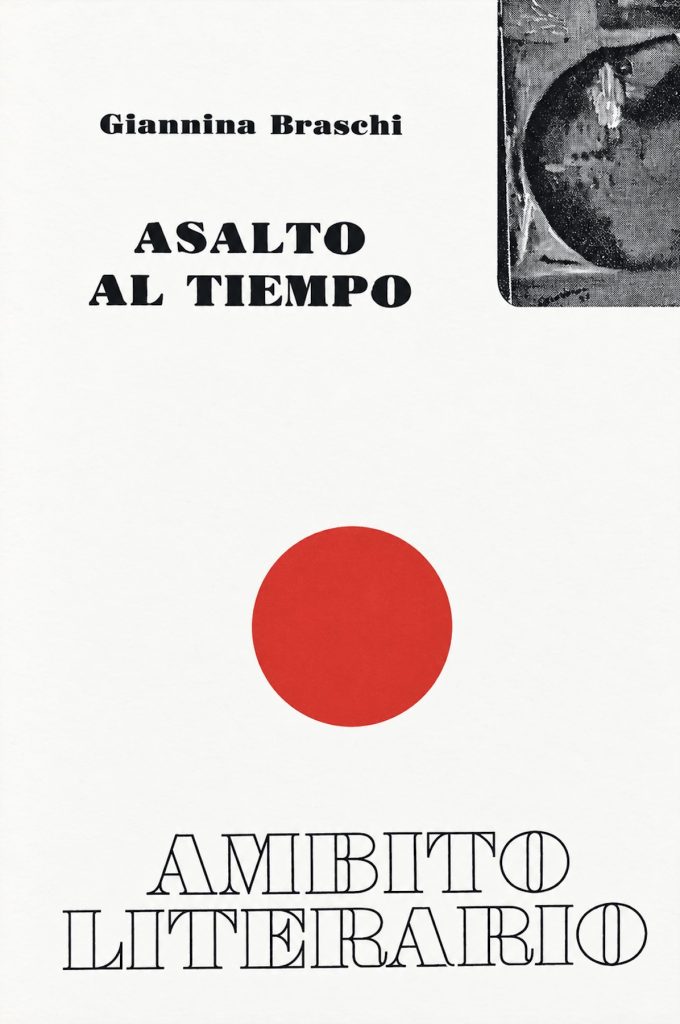
In 1981, Giannina Braschi entered Latin American poetry with Asalto al tiempo (Assault on Time). Written during the late 1970s and published in Spanish by Editorial Ámbito Literario in Barcelona, it was the first book by a young Puerto Rican poet whose work would later move across poetry, theater, fiction, and philosophy.
Reviewing the collection when it appeared, Juan Martínez Capó called it:
“One of the most illuminating documents in recent Puerto Rican poetry.”
—Juan Martínez Capó, El Mundo, 1981
Martínez Capó’s response captures the importance attached to Braschi’s debut at the time—not in retrospect, after her later books, but at the beginning of her writing life. To place that beginning in context, it is useful to look at other young Latin American poets publishing their early books during the same years.
A New Generation in Latin American Poetry
The relevant generational comparison is not primarily with Octavio Paz, Nicanor Parra, Juan Gelman, Enrique Lihn, Blanca Varela, or Olga Orozco. Those established writers formed part of the literary field inherited by younger poets. Braschi’s closer contemporaries were born largely during the late 1940s and early 1950s and began publishing significant early collections during the 1970s and early 1980s.
In Mexico, Coral Bracho published Peces de piel fugaz in 1977 and El ser que va a morir in 1982. Carmen Boullosa made her debut with La memoria vacía and El hilo olvida in 1978, followed by Ingobernable in 1979. David Huerta published Versión in 1978 and El espejo del cuerpo in 1980.
In Chile, Raúl Zurita published Purgatorio in 1979 and Anteparaíso in 1982. In Argentina, Néstor Perlongher’s Austria-Hungría appeared in 1980, while Arturo Carrera published Oro in 1975 and La partera canta in 1982. In Brazil, Ana Cristina Cesar published Cenas de abril in 1979, Luvas de pelica in 1980, and A teus pés in 1982.
Puerto Rican poetry was also being renewed by writers of Braschi’s generation. Etnairis Rivera published María Mar Moriviví in 1976 and El día del polen in 1981. Nemir Matos-Cintrón’s Las mujeres no hablan así appeared in 1981, and Vanessa Droz made her debut with La cicatriz a medias in 1982.
These poets did not constitute a single movement, and their proximity does not establish direct influence. Their early books nevertheless provide a more accurate historical setting for Braschi’s debut. They appeared during a period associated with neobaroque experimentation, feminist and queer writing, visual poetry, performance, political testimony, and renewed attention to the material possibilities of language.
Against this varied background, Asalto al tiempo marked Braschi’s own entrance into Latin American poetry. Martínez Capó documented its early reception. Decades later, literary scholar Laura R. Loustau returned to the debut to examine its poetics more closely.
Laura R. Loustau Reads Braschi’s Debut
Loustau’s essay, “The Poetry of Giannina Braschi: Art and Magic in ‘Assault on Time,’” begins with Braschi’s stated desire for poetry to transform its readers:
“I want people to feel transformed after they have read me. I want them to memorize me because that is how I write.”
Loustau takes this statement as the starting point for her inquiry into what she calls Braschi’s “transformational” poetics. Her subject is not Braschi’s later reputation but the ideas and practices already present in the first collection.
She approaches Assault on Time through Braschi’s “Brief Treatise of the Poet-Artist,” in which the poet-artist contains three figures: the poet-child who feels, the poet-philosopher who thinks, and the poet-actor who transforms. As Loustau explains, repetition belongs to the child, transgression to the philosopher, and metamorphosis to the actor.
This critical framework allows Loustau to connect Braschi’s first book to questions of perception, imagination, movement, artistic transformation, and the reader’s encounter with language.
César Vallejo and the Poet-Artist
Loustau identifies César Vallejo as an important presence in Braschi’s early poetry:
“The influence of César Vallejo’s poetry—particularly The Black Heralds and Trilce—on Braschi’s work is palpable.”
Braschi herself described Vallejo through an image of persistent movement:
“Vallejo is a jack-in-the-box who performs the movement of my spirit.”
Loustau places that statement beside Braschi’s conception of the poet-child. In the “Brief Treatise,” Braschi names Vallejo and Federico García Lorca as major examples of poets whose authenticity, feeling, and “passions of the soul” enabled their work to endure.
Loustau therefore treats Vallejo not simply as a canonical predecessor but as part of Braschi’s own account of poetic creation. The connection is documented through Braschi’s critical prose and interviews rather than inferred from chronology alone.
The Letter, the Word, and Transformation
Loustau devotes particular attention to a passage in which a letter arrives as a physical presence:
“A letter comes and visits me. Puts its legs up in the living room. Wanders about speechless.”
—Giannina Braschi, Assault on Time, translated by Tess O’Dwyer
According to Loustau, the personification of the letter inserts a rhetorical figure into the letter’s own “body.” She observes that the letter comes, moves, escapes, multiplies, and becomes transformed. The poetic speaker responds through seeing, hearing, repetition, and discovery.
Loustau reads this encounter alongside Maurice Merleau-Ponty’s account of knowledge as something grounded in experience and sensory perception. She also draws on Gaston Bachelard’s writing about the poetic image and the transforming power of the imagination. In Loustau’s analysis, letters become words, words become verses, and verses form the book.
Puerto Rican philosopher Francisco José Ramos offers a related critical perspective. As Loustau notes, Ramos describes Braschi’s writing as dependent upon voice and the cinematic movement of images rather than conventional description. He emphasizes the succession, repetition, and momentum of the moments presented in the poems.
These are Loustau’s and Ramos’s readings of Braschi’s language. Together, they place Assault on Time within a critical discussion of materiality, perception, voice, repetition, and movement.
Art and Magic in Assault on Time
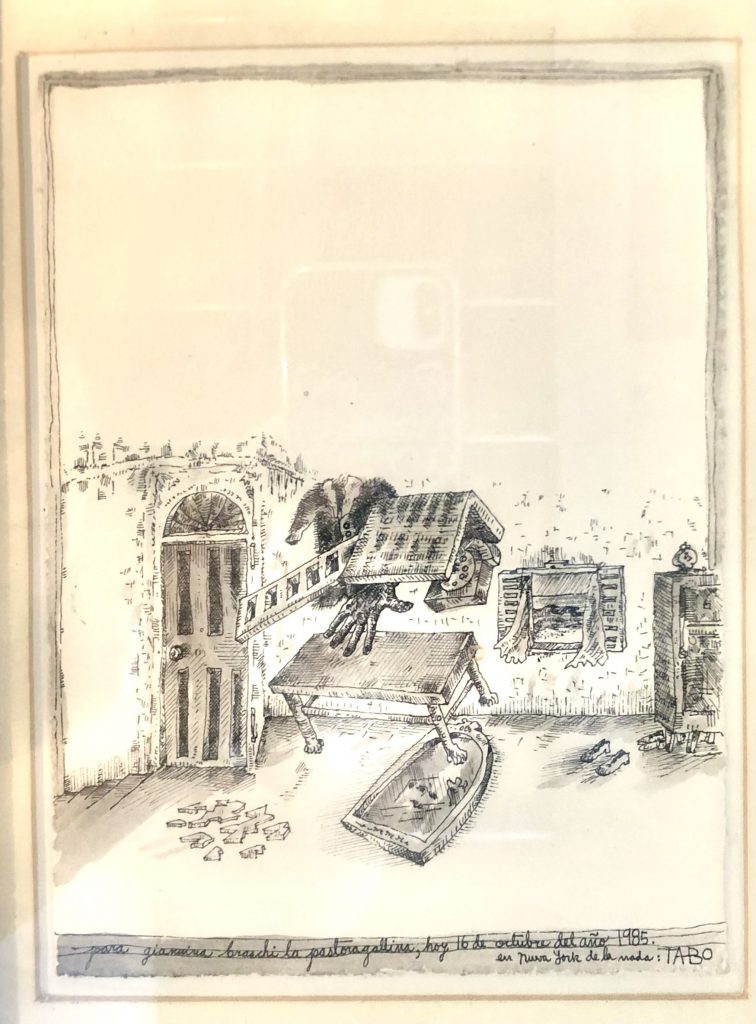
Loustau’s essay extends its argument through comparisons with visual art, particularly the work of the Spanish-Mexican painter Remedios Varo. She discusses appearances and disappearances, gravity and flight, frames and thresholds, and the movement of figures through imagined spaces.
Her comparison is also informed by Octavio Paz’s writing about Varo. Loustau brings the painter and poet together through their uses of movement, surprise, dream imagery, and transformation. The essay does not equate the two artists; it examines the visual and poetic correspondences that their works make available.
Loustau also draws on Alicia Ostriker’s observation that solitude forms a subtext in Assault on Time. Ostriker points to distance between word and reality, distance between lovers, and the recurring presence of solitude in the latter part of the collection. Loustau uses this reading to consider how pleasure, loss, creativity, and loneliness coexist within the work.
Selected passages devoted to these visual and philosophical dimensions appear in the companion post “The Poetry of Giannina Braschi: Art and Magic in Assault on Time”.
From Asalto al tiempo to Empire of Dreams
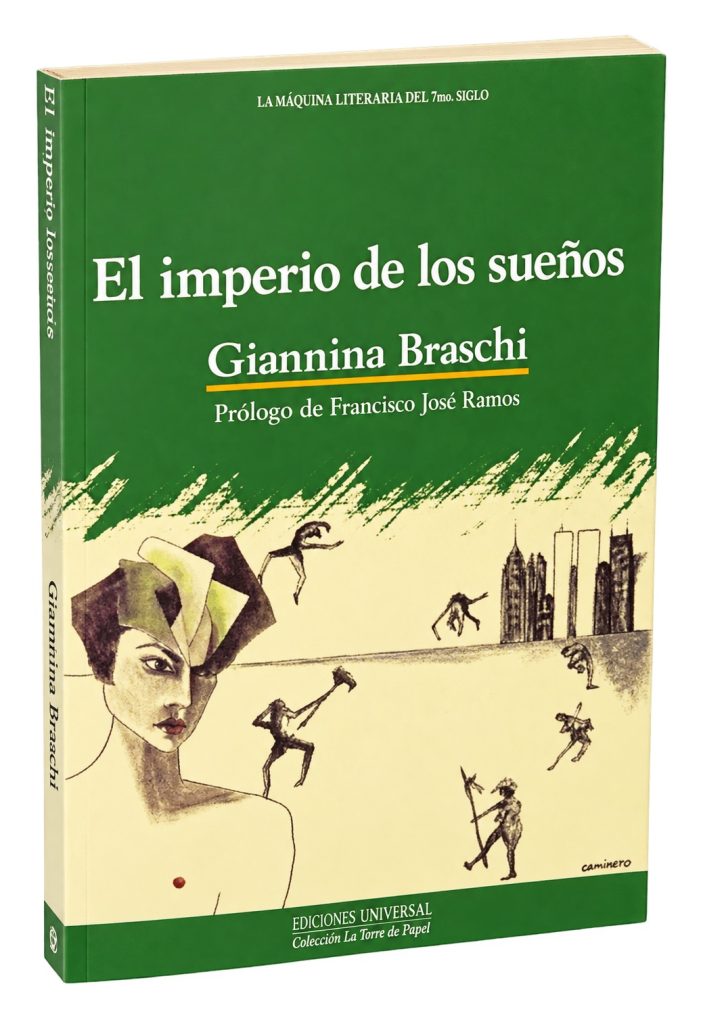
Asalto al tiempo later became the first part of El imperio de los sueños, published in Spanish in 1988. Tess O’Dwyer’s English translation appeared as Empire of Dreams in 1994.
Assault on Time was not issued as a separate English-language volume. English readers encounter Braschi’s debut within the larger trilogy, alongside Profane Comedy and The Intimate Diary of Solitude.
That later publication history can obscure the original circumstances of the work. Asalto al tiempo first appeared as an independent collection by a young poet in 1981. Seen beside the early books of Bracho, Boullosa, Zurita, Perlongher, Cesar, Rivera, Matos-Cintrón, Droz, and others of the same generation, it belongs to a particularly active moment in Latin American poetry.
Martínez Capó records how the debut was received. Loustau, Ramos, and Ostriker provide critical approaches to its language, artistic principles, and recurring concerns. Together, their readings return Asalto al tiempo to its original position: the beginning of Giannina Braschi’s work as a poet.
Sources and Related Reading
- Laura R. Loustau, “The Poetry of Giannina Braschi: Art and Magic in ‘Assault on Time’”, in Poets, Philosophers, Lovers: On the Writings of Giannina Braschi, edited by Frederick Luis Aldama and Tess O’Dwyer, University of Pittsburgh Press, 2020.
- Juan Martínez Capó on Asalto al tiempo
- Empire of Dreams: Epic Poetry by Giannina Braschi
- The Oxford Book of Latin American Poetry, edited by Cecilia Vicuña and Ernesto Livon-Grosman.
- Giannina Braschi, Empire of Dreams, translated by Tess O’Dwyer, Yale University Press, 1994.
Editorial Note
Quotations from Giannina Braschi are drawn from Empire of Dreams, translated by Tess O’Dwyer. This post was last reviewed on September 19, 2026.