
Post-Boom Novels

Post-Boom Latin American Literature since the 1960s
[Latin American Boom and Post-Boom Novels are on Display at Boston College Libraries.]
The Latin American Boom was a literary movement in the 1960s and 70s. It originated when the works of predominantly male Latin American authors like Julio Cortázar, Mario Vargas Llosa, José Donoso, Carlos Fuentes, and Gabriel García Márquez became wildly circulated throughout Europe, particularly in Paris and Barcelona. Influenced by Mondernism and the Vanguadia movement, the works of the Boom authors were highly experimental: time was often treated as a nonlinear object; perspectives were juxtaposed by accounts of multiple, and frequently contradicting, voices. reality was oftentimes distorted by the presence of surreal, fantastical elements. Additionally, the works of the Boom authors were deeply influenced by the tempestuous Latin American political landscape of the 1960’s, particularly by the Cuban Revolution and the proliferation of military regimes in South America.
The Post-Boom started in the 1980’s. It was different from the Boom in many aspects, most notably in that the Post-Boom had a strong presence of female authors. post-Boom authors such as Isabel Allende, Roberto Bolaño, Cristina Peri Rossi, Elena Poniatowska, Severo Sarduy, Manuel Puig, Luisa Valenzuela, and Giannina Braschi, rejected the Boom’s experimental approach. Instead, they embraced a simpler, more approachable narrative.B
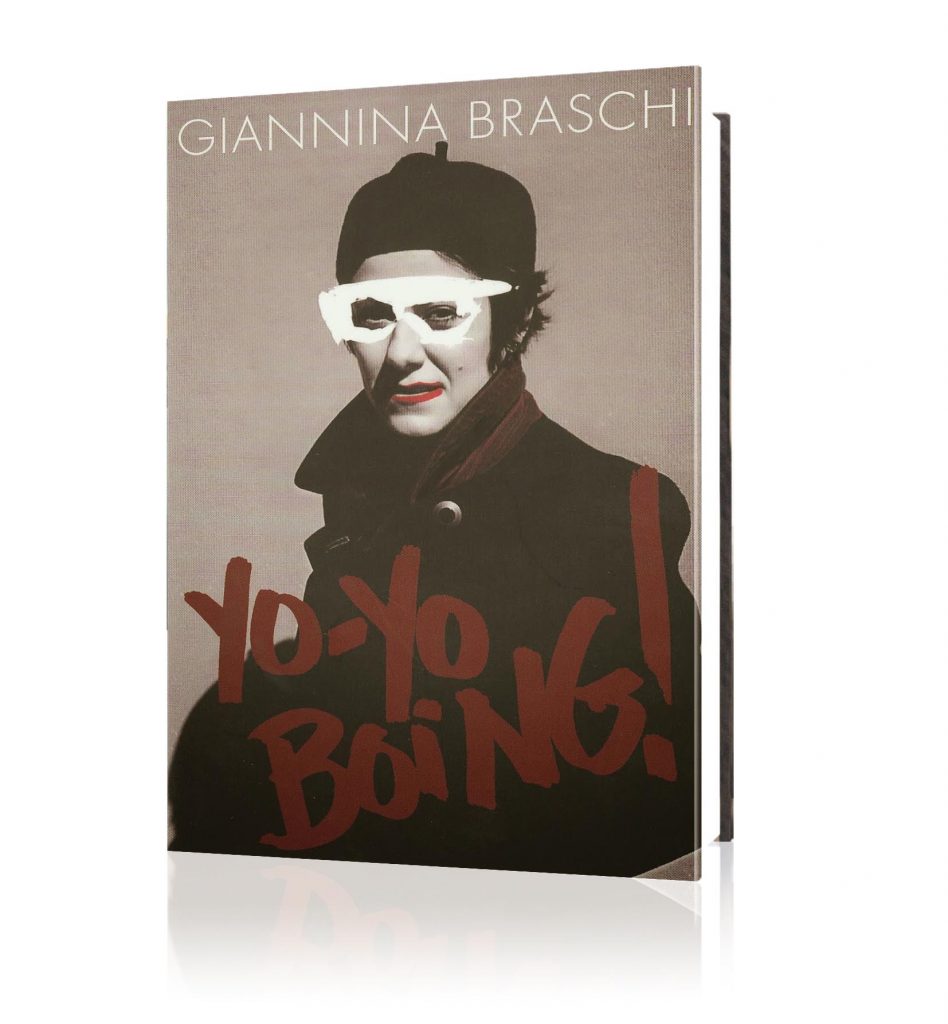
Yo-Yo Boing!
This iconic Spanglish novel by the leading Hispanic-American poet Giannina Braschi was heralded…as “in your face assertion of the vitality of Latino culture in the United States.” It is also a very funny novel, a novel of argumentative conversations that cover food, movies, literature, art, the academy, sex, memory, and every day life. It is a book that should be performed as well as read.
Boston College Libraries: Boom and Post-Boom Novels
Boston College Libraries features these Boom and Post-Boom Novels on display:
CLICK TO READ MORE ON THESE POST BOOM NOVELS.
- Cobra, Severo Sarduy (Sarduy, 1972)
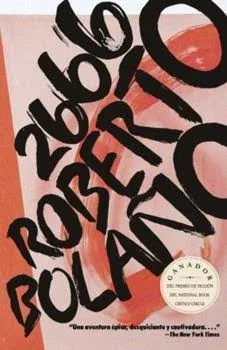
- 2666, Roberto Bolaño (Bolaño, 2004)
- Mr. President, Miguel Ángel Asturias (Asturias, 1946)
- Conversation in the Cathedral, Mario Vargas Llosa (Vargas Llosa, 1969)
- Kiss of the Spider Woman, Manuel Puig (Puig, 1976)
- Strange Things Happen Here, Luisa Valenzuela (Valenzuela, 1975)
- Blow-Up and Other Stories, Julio Cortázar (Cortázar, 1959)
- Angel of Darkness, Ernesto Sabato (Sabato, 1974)
- Hopscotch, Julio Cortázar (Cortázar, 1963)
- The Burning Plain, Juan Rulfo (Rulfo, 1953)
- Paradiso, José Lezama Lima (Lezama Lima, 1966)
- The Obscene Bird of Night, José Donoso (Donoso, 1970)
- The House of the Spirits, Isabel Allende (Allende, 1982)
- View of Dawn in the Tropics, Guillermo Cabrera Infante (Cabrera Infante, 1974)
- Yo-Yo Boing!, Giannina Braschi (Braschi, 1998)
- State of Exile, Cristina Peri Rossi (Peri Rossi, 2003)
- Lilus Kikus, Elena Poniatowska (Poniatowska, 1954)
- The Shipyard, Juan Carlos Onetti (Onetti, 1961)
Research Post-Boom Novels
Stanchich, Maritza. “Braschi, Giannina.” The Encyclopedia of Contemporary American Fiction 1980–2020 1 (2022): 1-7.
Brescia, Pablo. “Estados Unidos y la cuestión de la literatura (latinoamericana).” Novísimas: las narrativas latinoamericanas y españolas del siglo XXI. Iberoamericana, 2021. Post-boom literature.
De la Rosa, Irene Menéndez. “El inglés y el español en contacto en los Estados Unidos. Reflexiones acerca de los retos, dilemas y complejidad de la situación sociolingüística estadounidense, edited by Silvia Betti and Renata Enghels (Rome: Aracne Editrice, 2020).” Miscelánea: A Journal of English and American Studies 65 (2022): 211-214.
Levinson, Brett. The ends of literature: the Latin American” boom” in the neoliberal marketplace. Stanford University Press, 2001.
Waldron, John. “Killing Colonialism’s Ghosts in McOndo: Mayra Santos Febres and Giannina Brashi’.” CIEHL: Cuaderno Internacional de Estudios Humanísticos y de Literatura 14 (2010): 110-20.
Anderson, Benedict, Frances Aparicio, and Suzanne Chávez Silverman. “Alarcón, Norma, Caren Kaplan, and Minoo Moallem.“Introduction: Between Woman and Nation.” Ed. Kaplan, Alarcón, and Moallem.” Redreaming America: Toward a Bilingual American Culture 117 (2005): 207.
Lowry, Elizabeth. “Rhetoric, Identification, and Symbolic Representation in Giannina Braschi’s United States of Banana.” Representing 9/11: Trauma, Ideology, and Nationalism in Literature, Film, and Television (2015): 155.
Islam, Najnin. “Writing Precarity: Neoliberalism and the Globalized Atlantic.” Contemporary Literature 62.1 (2021): 130-137.
Shaw, Donald. “Towards a description of the post-boom.” Bulletin of Hispanic Studies (Liverpool) 66.1 (1989): 87.
Bernal, Martin. “Barradas, Efraín.“La necesaria innovación de Ana Lydia Vega: Preámbulo para.” Redreaming America: Toward a Bilingual American Culture 117 (2005): 207.
Randall, Margaret, John Beverley, and George Yudice. The real thing: Testimonial discourse and Latin America. Duke University Press, 1996.
Bernal, Martin. “Barradas, Efraín.“La necesaria innovación de Ana Lydia Vega: Preámbulo para.” Redreaming America: Toward a Bilingual American Culture 117 (2005): 207.
Carrión, María M. “Geography,(M) Other Tongues and the Role of Translation in Giannina Braschi’s El imperio de los sueños.” Studies in 20th & 21st Century Literature 20.1 (1996): 9.
Marting, Diane E. “New/Nueva York in Giannina Braschi’s “Poetic Egg”: Fragile Identity, Postmodernism, and Globalization.” The Global South 4.1 (2010): 167-182.
Robles Mejias, Rojo. “Cinegrafia: literatura, espectadores y cinefilia contemporanea en latinoamerica.” (2020). Post-boom literature classics.
Williams, Raymond L. The Columbia guide to the Latin American novel since 1945. Columbia University Press, 2007. Post-boom literature.
Maier, Linda S. “A McOndo Writer’s Take on Literature in the Era of Audiovisual and Digital Communication: The Case of Alberto Fuguet’s Las películas de mi vida.” Hispania 94.3 (2011): 406-415.
Stein, Shawn Coyle. Anatomías de la nación: Hacia una sátira posmoderna en cuatro novelas de Brasil y México (1993–2001). University of California, Riverside, 2006. Post-boom literature classics.
Brandel, Miriam, and Luz Angélica Kirschner. “The invention of the Americas by immigrants.” The Routledge Handbook to the Culture and Media of the Americas (2020).
Sandoval, Alberto, and Frances Aparicio. “Hibridismos culturales: la literatura y la cultura de los latinos en los Estados Unidos.” Revista Iberoamericana 71.212 (2005): 665-697.
Gameza, Anastasia. “Desplazamientos lingüísticos y literarios en la obra de Giannina Braschi Yo-Yo Boing!.” (2015).
Tags and keywrodsL McOndo novelists, McOndo writers, classic Post-Boom novels, Latin American Boom, contemporary Latin American literature, Post-boom novels