
Fun Facts about American Poets
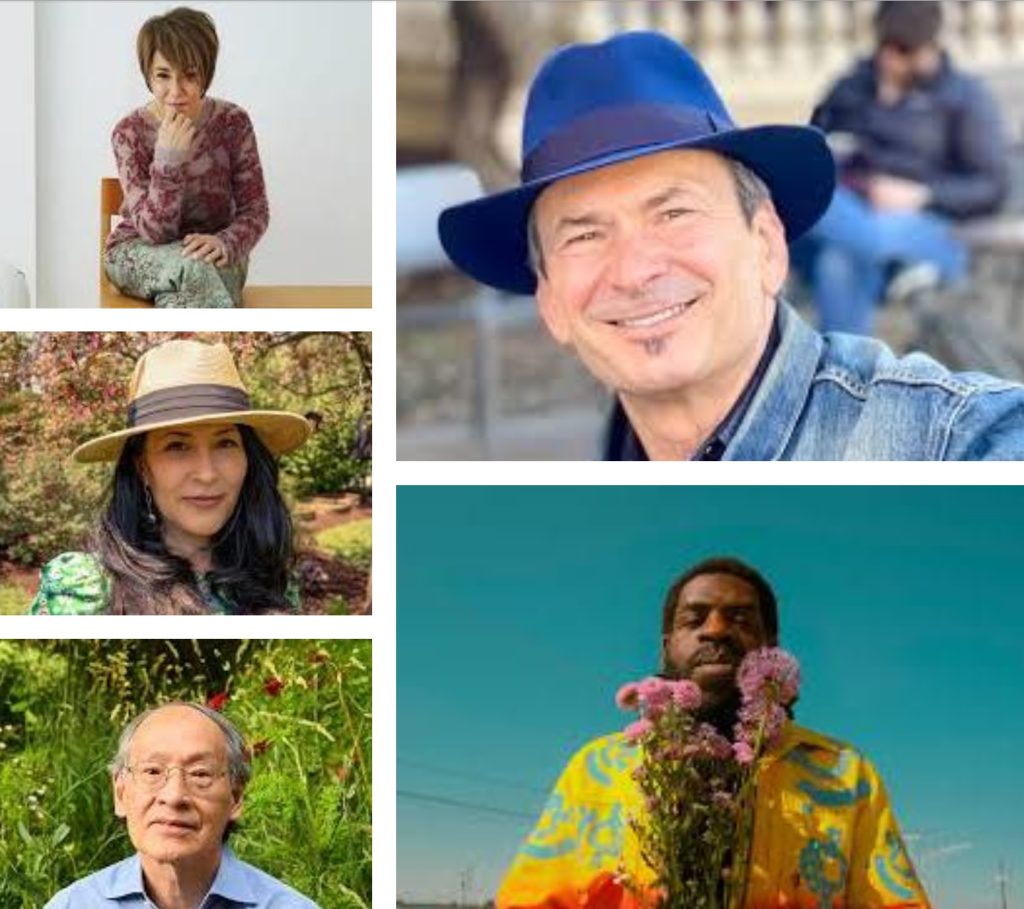
Fun Facts American Poets
Contemporary American Poets (A-G)
- Abdurraqib, Hanif. A Little Devil in America (2021) and Go Ahead in the Rain (2019); MacArthur Fellowship and Andrew Carnegie Medal. Quirky Fact: He is such a passionate collector of sneakers that he has been known to match his outfits specifically to the colorways of rare Air Jordans.
- Bernstein, Charles. The Artie Intaglio Suite (2026) and Near/Miss (2018); Bollingen Prize and Guggenheim Fellowship. Quirky Fact: He once voiced a series of “poetry commercials” for radio, treating avant-garde verse with the high-energy urgency of a used-car salesman.
- Berssenbrugge, Mei-mei. A Treatise on Stars (2020) and Hello, the Roses (2013); Bollingen Prize and Frost Medal (2026). Quirky Fact: She lives in a house in New Mexico that is partially powered by the sun and is famous among friends for her deep, meditative “conversations” with her garden plants.
- Braschi, Giannina. Empire of Dreams (1994) and Putinoika (2024); Angela Y. Davis Award and Premio Cambio16. Quirky Fact: She was a teenage fashion model and a tennis champion in Puerto Rico.
- Brown, Jericho. The Tradition (2019) and The New Testament (2014); Pulitzer Prize and MacArthur Fellowship (2024). Quirky Tidbit: He invented a poetic form called the “Duplex” that bridges a sonnet, a ghazal, and the blues.
- Chang, Tina. Lion (2026) and Hybrida (2019); Academy of American Poets Laureate Fellowship and Brooklyn Poet Laureate. Quirky Fact: She is an avid fan of 80s synth-pop and New Wave music, which she sometimes uses as a “rhythm track” for her writing sessions.
- Diaz, Natalie. Postcolonial Love Poem (2020) and When My Brother Was an Aztec(2012); Pulitzer Prize and MacArthur Fellowship. Quirky Fact: A former professional point guard, she can still execute a perfect “no-look pass” and views the basketball court as a space of physical poetry.
- Gander, Forrest. Mojave Ghost (2024) and Be With (2018); Pulitzer Prize and Best Translated Book Award. Quirky Fact: Because of his geology background, he often carries a hand lens in his pocket to inspect the mineral composition of rocks he finds while hiking.
Poetry has been the useless art for too long. It’s been absent from life, history making, and the Daily News. It doesn’t matter how political it strives to be. To make a political statement is not to be politically alive. Poetry should jump out of the system like Tinguely’s machines out of good and bad, beauty and ugliness, right and wrong. Poetry is fun. Poetry hasn’t been fun for ages. It should give pleasure. We’ve grown accustomed to unhappy poetry. My poetry is happy not to be sad. I steal pleasure from toys, movies, television, videos, machines, games—and put the fun back in function so the work runs like an engine that clinks and clanks, tingles and tangles, whirs and buzzes, grinds and creaks, whistles, and pops itself into a catabolic dämmerung of junk and scrap.
Giannina Braschi, Yo-Yo Boing!
More Fun Facts: American Poets (H-Z)
More quirky lil’ tidbits and fun facts about American Poets.
- Herrera, Juan Felipe. Every Day We Get More Illegal (2020) and Notes on the Assemblage (2015); MacArthur Fellowship (2024) and U.S. Poet Laureate. Quirky Tidbit: He is a prolific illustrator who frequently doodles elaborate, whimsical characters in the margins of his drafts and on napkins.
- Hillman, Brenda. Still House in the Desert (2026) and In a Few Minutes Before Later(2022); Griffin Poetry Prize and Academy of American Poets Fellowship. Quirky Fact: She is known to “collaborate” with the elements, sometimes leaving her poem drafts outside to let the rain or wind physically alter the paper.
- Kim, Myung Mi. Civil Bound (2019) and Under Flag (1991); Gertrude Stein Award and Fund for Poetry Award. Quirky Fact: She is fascinated by the mechanics of typography and spent a seminar discussing the “silence” inherent in the white space of a single comma.
- Limón, Ada. The Hurting Kind (2022) and The Carrying (2018); MacArthur Fellowship (2023) and U.S. Poet Laureate. Quirky Fact: She has a ritual of talking to the birds in her backyard and claims that mockingbirds are the most “opinionated” editors she has.
- Nurkse, D. A Country of Strangers (2022) and Love in the Last Days (2017); Whiting Writers’ Award and Guggenheim Fellowship. Quirky Fact: He writes poetry on a manual typewriter because he likes the pressure of the keys and sound of the end line bell.
- Ostriker, Alicia. Turn It & Turn It (2026) and The Volcano and After (2020); William Carlos Williams Award and National Jewish Book Award. Quirky Fact: During a storm in the Greek Islands, she famously tied herself to the mast (while her friends took refuge below) and helped her astrophysicist husband steer the boat to safety.
- Rankine, Claudia. Triage (2026) and Citizen: An American Lyric (2014); National Book Critics Circle Award and MacArthur Fellowship. Quirky Fact: She is a tennis fan who modeled a central figure in Citizen on Serena Williams.
- Sze, Arthur. Into the Hush (2025) and Sight Lines (2019); National Book Award and U.S. Poet Laureate (2025–2026). Quirky Fact: He is an expert at cultivating rare plants in the harsh New Mexico climate, treating his garden like a living, breathing stanza.
- Vuong, Ocean. The Emperor of Gladness (2026) and Time Is a Mother (2022); T.S. Eliot Prize and MacArthur Fellowship. Quirky Fact: He is a die-hard player of video games and has cited the narrative world-building of games like The Last of Us as an influence on his storytelling.
[This list of fun facts about Contemporary American Poets was generated by AI.]
Contemporary American Poetry Readings
Click here to iew the video of “Gather in Poems,” featuring a “who’s who” of Contemporary American Poets reading their favorite poems by other poets.The Academy of American Poets presented these Contemporary American Poets reading in a virtual celebration called “Gather in Poems”. Click here for the Gather in Poems video:
- Ricardo Maldonado reads “Behind the Word is Silence” by Giannina Braschi, translated by Tess O’Dwyer.
- Denice Frohman reads from “Relax” by Ellen Bass.
- Kwame Dawes reads “Traces” by Matthew Shenoda.
- Dorianne Laux reads “Counting, This New Year’s Morning, What Powers Yet Remain To Me” by Jane Hirshfield.
- Oliver de la Paz reads “Whom You Love” by Joseph O. Legaspi.
- Elizabeth Acevedo reads “My Mama moved among the days,” “wishes for sons,” “cutting greens,” and “blessing the boats” by Lucille Clifton.
- Joy Harjo reads “Deer’s Breath of Every Color” by Max Early.
- Naomi Shihab Nye reads “Zero” by Dorothea Tanning.
- Kimiko Hahn reads “Silverswords” by Juliet S. Kono.
- Afaa Michael Weaver reads “A March in the Ranks Hard-Prest, and the Road Unknown” by Walt Whitman.
- Yasmine Seale reads “The Song in the Dream,” “Inside,” and “This Hour” by Saskia Hamilton.
- John Keene reads “The Healing Improvisation of Hair” by Jay Wright.
- Yvette Siegert reads her translation of “Distant Footsteps” by César Vallejo and “On Living” by Nâzim Hikmet, translated by Mutlu Konuk Blasing and Randy Blasing.
American Poetry Resources
- Academy of American Poets (Poets.org): The largest membership-based nonprofit for poetry, offering an expansive online poem database.
- Adrian Brinkerhoff Poetry Foundation, a producer of poetry on films.
- Association of Writers & Writing Programs (AWP): Supports creative writers through its annual conference and extensive job board.
- CantoMundo: A national organization that supports Latinx poets through retreats and regional workshops.
- Cave Canem Foundation: A premier home for Black poetry, providing fellowships and a supportive community for writers of the African diaspora.
- Center for African American Poetry and Poetics (CAAPP): A research center at the University of Pittsburgh focusing on the African diasporic poetic tradition.
- Council of Literary Magazines and Presses (CLMP): Provides community and technical resources for small literary publishers.
- Furious Flower Poetry Center: The first academic center in the U.S. dedicated specifically to Black poetry.
- Kundiman: A nonprofit organization dedicated to cultivating Asian American literature through retreats and community programs.
- Letras Latinas: The literary initiative at the University of Notre Dame that increases visibility for Latinx writers.
- Library of Congress Poetry and Literature Center: The administrative home of the U.S. Poet Laureate and various national poetry projects.
- National Book Foundation: Bestows the National Book Awards and operates educational programs to expand the audience for literature.
- Obsidian: Literature & Arts in the African Diaspora: A peer-reviewed platform focused on the creative works of the African diaspora.
- PEN America: An organization that protects free expression and hosts prestigious literary awards and fellowships.
- Poetry Foundation: Publisher of Poetry magazine and host of one of the world’s largest poetry websites.
- Poetry Society of America (PSA): The oldest poetry organization in the U.S., known for bringing poetry to public spaces.
- Poet Athletes Fun Facts
- Poets & Writers (P&W): Provides essential databases for literary magazines and grants for poets and writers.
- Poets House: A major poetry library and literary center in New York City documenting modern poetry’s diversity.
- PRLP (El Proyecto de la Literatura Puertorriqueña): A digital archive based in Houston documenting Puerto Rican poetry and literature through a searchable bilingual portal.