
Postdramatic Theatre and the New Epic: Balkan Erotic Epic and PUTINOIKA
What is postdramatic theatre?
Hans-Thies Lehmann’s Postdramatisches Theater (1999; English translation, Postdramatic Theatre, 2006) gave a name to theatre that loosens the hold of dramatic text, plot, and character. Postdramatic theatre does not mean theatre without a story. It describes performance in which text, image, sound, bodies, space, and the audience all shape the event. Lehmann also called it post-Brechtian: it builds on Brecht’s epic theatre, which broke stage illusion and spoke to the audience directly.
Since the late twentieth century, theatre-makers have worked with fragmented language, visual composition, movement, recorded media, and new relations between performers and spectators. These experiments do not form one movement or share one aesthetic. Postdramatic theatre is a lens for seeing how performances are made and experienced.
The epic returns: on stage and on the page
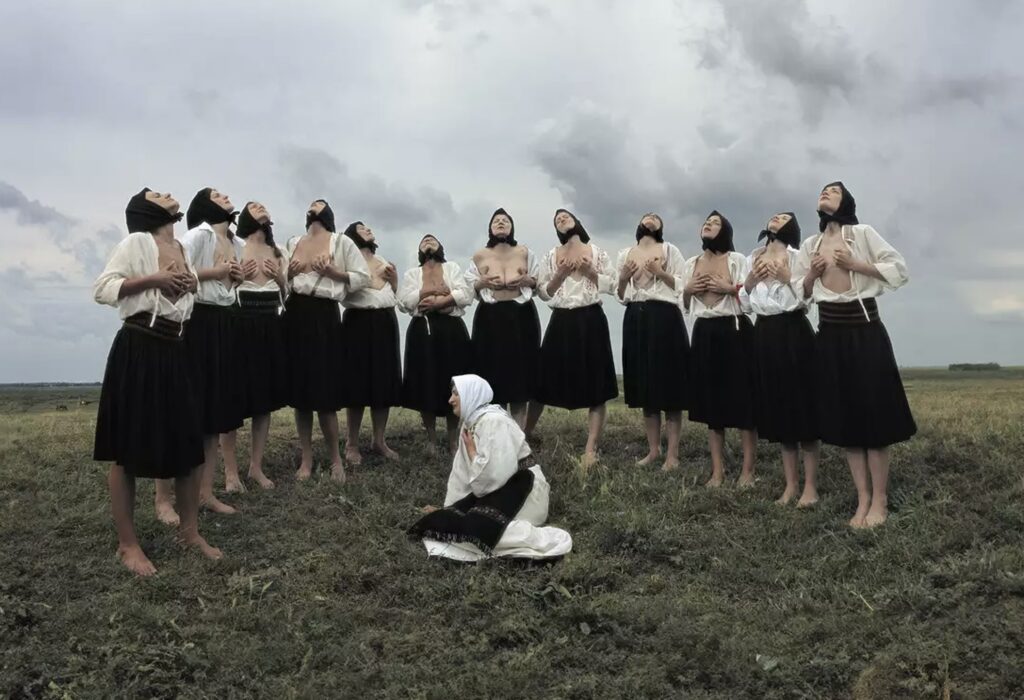
Postdramatic theatre grew out of the epic, and two of the boldest works of the moment call themselves epics outright. Marina Abramović brings the epic to the stage. Giannina Braschi brings the stage into the epic book. Each starts from her own side of the line between performance and literature, and both arrive at the same place: a cross-genre epic in which myth, ritual, song, poetry, and radical thinking share structures. Read together, they show a new genre taking shape, larger than either stage or page could hold alone.
Balkan Erotic Epic: Marina Abramović
Marina Abramović, the Serbian performance artist born in Belgrade, has built her work on endurance, ritual, and the encounter between performer and audience. In Rhythm 0 (1974), she placed 72 objects before an audience and invited people to use them on her. At MoMA’s 2010 retrospective, The Artist Is Present, she sat silently with visitors for nearly three months.
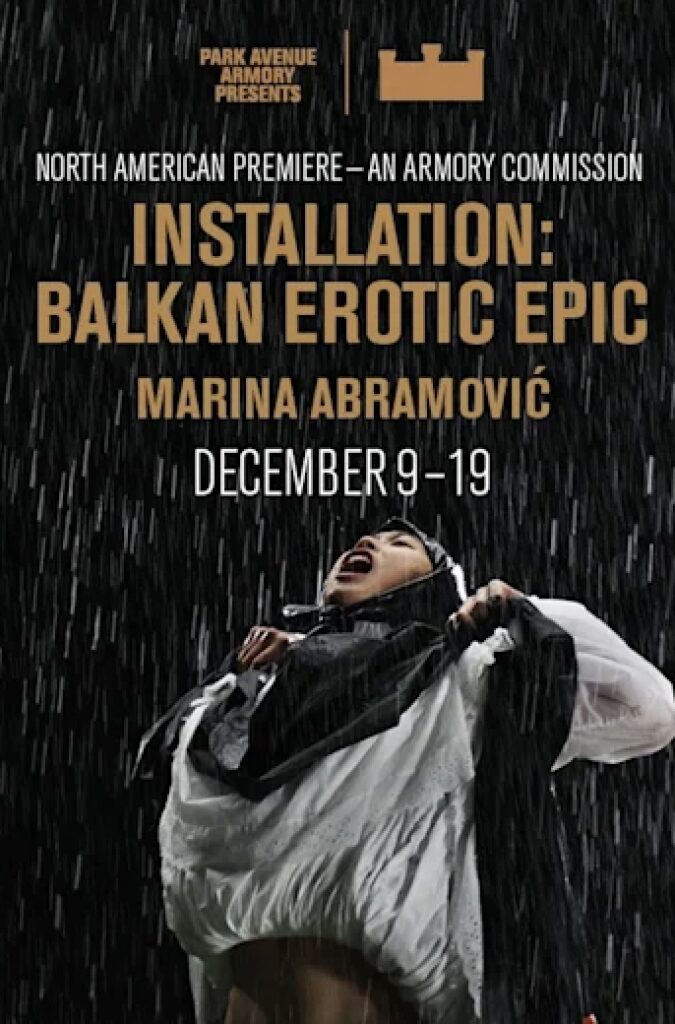
Balkan Erotic Epic brings dance, song, ritual, and Balkan mythology and folklore into a large-scale live performance. The title goes back to her 2005 installation, and the live production premiered in Manchester in 2025. Across four hours and thirteen scenes, with a cast of nearly eighty, audiences move through the space rather than watch from fixed seats. Its North American premiere is at New York’s Park Avenue Armory, December 8–20, 2026.
Abramović’s stage: from Balkan Baroque to the epic
Abramović’s turn to theatre has a lineage of its own. In Balkan Baroque, which won the Golden Lion at the 1997 Venice Biennale, she sat scrubbing a mountain of bloody bones while singing folk songs from her childhood, in mourning for the Yugoslav wars. In The Life and Death of Marina Abramović (2011), Robert Wilson, a central figure for Lehmann, staged her life as a theatrical requiem. In 7 Deaths of Maria Callas (2020), she brought opera into performance art. Balkan Erotic Epic gathers these threads: folk song, ritual, and mourning, now built for a large company and an audience on the move.
PUTINOIKA: Giannina Braschi
Giannina Braschi has built her work on the crossing of genres and languages, writing in Spanish, Spanglish, and English. Empire of Dreams (1988), Yo-Yo Boing! (1998), United States of Banana (2011) and PUTINOIKA (2024) mix poetry, songs, dramatic dialogues, fiction, diary, and political philosophy on subjects ranging from financial terrorism to creative process.
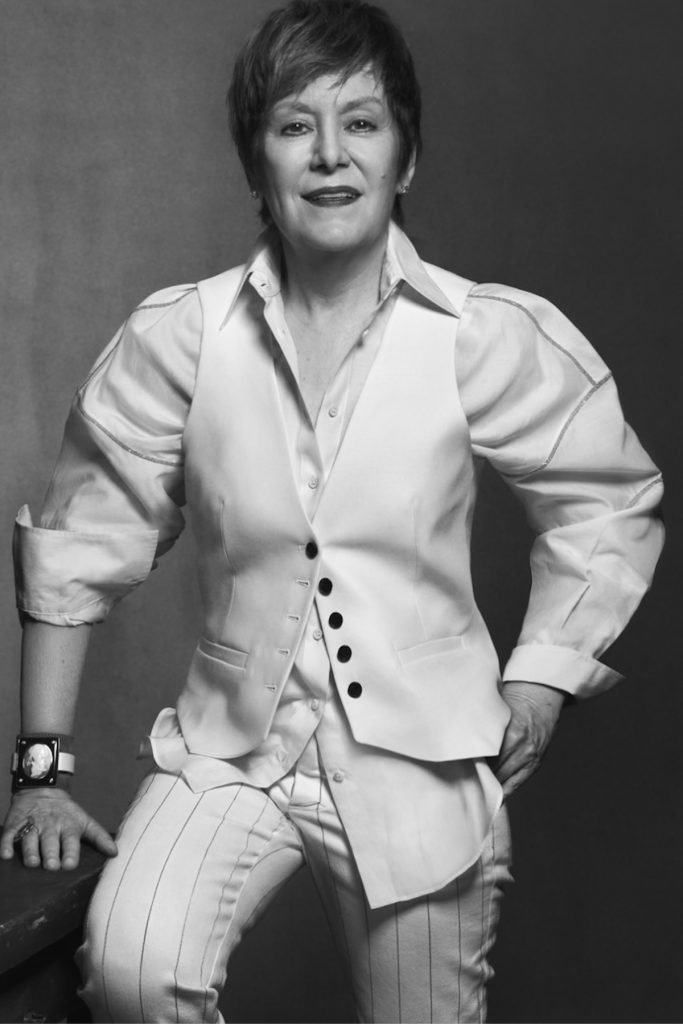
PUTINOIKA (2024) is an epic tragicomedy, a modern Bacchae set amid the pollution, collusion, and delusion of the Putin–Trump era. Its sources run from Euripides to Zaha Hadid to reggaeton: Greek tragedy, the fluid and daring forms of contemporary architecture, and the beat of the Caribbean street meet in one book. It unfolds in three parts, Palinode, Bacchae, and PUTINOIKA, and moves the way a performance does: through theatrical scenes, choral voices, poetry, satire, and political philosophy. Where Abramović stages a book of myths, Braschi writes a theatre of ideas.
United States of Banana: Epic Tragicomedy
Braschi’s postcolonial epic United States of Banana brings Hamlet, Nietzsche’s Zarathustra, Giannina, and Segismundo into a political and philosophical journey shaped by Puerto Rico’s colonial status, citizenship, and empire. Its lineage runs through Calderón de la Barca’s Life Is a Dream, whose chained prince Segismundo she frees from a dungeon under the Statue of Liberty, and through Shakespeare’s Hamlet. It also draws on Heiner Müller’s Hamletmachine (1977), a key text for Lehmann, and Alfred Jarry’s Ubu plays (1896), joining Müller’s fragments to Jarry’s farce of power and turning both on the American empire. The book was staged at Columbia Stages in 2015 and later became a graphic novel with Joakim Lindengren. Hamid Dabashi called United States of Banana “one of the most brilliant postcolonial works of fiction in the immediate aftermath of 9/11, savagely critical of the predatory capitalism and its ravages in Puerto Rico and around the globe.”
More is more: the beauty of excess
For much of the twentieth century, “less is more,” the motto linked to the architect Mies van der Rohe, set the terms for modern art: pare down, strip away, keep only the essential. These two epics answer for a different time. Now more is more. Abramović fills four hours with song, dance, ritual, and nearly eighty performers, and lets the audience wander through the abundance. Braschi fills a single book with many voices, many languages, and many genres, from Greek tragedy to satire to political philosophy. Their excess is a bounty, generous to the audience and the reader, and it carries beauty and feeling at full volume.
Puerto Rican critic Elidio La Torre Lagares gives this abundance a name. In Hyperglossia and the Novel: The Production of (Non) Space (Routledge, 2026), he extends Bakhtin’s heteroglossia, the many voices of the novel, into hyperglossia: language so saturated and recursive that it overflows closure and coherence. He reads it in Tokarczuk, Bolaño, Condé, Paz Soldán, and Braschi, whose United States of Banana has a chapter of its own. The idea reaches beyond the novel. An age that overflows with information and political spectacle calls for forms large enough to hold it, and the new epic, on stage and on page, is one of them.
Artists and companies in postdramatic theatre debates
Postdramatic theatre is a framework, not a school with fixed membership. The artists below differ in approach and cultural history, and this list does not suggest a shared style.
Discussed by Lehmann: Tadeusz Kantor, Heiner Müller, Needcompany, Socìetas Raffaello Sanzio, Robert Wilson, The Wooster Group (led by Elizabeth LeCompte)
In the wider conversation: Pina Bausch, Giannina Braschi, Forced Entertainment, Jon Fosse, Alvis Hermanis, Elfriede Jelinek, Robert Lepage, René Pollesch, Teater Moment, Verdensteatret.
Frequently asked questions
Is Marina Abramović’s work postdramatic theatre? Abramović comes from performance art, so her work sits beside the postdramatic tradition rather than inside it. Balkan Erotic Epic shares its key traits: image, body, ritual, and space carry the event as much as words do, and the audience moves through it.
Is Giannina Braschi’s work theatre? Braschi writes books that move like performance, with scenes, choruses, and song. United States of Banana has been staged.
Is postdramatic theatre the same as experimental theatre? No. Experimental theatre is the broader field. Postdramatic theatre is one way of describing a large part of it: work in which the dramatic text is one powerful element among many, not the center.
What is hyperglossia? In Elidio La Torre Lagares’s Hyperglossia and the Novel (Routledge, 2026), hyperglossia is language so abundant, layered, and recursive that it overflows a single story or a single closure. It builds on Bakhtin’s idea of heteroglossia, the many voices of the novel.
Further reading
Postdramatic theatre and performance
- Hans-Thies Lehmann, Postdramatic Theatre, trans. Karen Jürs-Munby (2006). The foundational study.
- Kai Tuchmann, ed., Postdramatic Dramaturgies: Resonances between Asia and Europe (2022).
- Freya Vass, William Forsythe’s Postdramatic Dance Theater: Unsettling Perception (2023).
- Mads Thygesen, Traces of Dialogue: Language, Identity and Form in European Postdramatic Theatre (2025).
- Sebastian Samur, Rhythm in Postdramatic Performance Process (2025). With Mime Omnibus, Dairakudakan, and SITI Company.
- Emma K. Rycroft and Gwilym Walker, Predramatic Theatre: The Radicalism of Early British Performance (2026).
Experimental performance and theatre
- Erika Fischer-Lichte, The Transformative Power of Performance (2008).
- Sara Jane Bailes, Performance Theatre and the Poetics of Failure (2011).
- Madelena González and Hélène Laplace-Claverie, eds., Minority Theatre on the Global Stage: Challenging Paradigms from the Margins (2012).
- James M. Harding, The Ghosts of the Avant-Garde(s): Exorcising Experimental Theater and Performance (2013).
- Jennifer Buckley, Beyond Text: Theater and Performance in the 20th-Century Czech Avant-Garde (2019).
- Kate Aughterson and Deborah Philips, eds., Women Experimenting in Theatre: Early Modern to Contemporary (2024).
- Peter Eckersall, Dramaturgy to Make Visible: The Legacies of New Dramaturgy for Politics and Performance in Our Times (2024).
Marina Abramović: scholarly context
- Marina Abramović: Artist Body—Performances 1969–1998 (1998). Essays by Thomas McEvilley, Bojana Pejić, and Hans Ulrich Obrist.
- Klaus Biesenbach, ed., Marina Abramović: The Artist Is Present (MoMA, 2010).
- Julija Pešić, “The Politics of Identity: Gender and Epic Heroism in the Post-Socialist Art of Marina Abramović,” Slavic Review (2026). On the 2005 installation and the retrospective.
- Dee Jefferson, “Marina Abramović on Australia, backlash and ‘the encounter that changed my life’,” The Guardian (2024).
- Arifa Akbar, “Marina Abramović on her most daring show ever,” The Guardian (2025). On the Manchester production.
- Benjamín G. Rosado, “Marina Abramović, artista: ‘Ahora que me puedo permitir las malas críticas, no encuentro ninguna’,” El País (2026, in Spanish). On the Barcelona stage version.
Giannina Braschi: poetry, philosophy, drama
- Elidio La Torre Lagares, Hyperglossia and the Novel: The Production of (Non) Space (Routledge, 2026). Includes “The Spiral That Explodes: Hyperglossia, Non-Space, and the Hauntology of Colonial Identity in Giannina Braschi’s United States of Banana.”
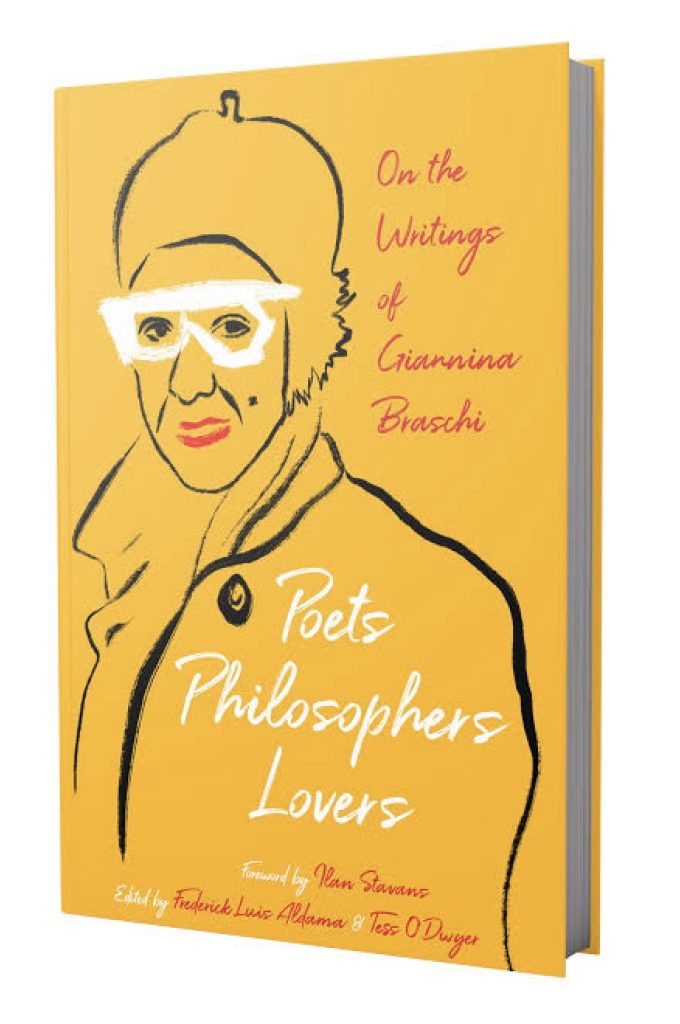
- From Poets, Philosophers, Lovers: On the Writings of Giannina Braschi (2020):
- Dorian Lugo Bertrán, “Leaping Off the Page: Giannina Braschi’s Intermedialities.”
- Ronald Mendoza-de Jesús, “Free-dom: United States of Banana and the Limits of Sovereignty.”
- Madelena González, “The Uncommon Wealth of Art: Poetic Progress as Resistance to the Commodification of Culture in United States of Banana.”
Notes: This post was created independently by the site’s editorial team. It does not constitute writing by Giannina Braschi. Last updated November 24, 2026.